Tijuana to Milwaukee
Milwaukee → TijuanaFTL freight transportation service between Tijuana and Milwaukee. Reliable logistics solutions for your business.
Route Description
Everything you need to know about the corridor Tijuana - Milwaukee
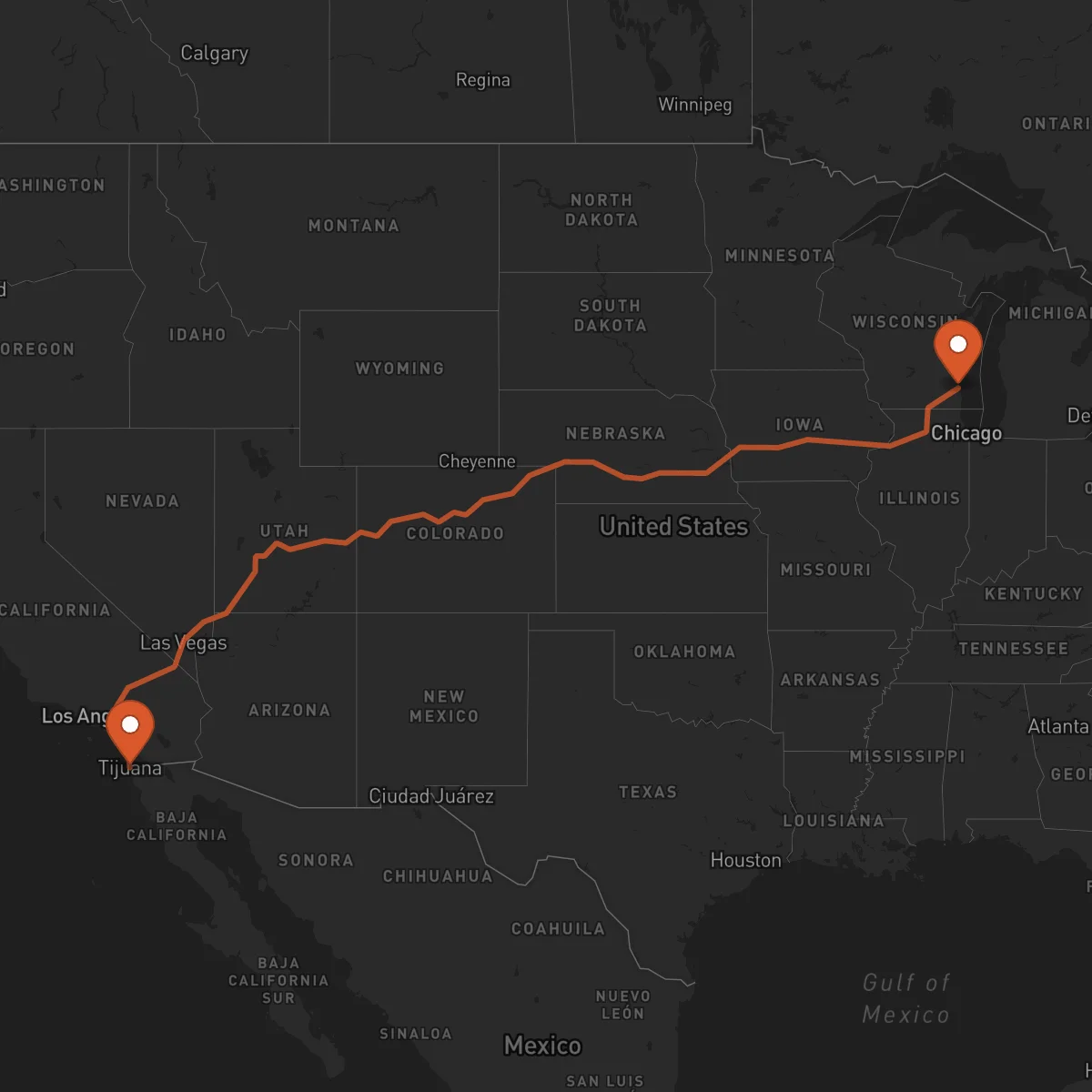
The Tijuana-Milwaukee corridor represents a vital logistics connection between Mexico's northwestern industrial hub and the manufacturing center of the American Midwest. This 2,794 km cross-border route facilitates the movement of goods between Baja California's maquiladora industry and Wisconsin's advanced manufacturing sector, creating essential supply chain links for both countries.
The corridor traverses diverse terrain and crosses multiple states, requiring expertise in cross-border logistics and regulatory compliance. Tijuana's proximity to major U.S. ports and transportation networks makes it an ideal export gateway, while Milwaukee's strategic location in the Great Lakes region provides access to major distribution centers and manufacturing facilities throughout the Midwest.
This route serves industries including automotive components, electronics, medical devices, and agricultural products. The main transportation infrastructure includes Mexico's Federal Highway 2D and 5, connecting to Interstate 8 and I-35 in the United States, continuing through I-43 to reach Milwaukee. The Otay Mesa border crossing provides efficient access for commercial freight, with C-TPAT certified carriers ensuring expedited processing.
Control Terrestre specializes in managing this corridor with dedicated full truckload services, ensuring your cargo moves seamlessly across the border with proper documentation, temperature-controlled options when needed, and real-time tracking throughout the journey. Our strategic partnerships with certified carriers guarantee reliable service for time-sensitive shipments between these two industrial powerhouses.
Services for this Route
Available services for the corridor Tijuana - Milwaukee
 Origin
Tijuana
Tijuana stands as a strategic logistics hub on Mexico's northern border, offering immediate access to the U.S. market and serving as a gateway for international trade. The city's location adjacent to California positions it as a critical point for cross-border freight movement, with multiple border crossings and modern infrastructure supporting efficient cargo transfer. Tijuana's maquiladora industry, particularly in automotive, aerospace, and electronics manufacturing, generates substantial freight volume requiring specialized transportation services.
The city boasts extensive transportation infrastructure including the Tijuana International Airport, major highways connecting to the U.S. interstate system, and the Port of Ensenada for maritime cargo consolidation. The Otay Mesa and San Ysidro border crossings provide multiple options for freight movement, with dedicated commercial lanes and advanced customs facilities. Tijuana's Free Trade Zone status and proximity to major U.S. distribution centers make it an ideal origin point for companies seeking efficient North American supply chain solutions.
 Destination
Milwaukee
Milwaukee serves as a strategic logistics center in the American Midwest, offering exceptional connectivity to major markets across the United States. Located on the western shore of Lake Michigan, the city provides multimodal transportation options including access to the Great Lakes shipping network, extensive rail connections, and proximity to major interstate highways. Milwaukee's location within a day's drive of major metropolitan areas like Chicago, Minneapolis, and Detroit makes it an ideal distribution point for regional and national operations.
The city's industrial base includes advanced manufacturing, food processing, medical equipment production, and brewing industries, all requiring reliable freight transportation services. Milwaukee's transportation infrastructure features the Milwaukee Mitchell International Airport, extensive rail yards operated by major carriers, and direct access to I-94 and I-43 highways. The Port of Milwaukee on Lake Michigan provides additional options for intermodal cargo movement, while the city's central location in the Midwest ensures efficient distribution to surrounding states and beyond.










