Tijuana to Chicago
Chicago → TijuanaFTL freight transportation service between Tijuana and Chicago. Reliable logistics solutions for your business.
Route Description
Everything you need to know about the corridor Tijuana - Chicago
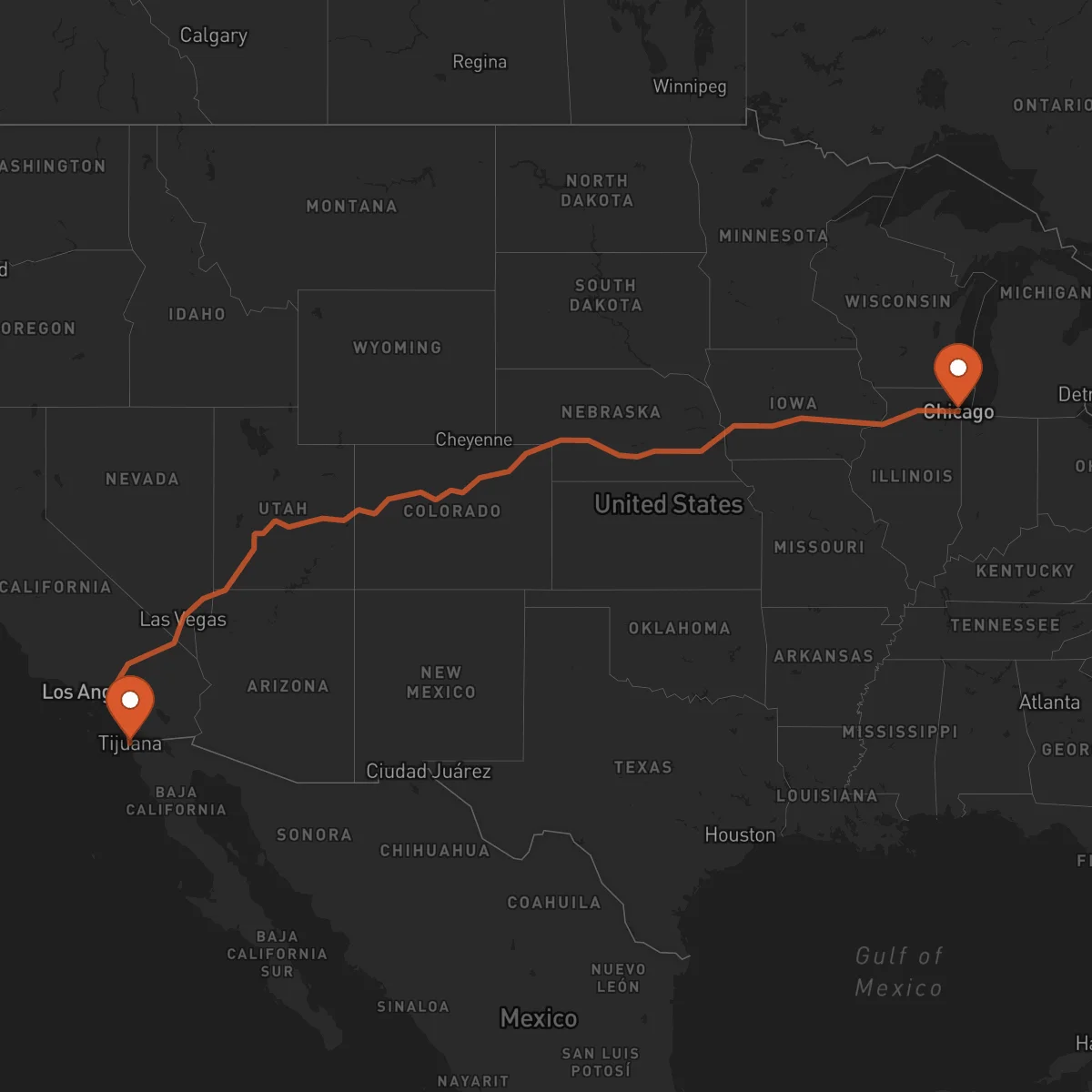
The Tijuana-Chicago corridor represents a vital logistics link between Mexico's northwestern industrial hub and the heart of the United States' Midwest. This 2,785 km cross-border route connects the booming manufacturing and export sector of Baja California with Chicago's strategic position as a continental distribution center. The corridor traverses some of North America's most important industrial regions, facilitating the movement of goods between two major economic zones.
The route primarily utilizes Mexico's Federal Highway 2D and Federal Highway 1D before crossing at the Otay Mesa border crossing, then continues through the United States via Interstate 8, Interstate 10, and Interstate 55. This infrastructure provides reliable connectivity for freight transportation, with multiple options for crossing the border depending on cargo type and urgency. The Otay Mesa crossing is particularly advantageous for commercial traffic due to its modern facilities and dedicated truck lanes.
This corridor serves diverse industries including automotive, electronics, medical devices, and agricultural products. Tijuana's maquiladora industry produces high-value goods requiring just-in-time delivery to Chicago and surrounding manufacturing centers. Control Terrestre facilitates seamless operations on this corridor through our experienced cross-border team, C-TPAT certified carriers, and comprehensive customs coordination services. Our dedicated approach ensures your freight moves efficiently through both Mexican and U.S. customs processes, minimizing delays and maintaining the integrity of your supply chain.
Services for this Route
Available services for the corridor Tijuana - Chicago
 Origin
Tijuana
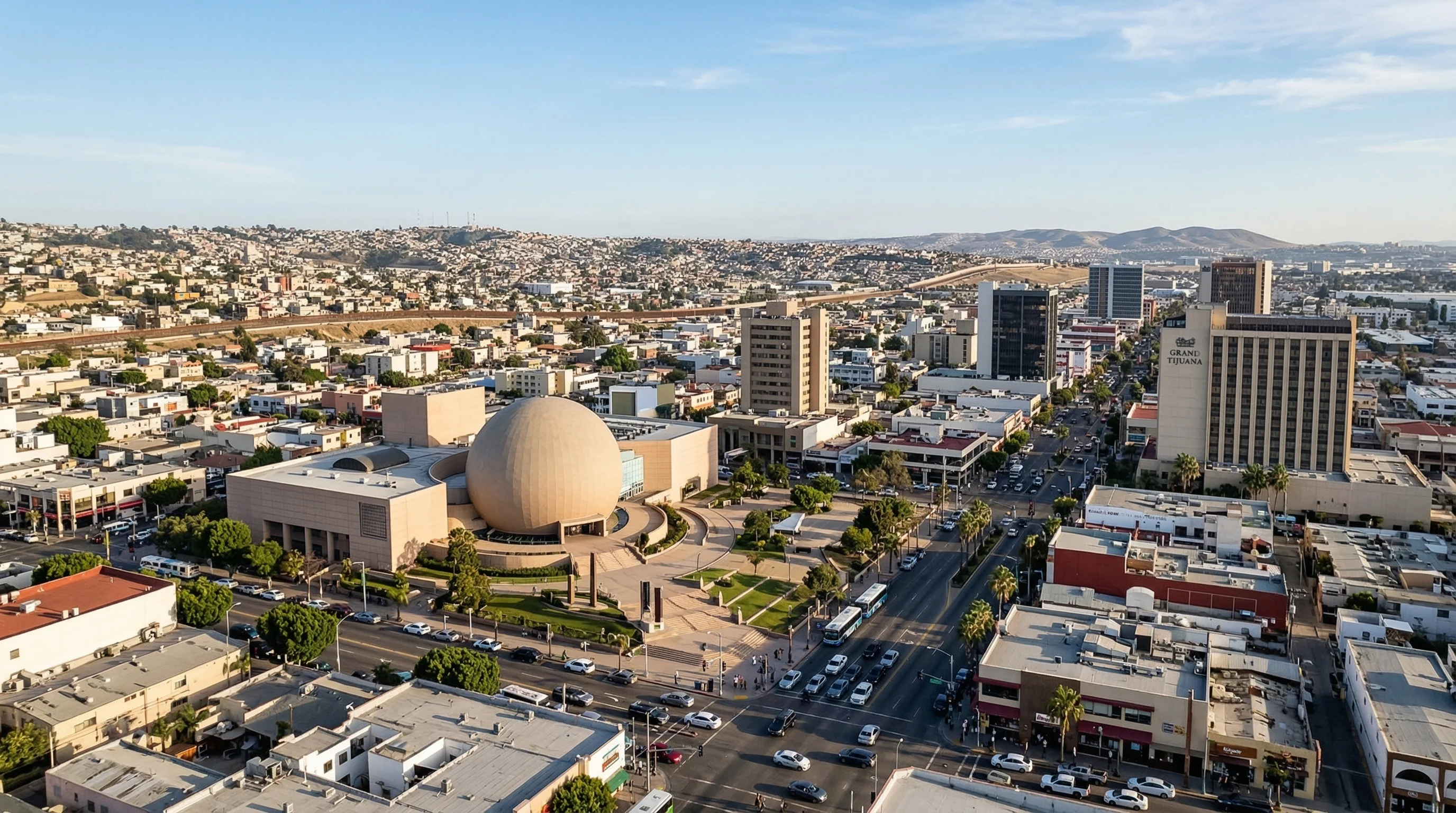
Tijuana stands as a strategic logistics hub on Mexico's northern border, serving as the primary gateway between Baja California and the United States. The city's proximity to San Diego creates a unique binational economic zone that facilitates high-volume commercial exchange. Tijuana's transportation infrastructure includes multiple border crossings, including the Otay Mesa commercial port of entry, which is specifically designed for freight movement and features modern facilities for efficient cargo processing.
The city hosts a diverse industrial base, with the maquiladora sector being particularly prominent. Automotive, aerospace, electronics, and medical device manufacturing are key industries that generate substantial freight volumes. Tijuana's location offers companies access to both the U.S. West Coast market and Mexico's Pacific ports, creating multiple routing options for international shipments. The city's industrial parks are equipped with modern warehousing and distribution facilities, supporting just-in-time manufacturing operations that require reliable transportation services to U.S. destinations.
 Destination
Chicago
Chicago represents a critical logistics hub in the United States, strategically positioned at the intersection of major transportation networks. The city's location in the Midwest provides access to a vast consumer market and serves as a gateway to both the eastern and western United States. Chicago's multimodal transportation infrastructure includes extensive highway networks, rail connections, and proximity to major airports, making it an ideal distribution center for goods arriving from Mexico.
The Chicago metropolitan area hosts diverse industries including manufacturing, food processing, pharmaceuticals, and retail distribution. The region's concentration of warehouses, fulfillment centers, and manufacturing facilities creates substantial demand for cross-border freight services. Chicago's transportation network includes direct highway connections to major U.S. markets, enabling efficient distribution throughout the Midwest and beyond. The city's logistics infrastructure is supported by a skilled workforce and advanced supply chain technology, making it an optimal destination for high-value, time-sensitive freight from Mexico.










