Tijuana to Acapulco
Acapulco → TijuanaFTL freight transportation service between Tijuana and Acapulco. Reliable logistics solutions for your business.
Route Description
Everything you need to know about the corridor Tijuana - Acapulco
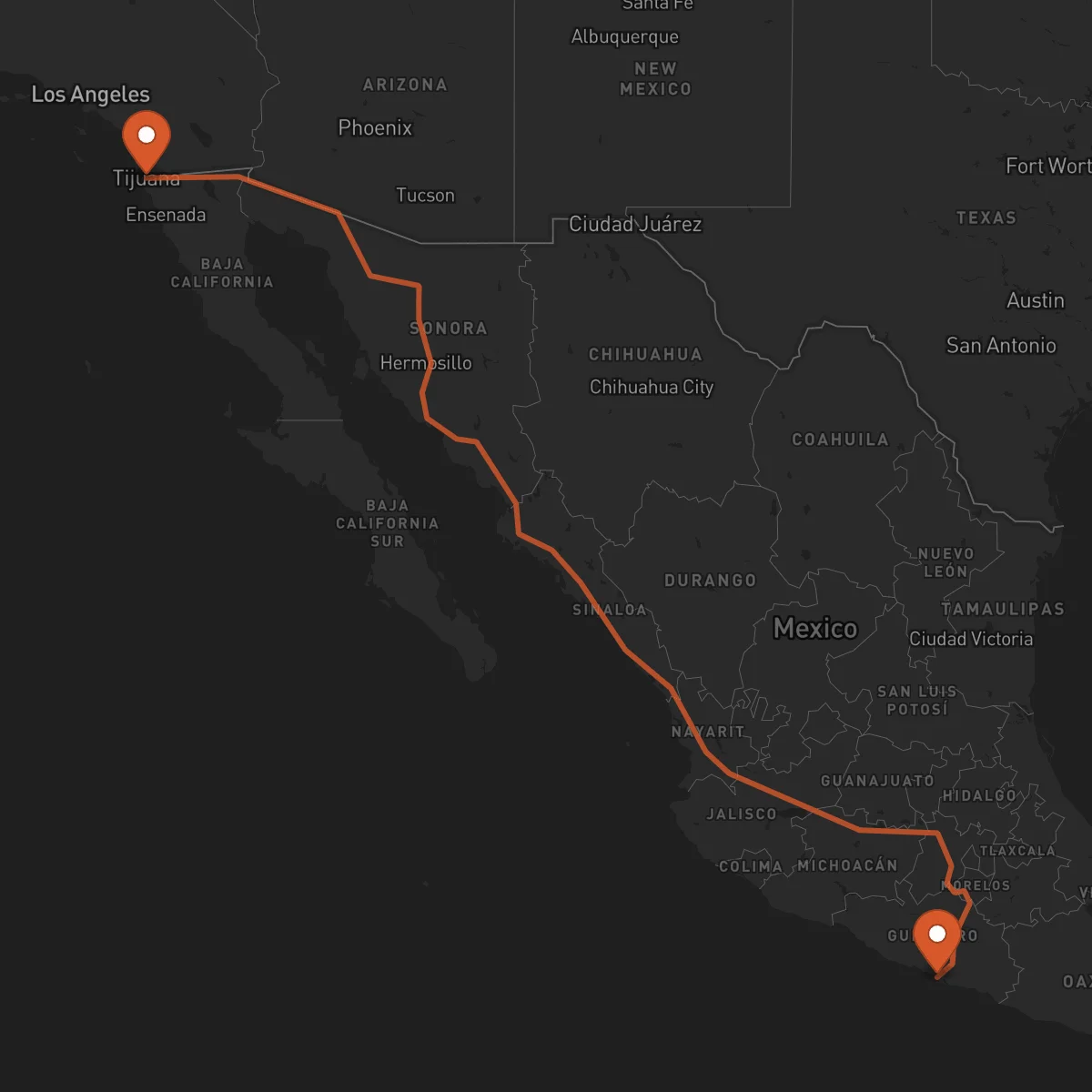
The Tijuana-Acapulco corridor represents a crucial logistics connection between the northern border of Mexico and the Pacific coast of the country. This route spans approximately 2,449 km, connecting one of Mexico's most dynamic industrial hubs with one of its most important tourist destinations. The corridor traverses several states, crossing diverse geographical and economic regions, making it a vital artery for national commerce and trade.
The Tijuana region stands as a leading industrial and commercial center, with a strong presence of maquiladoras, electronics manufacturing, aerospace, and medical device industries. In contrast, Acapulco serves as a key port for imports and exports, with a significant tourism sector that drives demand for various goods and services. This corridor facilitates the movement of industrial products, consumer goods, agricultural products, and materials for the tourism industry.
Transportation infrastructure along this route includes major highways such as the Mexico 1D (Tijuana-Mexicali), Mexico 45 (Hermosillo-Ciudad de México), and Mexico 95 (Mexico City-Acapulco). These roads provide the necessary connectivity for efficient freight transportation, though they also present challenges such as mountainous terrain and varying road conditions. Control Terrestre leverages its extensive network of certified carriers and advanced logistics technology to ensure safe and timely delivery of freight along this important corridor, offering customized solutions for the specific needs of each shipment.
Services for this Route
Available services for the corridor Tijuana - Acapulco
 Origin
Tijuana
Tijuana, located on the US-Mexico border in Baja California, is a strategic logistics hub for international trade. Its proximity to San Diego, California, and its status as one of Mexico's busiest border crossings make it an ideal point for import and export operations. The city hosts a robust industrial sector, including electronics, aerospace, automotive, and medical device manufacturing, as well as a thriving service and commercial sector. Tijuana's transportation infrastructure includes the Tijuana International Airport, the Port of Ensenada for maritime cargo, and an extensive network of highways connecting to the rest of Mexico and the United States. The city also benefits from its participation in the Cross Border Xpress (CBX) facility, facilitating faster cargo movement between both countries.
 Destination
Acapulco, situated on the Pacific coast of Guerrero, is a key logistics point for maritime trade and tourism. The city's port is one of Mexico's most important for commercial fishing and cruise ship arrivals, as well as a gateway for imports and exports to the Pacific region. Acapulco's economy is heavily based on tourism, which drives demand for a wide variety of consumer goods, food products, and construction materials. The city's transportation infrastructure includes the Acapulco International Airport, the Port of Acapulco, and highway connections to Mexico City and other major cities. Despite challenges related to its geography and climate, Acapulco remains a vital link in Mexico's logistics chain, particularly for goods destined for the southern and southeastern regions of the country.










