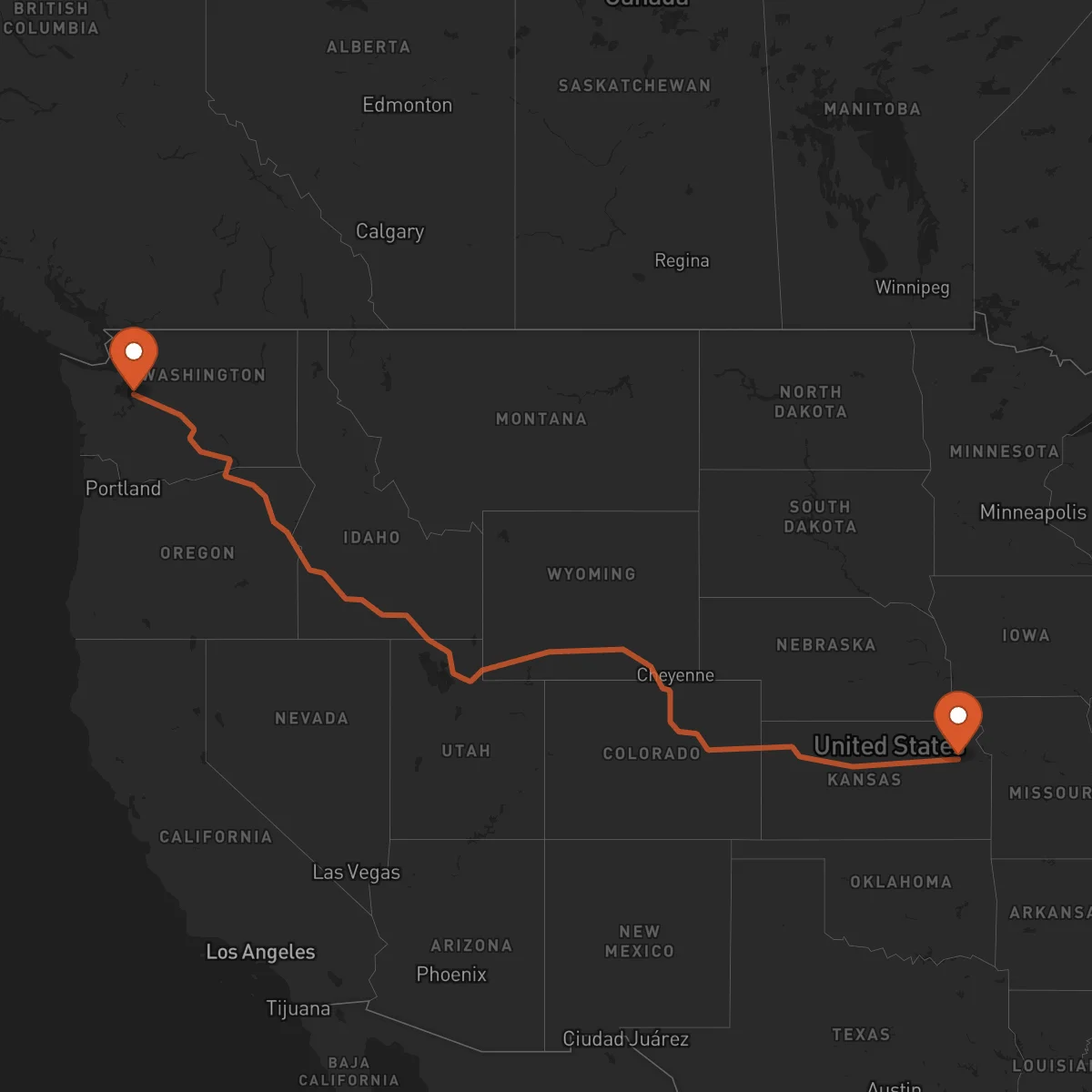
Seattle to Topeka
Topeka → SeattleFTL freight transportation service between Seattle and Topeka. Reliable logistics solutions for your business.
Route Description
Everything you need to know about the corridor Seattle - Topeka
The logistics corridor between Seattle, Washington, and Topeka, Kansas, represents a vital domestic freight route spanning approximately 2,342 kilometers across the United States. This east-west transportation artery connects the Pacific Northwest's major port city with the central United States, facilitating the movement of goods between two economically significant regions. The corridor traverses diverse terrain and multiple states, making it a strategic link for companies operating across the country's vast geography.
The Seattle metropolitan area serves as a major gateway for international trade, with its bustling port handling millions of containers annually from Asia and beyond. Topeka, as the capital of Kansas, anchors a region known for its agricultural production, manufacturing capabilities, and distribution networks. The corridor supports numerous industries including technology, aerospace, agriculture, automotive, and consumer goods, reflecting the complementary economic profiles of both endpoints.
Key transportation infrastructure along this route includes Interstate 90 (I-90) heading east from Seattle through Montana and South Dakota, connecting with I-29 South in Sioux Falls, which then links to I-80 East toward Topeka. This network of interstate highways provides reliable, year-round access for full truckload (FTL) freight movements. Control Terrestre leverages this established infrastructure to provide seamless transportation solutions, ensuring your cargo moves efficiently between these strategic locations with our network of certified carriers and specialized equipment options.
Services for this Route
Available services for the corridor Seattle - Topeka
 Origin
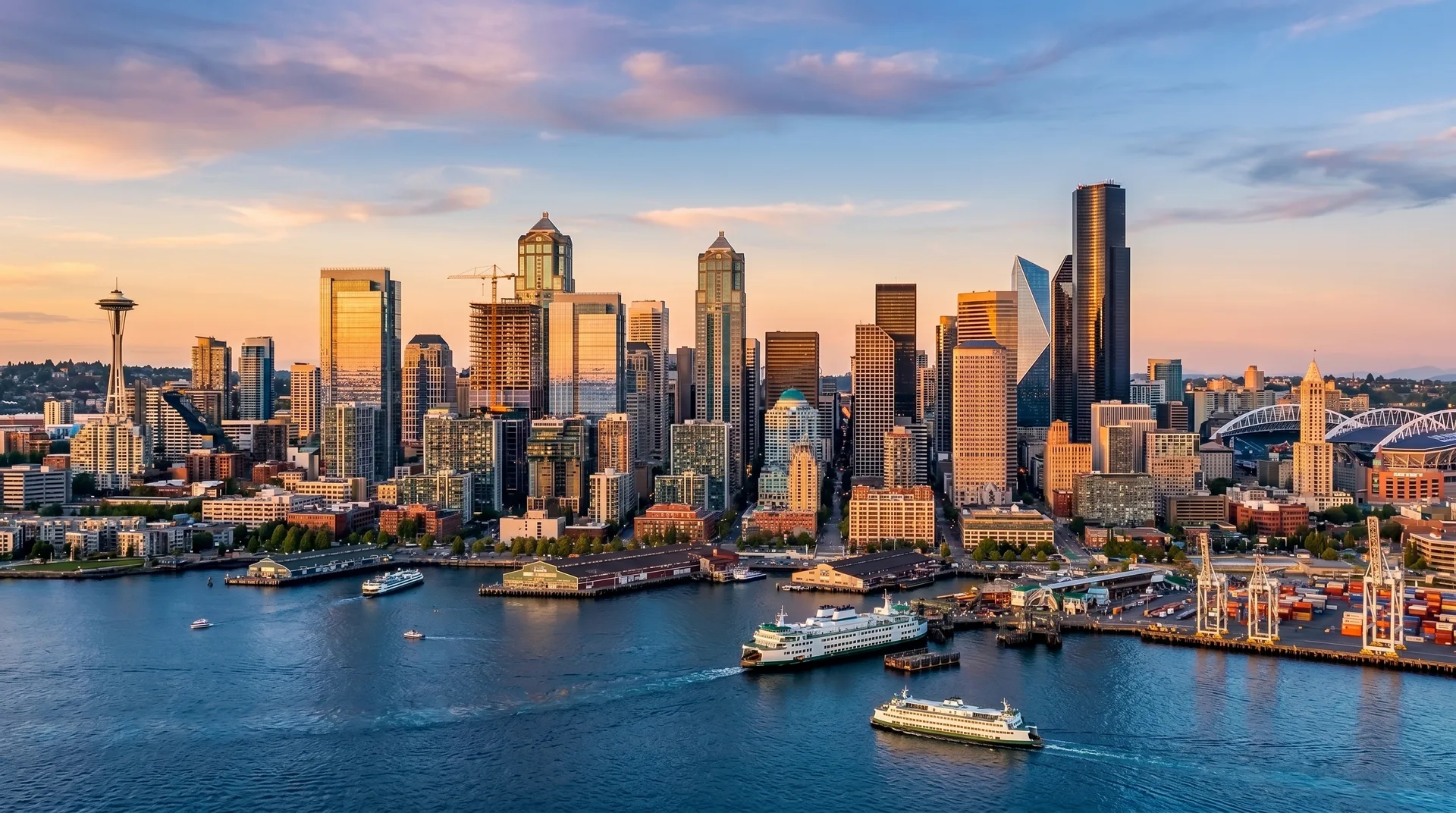
Seattle
Seattle, Washington, stands as a premier logistics hub on the West Coast, strategically positioned for international and domestic freight movements. The city's location provides direct access to the Port of Seattle, one of the largest container ports in North America, facilitating seamless connections between ocean freight and overland transportation. Seattle's robust transportation infrastructure includes multiple interstate highways (I-5, I-90, and I-405), a major international airport (Seattle-Tacoma International), and extensive rail networks operated by BNSF and Union Pacific.
The region's economy thrives on diverse industries including aerospace (Boeing's major presence), technology (Microsoft, Amazon), healthcare, and maritime trade. These sectors generate substantial freight volume, particularly in specialized equipment and time-sensitive cargo. Seattle's proximity to Canada also makes it a key point for cross-border logistics, with efficient connections to Vancouver and other Pacific Northwest markets. The city's infrastructure supports various freight modes, from standard dry van shipments to specialized cargo requiring temperature control or oversized handling capabilities.
 Destination
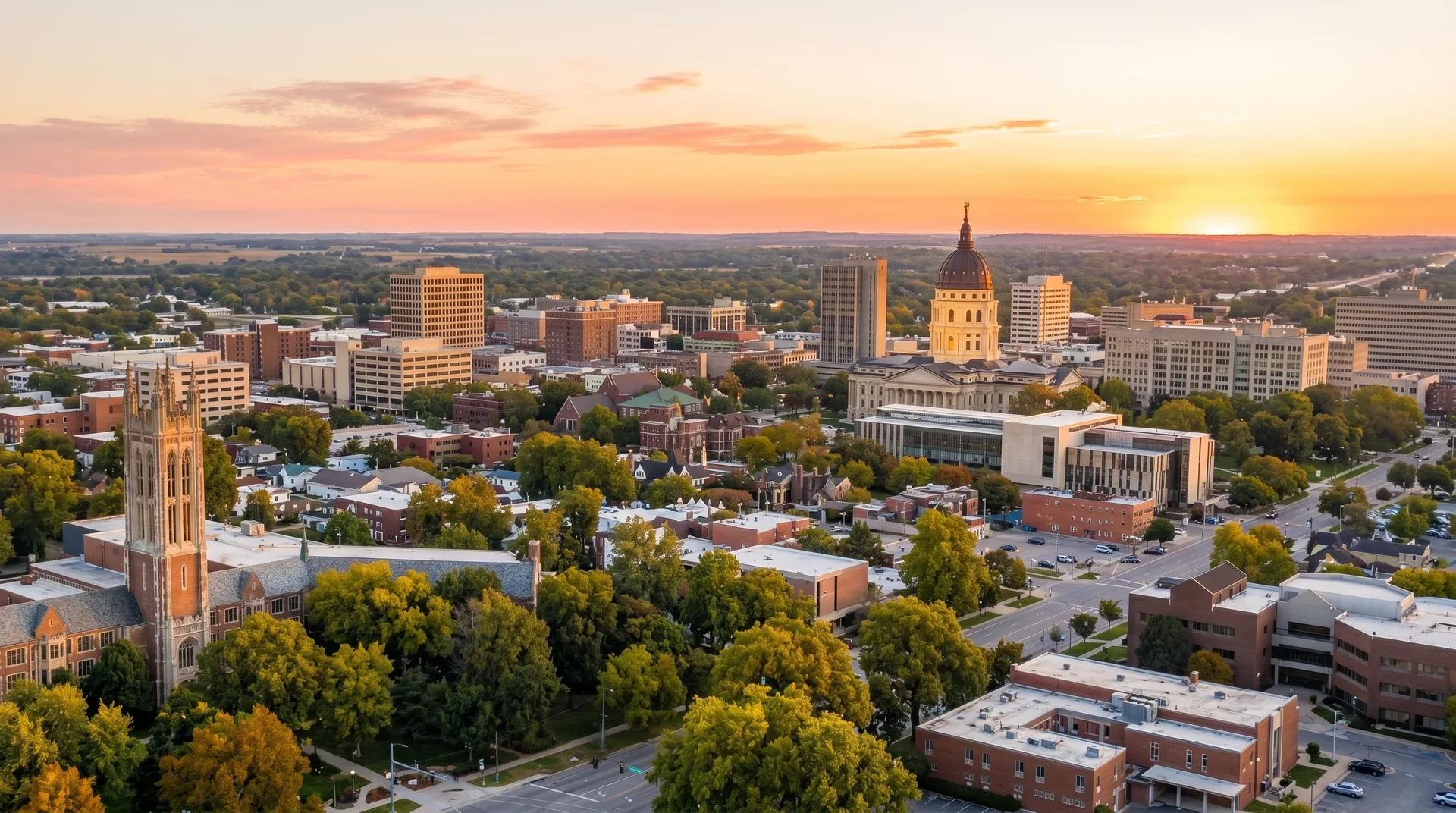
Topeka
Topeka, Kansas, serves as a strategic logistics center in the American Midwest, offering excellent connectivity to the central United States. Located along the I-70 corridor, Topeka provides direct access to major markets including Kansas City, Denver, and Chicago. The city's transportation infrastructure features well-maintained highways, rail connections through Union Pacific, and proximity to several regional airports, creating multiple options for freight distribution.
The Topeka region's economy centers on government services (as the state capital), education, healthcare, and manufacturing. The area is particularly strong in agricultural processing, food production, and industrial manufacturing, generating consistent demand for freight transportation. Topeka's central location makes it an ideal distribution point for companies serving the Midwest, with relatively short transit times to major population centers. The city's logistics ecosystem includes warehousing facilities, cross-docking operations, and a skilled transportation workforce, supporting efficient supply chain operations for businesses of all sizes.










