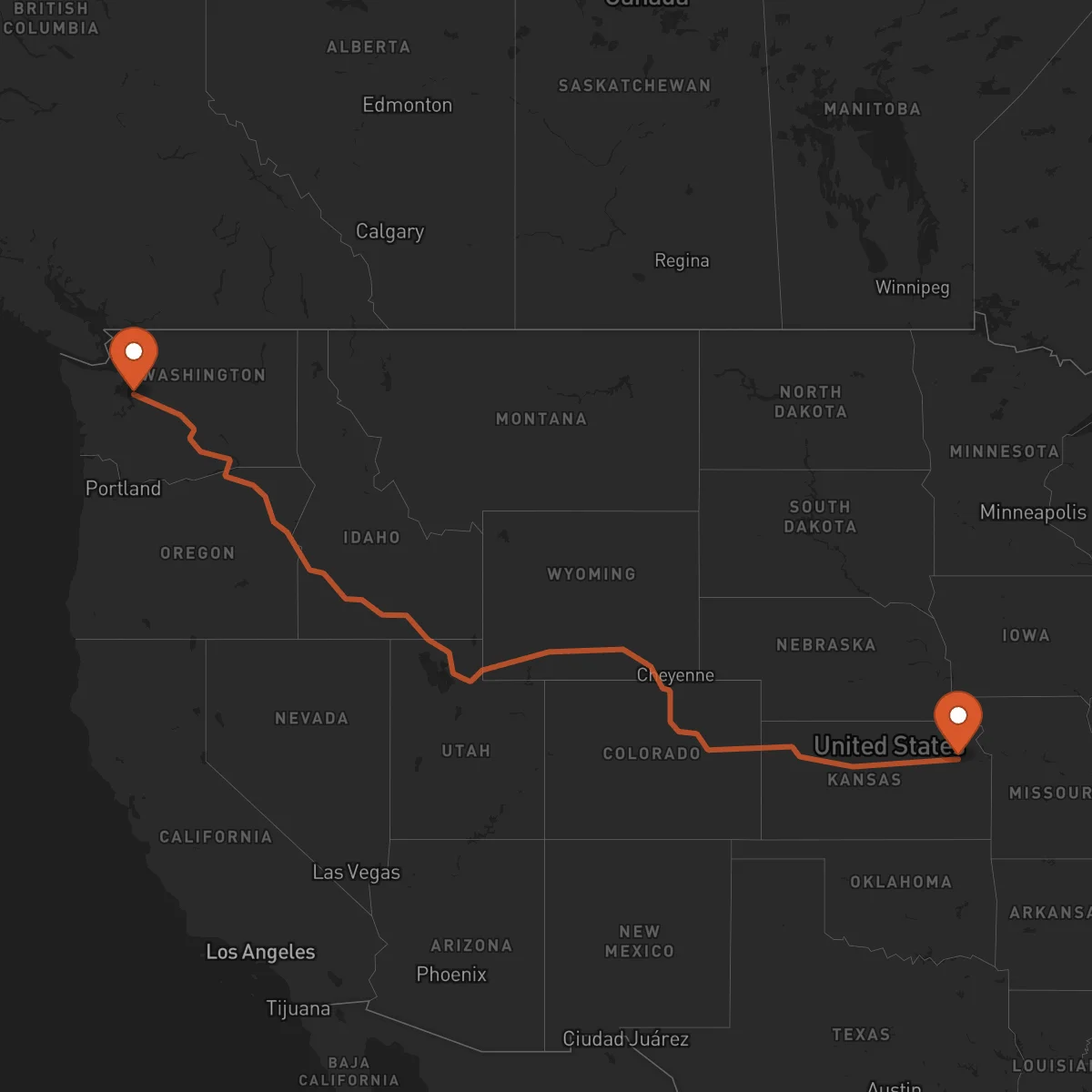
Topeka to Seattle
Seattle → TopekaFTL freight transportation service between Topeka and Seattle. Reliable logistics solutions for your business.
Route Description
Everything you need to know about the corridor Topeka - Seattle
The Topeka-Seattle corridor connects the Midwest with the Pacific Northwest, covering a distance of approximately 2,342 kilometers. This route is a vital artery for freight transportation across the United States, linking Kansas's agricultural and manufacturing heartland with Washington's major port and technology hub. The corridor traverses diverse landscapes and crosses multiple states, making it essential for companies looking to move goods efficiently between these two strategic regions.
The economic significance of this corridor is substantial. Topeka serves as a key distribution point for agricultural products, machinery, and manufactured goods, while Seattle stands as a gateway for international trade through the Port of Seattle and a center for aerospace, technology, and maritime industries. This route facilitates the movement of everything from agricultural commodities and industrial equipment to high-tech products and consumer goods.
Control Terrestre provides comprehensive FTL (Full Truckload) services along this corridor, utilizing our extensive network of certified carriers. Our transportation solutions ensure that your cargo moves seamlessly from origin to destination, whether you're shipping agricultural products from Kansas or technology equipment to Washington. We understand the unique challenges of this long-haul route and offer specialized services including dedicated transportation, expedited freight, and specialized cargo handling to meet your specific needs.
Services for this Route
Available services for the corridor Topeka - Seattle
 Origin
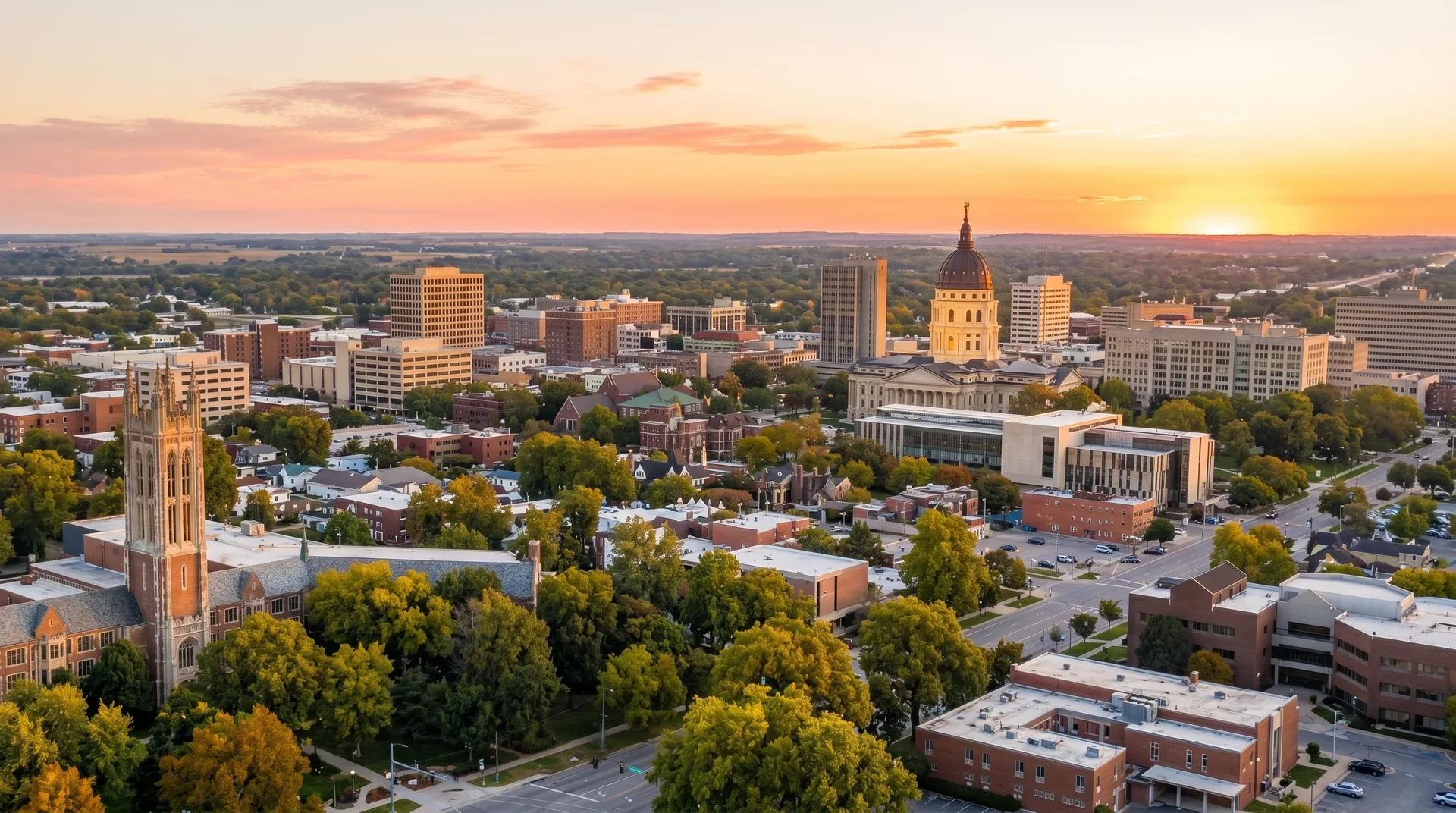
Topeka
Topeka, Kansas, serves as a strategic logistics hub in the Midwest, offering excellent connectivity to major transportation networks. Located along the I-70 corridor, Topeka provides direct access to both east-west and north-south freight routes. The city's central location makes it an ideal distribution point for companies serving the Midwest and beyond. Topeka's transportation infrastructure includes multiple interstate highways, rail connections, and proximity to major airports, facilitating efficient multimodal freight operations.
The city's economy is diverse, with strong sectors in agriculture, manufacturing, and healthcare. Topeka is home to several food processing facilities, agricultural equipment manufacturers, and distribution centers. The region's agricultural heritage means a significant volume of grain, livestock products, and farm equipment moves through the area. Additionally, Topeka's manufacturing sector produces machinery, electronics, and industrial goods that require reliable transportation to both domestic and international markets.
 Destination
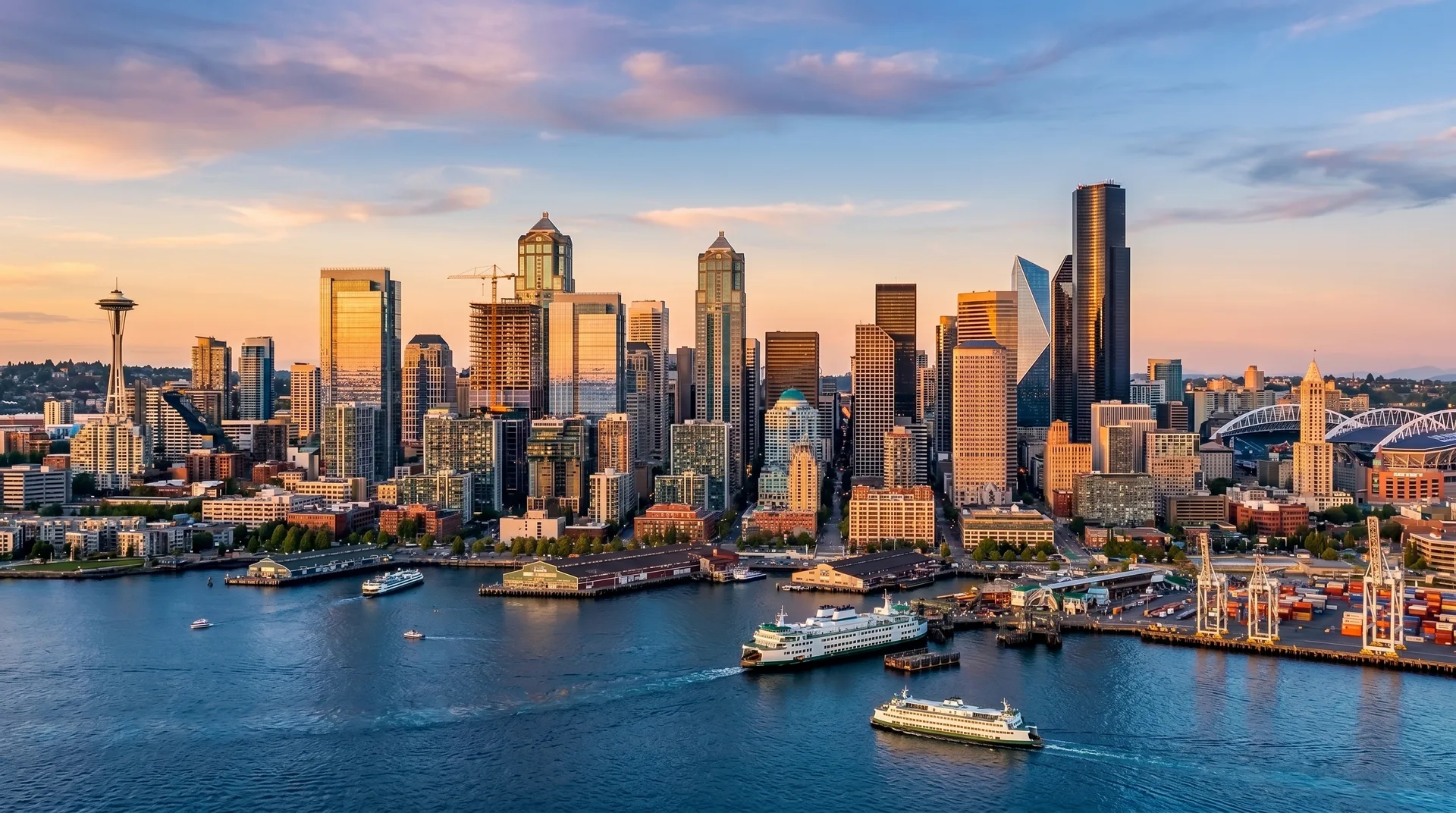
Seattle
Seattle, Washington, stands as a premier logistics gateway on the West Coast, offering unparalleled access to international trade routes. The city's strategic location on Puget Sound provides direct maritime connections to Asia and other global markets through the Port of Seattle, one of the largest container ports in North America. Seattle's transportation infrastructure is world-class, featuring major interstate highways (I-5, I-90), extensive rail networks, and a major international airport, creating multiple options for freight movement.
The Seattle metropolitan area is a powerhouse of economic activity, with dominant sectors in aerospace (Boeing), technology (Microsoft, Amazon), maritime, and advanced manufacturing. The region's port facilities handle millions of containers annually, while its aerospace industry requires specialized transportation for oversized aircraft components. Seattle's technology sector also demands reliable logistics for high-value, time-sensitive shipments. The city's diverse economy creates a constant flow of freight moving in multiple directions, making it a critical endpoint for long-haul transportation services.










