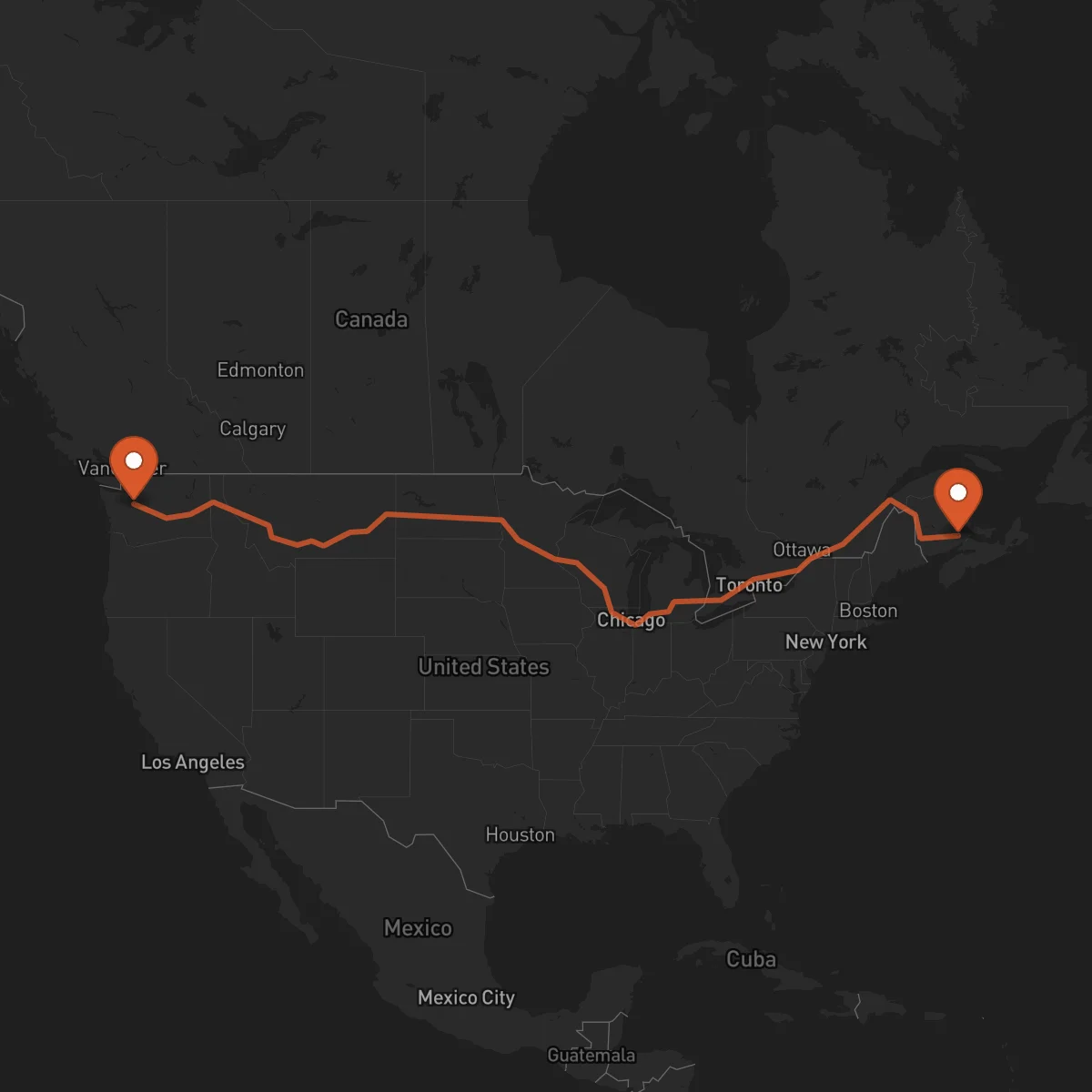
Seattle to Moncton
Moncton → SeattleFTL freight transportation service between Seattle and Moncton. Reliable logistics solutions for your business.
Route Description
Everything you need to know about the corridor Seattle - Moncton
The Seattle-Moncton corridor represents a vital cross-border logistics route connecting the Pacific Northwest with the Atlantic provinces of Canada. This extensive freight corridor spans approximately 4,278 kilometers, traversing diverse terrains and crossing multiple jurisdictions. Control Terrestre specializes in managing full truckload (FTL) freight movements along this strategic route, ensuring seamless transportation between these two major North American hubs.
The corridor's significance stems from its role in facilitating trade between Washington State's major port facilities and New Brunswick's Atlantic ports. Seattle serves as a critical gateway for international trade, while Moncton functions as an important distribution center for Atlantic Canada. This route supports the movement of diverse cargo types, from technology products and agricultural goods to industrial equipment and consumer merchandise.
Key transportation infrastructure includes major highways such as I-90 and I-94 across the United States, transitioning to the Trans-Canada Highway in Canada. The corridor crosses multiple border points, with the primary crossing typically occurring at major ports of entry where Control Terrestre's C-TPAT and FAST-certified carriers ensure efficient customs clearance. Our specialized knowledge of cross-border regulations and documentation requirements helps minimize delays and ensures compliance throughout the journey.
Control Terrestre provides comprehensive FTL services along this corridor, offering dedicated equipment options including dry vans, refrigerated units, and specialized trailers for oversized or hazardous cargo. Our network of certified carriers and strategic partnerships enable us to provide reliable door-to-door service, real-time tracking, and expert handling of all customs procedures, making us the preferred partner for companies requiring dependable freight transportation between Seattle and Moncton.
Services for this Route
Available services for the corridor Seattle - Moncton
 Origin
Seattle
Seattle, Washington serves as a strategic logistics hub on the West Coast, offering exceptional connectivity through its comprehensive transportation infrastructure. The city's location provides direct access to the Port of Seattle, one of the largest container ports in North America, facilitating efficient international trade. Seattle's robust highway network, including I-5, I-90, and I-405, ensures seamless connections to major domestic markets and cross-border routes.
The region's economy is driven by diverse industries including technology, aerospace, agriculture, and manufacturing. Major employers such as Boeing, Microsoft, and Amazon create significant freight transportation demands. Seattle's proximity to major agricultural regions in Washington State also contributes to substantial freight volumes, particularly in fresh produce and processed foods. The city's advanced logistics infrastructure, including multiple intermodal facilities and warehousing centers, positions it as an ideal origin point for cross-border freight movements.
 Destination
Moncton
Moncton, New Brunswick represents a strategic logistics center in Atlantic Canada, offering excellent connectivity and distribution capabilities. Located in the Maritimes region, Moncton serves as a crucial transportation hub with access to major highways including the Trans-Canada Highway (Route 2) and Route 15. The city's strategic position allows for efficient distribution throughout the Atlantic provinces and provides connections to both U.S. and Canadian markets.
The local economy encompasses diverse sectors including transportation, distribution, healthcare, and education. Moncton's status as a logistics center is reinforced by its international airport, extensive rail connections, and proximity to the Port of Halifax. The region's industrial base includes manufacturing, food processing, and technology sectors, all requiring reliable freight transportation services. Moncton's role as a distribution center for Atlantic Canada makes it a critical destination for cross-border freight movements from the United States.










