Moncton to Seattle
Seattle → MonctonFTL freight transportation service between Moncton and Seattle. Reliable logistics solutions for your business.
Route Description
Everything you need to know about the corridor Moncton - Seattle
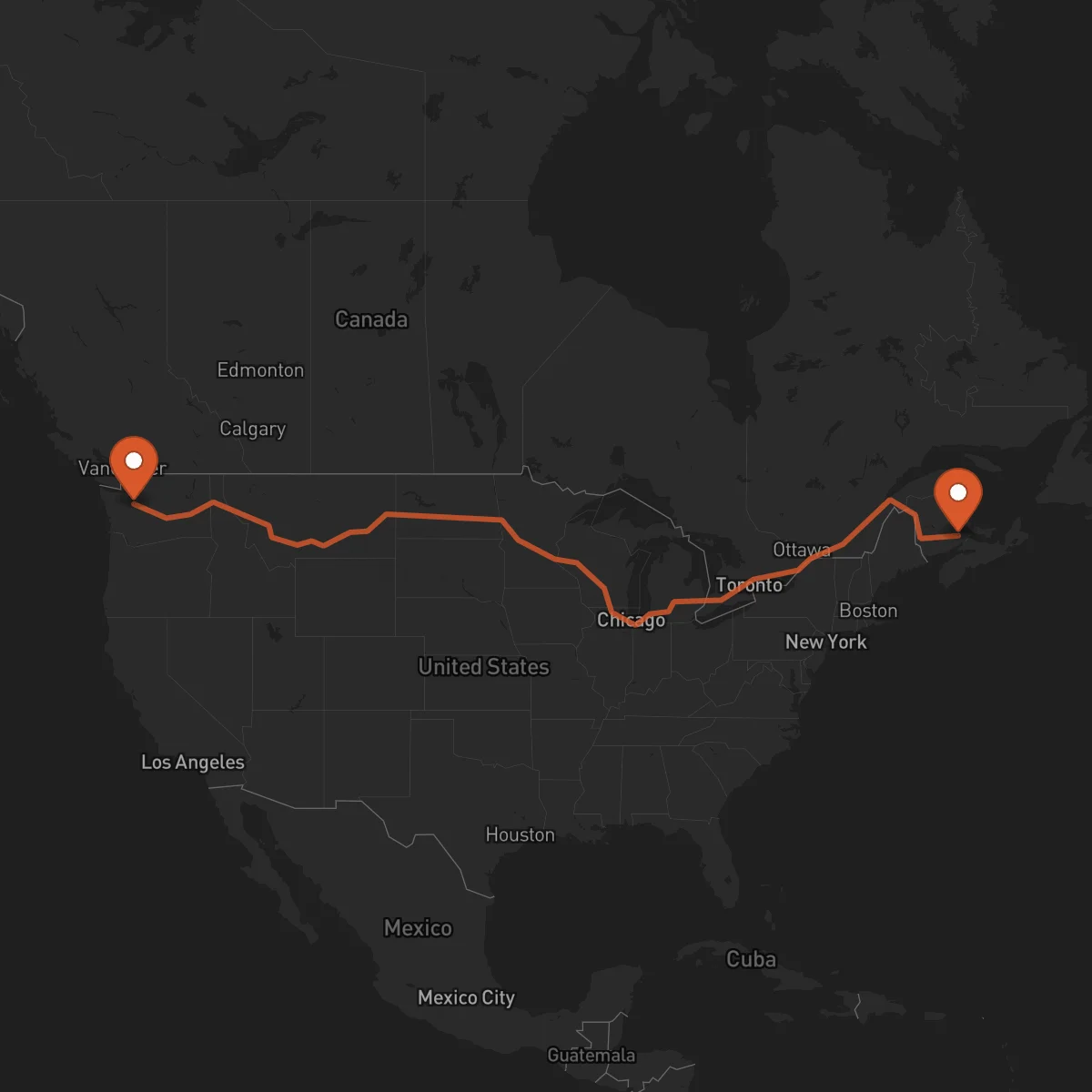
The Moncton to Seattle logistics corridor represents a vital cross-border connection between Atlantic Canada and the Pacific Northwest, spanning approximately 4,278 kilometers through diverse terrain and multiple jurisdictions. This strategic route links New Brunswick's transportation hub with Washington State's major port city, facilitating the movement of goods between the Atlantic and Pacific trade networks. The corridor traverses the Canadian provinces of New Brunswick, Quebec, and Ontario before crossing into the United States through Michigan, Wisconsin, Minnesota, North Dakota, Montana, and Idaho before reaching Washington State.
The economic significance of this corridor extends beyond simple transportation, serving as a critical link for industries requiring access to both Atlantic and Pacific markets. Major industries utilizing this route include automotive parts manufacturing, agricultural products, forest products, and industrial equipment. The corridor supports just-in-time manufacturing supply chains and e-commerce distribution networks that require reliable cross-border transportation solutions.
Key transportation infrastructure along this route includes the Trans-Canada Highway (Highway 2) in New Brunswick, the Trans-Canada Highway (Highway 17) through Ontario and Quebec, and Interstate 94 and Interstate 90 in the United States. The primary border crossing at Sault Ste. Marie (Michigan-Ontario) handles significant commercial traffic, while alternative crossings at Detroit-Windsor and Port Huron provide flexibility for shippers. Control Terrestre's expertise in cross-border operations ensures seamless customs clearance and compliance with both Canadian and US regulations, minimizing delays and optimizing transit times for our clients' freight shipments.
Services for this Route
Available services for the corridor Moncton - Seattle
 Origin
Moncton
Moncton serves as a strategic logistics hub in Atlantic Canada, positioned at the geographic center of the Maritimes region. The city's location at the intersection of major transportation routes, including the Trans-Canada Highway and CN Rail's mainline, makes it an ideal origin point for cross-country freight movements. Moncton's transportation infrastructure includes the Greater Moncton Roméo LeBlanc International Airport, the Moncton Terminal intermodal facility, and extensive highway connections to other Atlantic Canadian cities.
The region's economy is diverse, with strong presence in information technology, call centers, and transportation services. Key industries include forestry and wood products, food processing, and manufacturing sectors that require reliable access to both domestic and international markets. The Port of Halifax's proximity (approximately 260 km) provides additional maritime shipping options for businesses in the Moncton area, creating a comprehensive logistics ecosystem that supports efficient freight movements to Western Canada and the United States.
 Destination
Seattle
Seattle stands as a major logistics and economic center on the West Coast, strategically positioned to serve as a gateway to Asian markets through the Port of Seattle and Port of Tacoma. The city's location on Puget Sound provides direct access to international maritime shipping routes, while its extensive transportation infrastructure supports efficient distribution throughout the Pacific Northwest and beyond. Seattle's transportation network includes the Port of Seattle, Seattle-Tacoma International Airport, and major interstate highways (I-5, I-90, and I-405).
The Seattle metropolitan area hosts a diverse range of industries, including aerospace (Boeing), technology (Microsoft, Amazon), maritime shipping, and advanced manufacturing. The region's strong presence in e-commerce and distribution centers creates significant demand for reliable freight transportation services. Seattle's proximity to major West Coast ports and its role as a distribution hub for the Pacific Northwest make it a critical destination for cross-country freight movements from Eastern Canada, supporting supply chains that require efficient access to both North American and Asian markets.










