Seattle to Charlotte
Charlotte → SeattleFTL freight transportation service between Seattle and Charlotte. Reliable logistics solutions for your business.
Route Description
Everything you need to know about the corridor Seattle - Charlotte
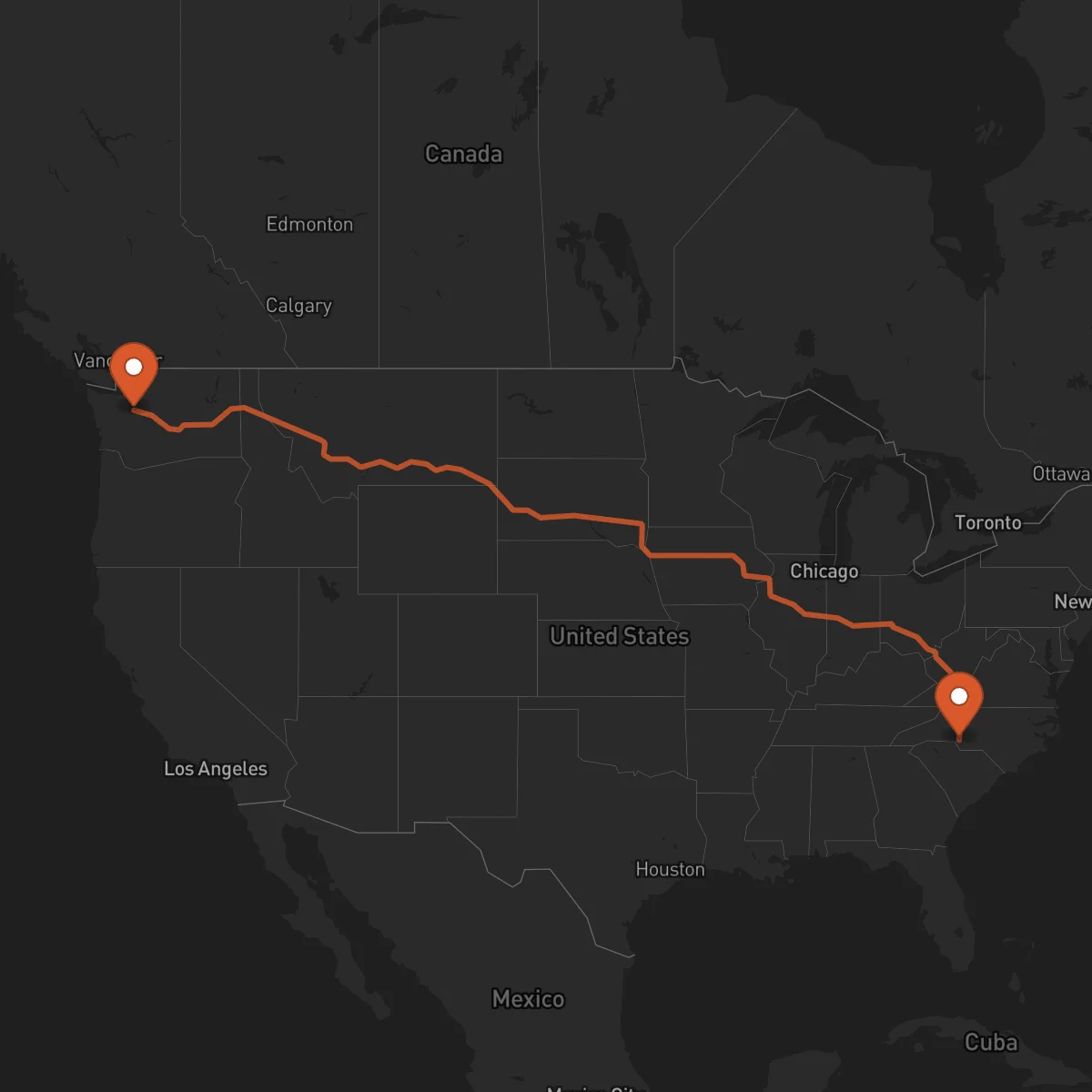
The Seattle to Charlotte corridor represents one of the most important domestic freight transportation routes in the United States, connecting the Pacific Northwest with the Southeast over approximately 3,671 kilometers. This transcontinental route links two major economic hubs, facilitating the movement of goods between Washington State's technology and manufacturing centers and North Carolina's growing industrial and financial sectors. The corridor traverses diverse landscapes and crosses multiple state lines, requiring expert logistics management to ensure timely and efficient deliveries.
The economic significance of this route cannot be overstated. Seattle serves as a gateway for international trade, with its port facilities and proximity to Asia-Pacific markets, while Charlotte has emerged as a major financial center and manufacturing hub. This creates a complementary economic relationship where technology products, aerospace components, and agricultural goods flow eastward, while automotive parts, textiles, and financial services equipment move westward. The route supports critical supply chains for industries including aerospace, technology, automotive, and advanced manufacturing.
Control Terrestre facilitates seamless operations on this corridor through our network of certified transportation providers. We understand the complexities of managing full truckload shipments across such vast distances, including weather considerations, regulatory compliance across multiple states, and the need for reliable scheduling. Our team coordinates every aspect of the journey, ensuring that your cargo moves efficiently from origin to destination with real-time tracking and dedicated support throughout the transit process.
Services for this Route
Available services for the corridor Seattle - Charlotte
 Origin
Seattle
Seattle, Washington stands as a strategic logistics hub on the West Coast, offering unparalleled access to international trade routes and domestic markets. The city's location provides direct connections to major ports, including the Port of Seattle, facilitating seamless integration between ocean freight and ground transportation. Seattle's robust infrastructure includes multiple interstate highways, extensive rail networks, and proximity to major airports, creating multiple transportation options for freight movement. The region's logistics ecosystem is further enhanced by its proximity to major technology centers and manufacturing facilities, making it an ideal origin point for diverse cargo types.
The Seattle area is home to major industries including aerospace (Boeing), technology (Microsoft, Amazon), and advanced manufacturing. These sectors generate substantial freight volumes requiring specialized transportation solutions. The region's economic strength is supported by a highly skilled workforce and a culture of innovation in logistics and supply chain management. Seattle's infrastructure includes modern warehousing facilities, advanced distribution centers, and specialized handling capabilities for high-tech and sensitive cargo, making it well-equipped to support complex logistics operations.
 Destination
Charlotte
Charlotte, North Carolina has established itself as a strategic logistics center in the Southeastern United States, offering excellent connectivity to major markets along the East Coast and beyond. The city's central location in the Piedmont region provides efficient access to both northern and southern markets, while its growing infrastructure supports expanding freight volumes. Charlotte benefits from its proximity to major interstate highways, including I-85 and I-77, which facilitate smooth transportation flows. The city's international airport and developing intermodal facilities further enhance its logistics capabilities, making it an ideal destination for diverse freight types.
The Charlotte metropolitan area hosts a diverse economic base with strong presence in banking and finance, automotive manufacturing, energy, and healthcare. The region is home to major corporate headquarters and has attracted significant manufacturing investments, particularly in the automotive and advanced materials sectors. Charlotte's logistics infrastructure includes modern distribution centers, specialized handling facilities, and a growing network of third-party logistics providers. The city's strategic location allows for efficient distribution throughout the Eastern United States, with access to major population centers within a day's drive.










