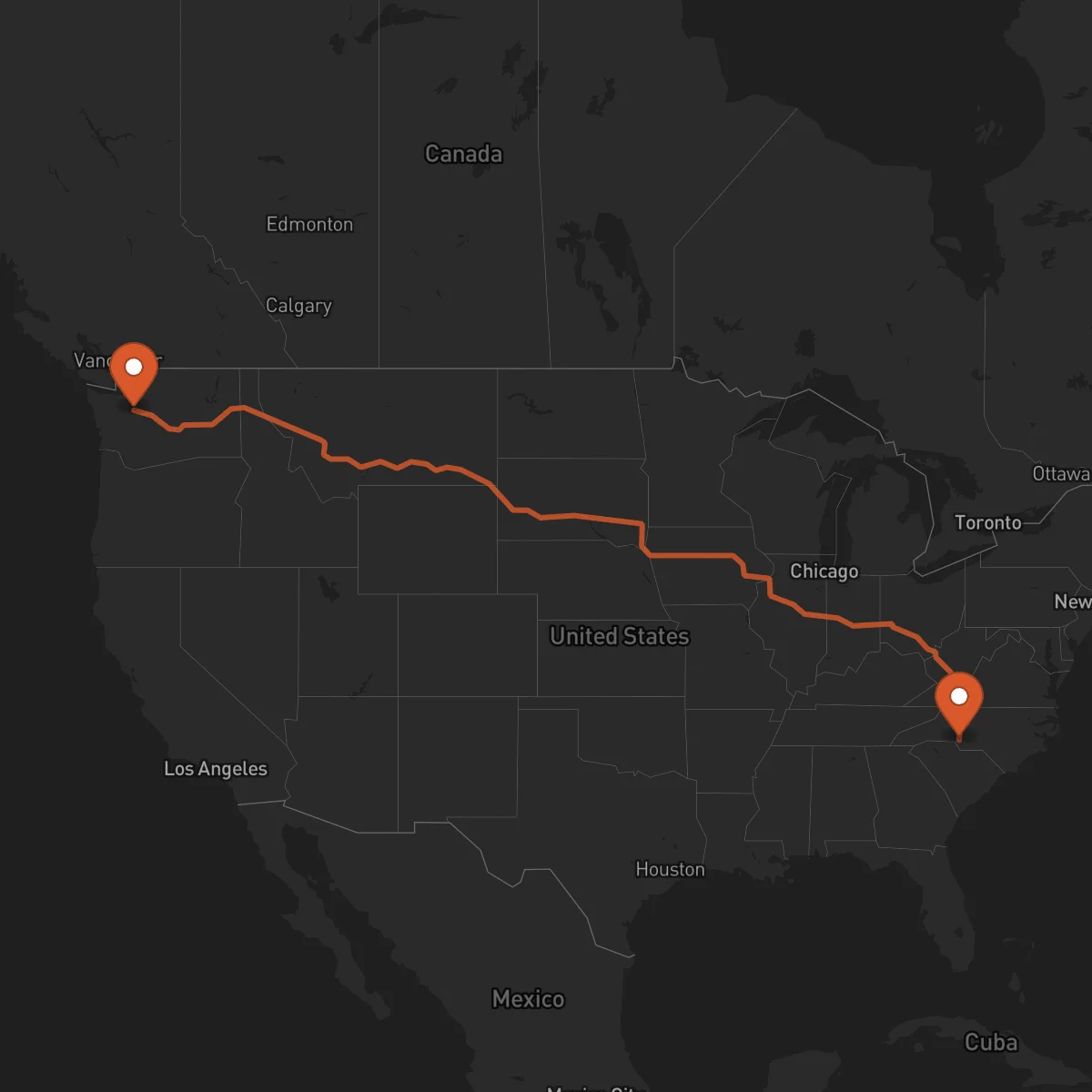
Charlotte to Seattle
Seattle → CharlotteFTL freight transportation service between Charlotte and Seattle. Reliable logistics solutions for your business.
Route Description
Everything you need to know about the corridor Charlotte - Seattle
The corridor connecting Charlotte, North Carolina, to Seattle, Washington, spans approximately 3,671 kilometers across the United States, representing a vital domestic logistics route. This transcontinental connection links the Southeast's manufacturing and distribution hub with the Pacific Northwest's major port and technology center. The route traverses diverse terrain and crosses multiple time zones, making it essential for companies requiring reliable full truckload (FTL) transportation between these key economic regions.
The economic significance of this corridor is substantial, facilitating the movement of goods between Charlotte's robust financial services, energy, and automotive manufacturing sectors and Seattle's technology, aerospace, and maritime industries. Major corporations in both cities rely on efficient freight transportation to maintain their supply chains, with Boeing's manufacturing operations in Seattle requiring components from across the country, while Charlotte's growing e-commerce and distribution centers need consistent inbound and outbound freight flow.
Key infrastructure along this route includes major interstate highways such as I-85, I-80, and I-90, providing direct access through major logistics hubs including Atlanta, Indianapolis, Chicago, and Minneapolis. Control Terrestre leverages this established infrastructure network to provide seamless FTL transportation services, ensuring cargo moves efficiently from origin to destination. Our strategic partnerships with certified carriers and our expertise in managing long-haul domestic routes make us the ideal partner for companies requiring dependable freight movement between Charlotte and Seattle.
Services for this Route
Available services for the corridor Charlotte - Seattle
 Origin
Charlotte
Charlotte, North Carolina, serves as a strategic logistics hub in the southeastern United States, offering excellent connectivity through multiple transportation modes. The city's central location in the region, combined with its proximity to major ports in Charleston and Savannah, makes it an ideal origin point for freight distribution. Charlotte's international airport and extensive highway network, including I-85 and I-77, provide efficient access to both domestic and international markets, supporting the city's role as a major distribution center.
The region's economy is anchored by strong financial services, energy, and manufacturing sectors. Charlotte is home to the second-largest financial center in the United States, hosting major banking institutions and insurance companies. The area also features significant automotive manufacturing, with plants operated by companies like Daimler Trucks and electric vehicle manufacturers. These industries generate substantial freight volume, requiring reliable full truckload transportation to move raw materials, components, and finished products throughout the supply chain.
 Destination
Seattle
Seattle, Washington, stands as a critical logistics gateway on the Pacific Coast, offering unique advantages for freight transportation and international trade. The city's strategic location provides direct access to the Port of Seattle, one of the largest container ports in North America, and its proximity to major Asian markets makes it an essential node in global supply chains. Seattle's comprehensive transportation infrastructure includes I-5, I-90, and I-405, connecting the city to both coastal and inland destinations efficiently.
The Seattle metropolitan area is dominated by technology, aerospace, and maritime industries, with companies like Amazon, Microsoft, and Boeing driving economic activity. Boeing's massive manufacturing operations require consistent delivery of components and materials from across the country, while the region's e-commerce boom has created substantial demand for reliable freight transportation. The city's growing population and urban development also contribute to increased logistics activity, making efficient FTL services essential for businesses operating in this dynamic market.










