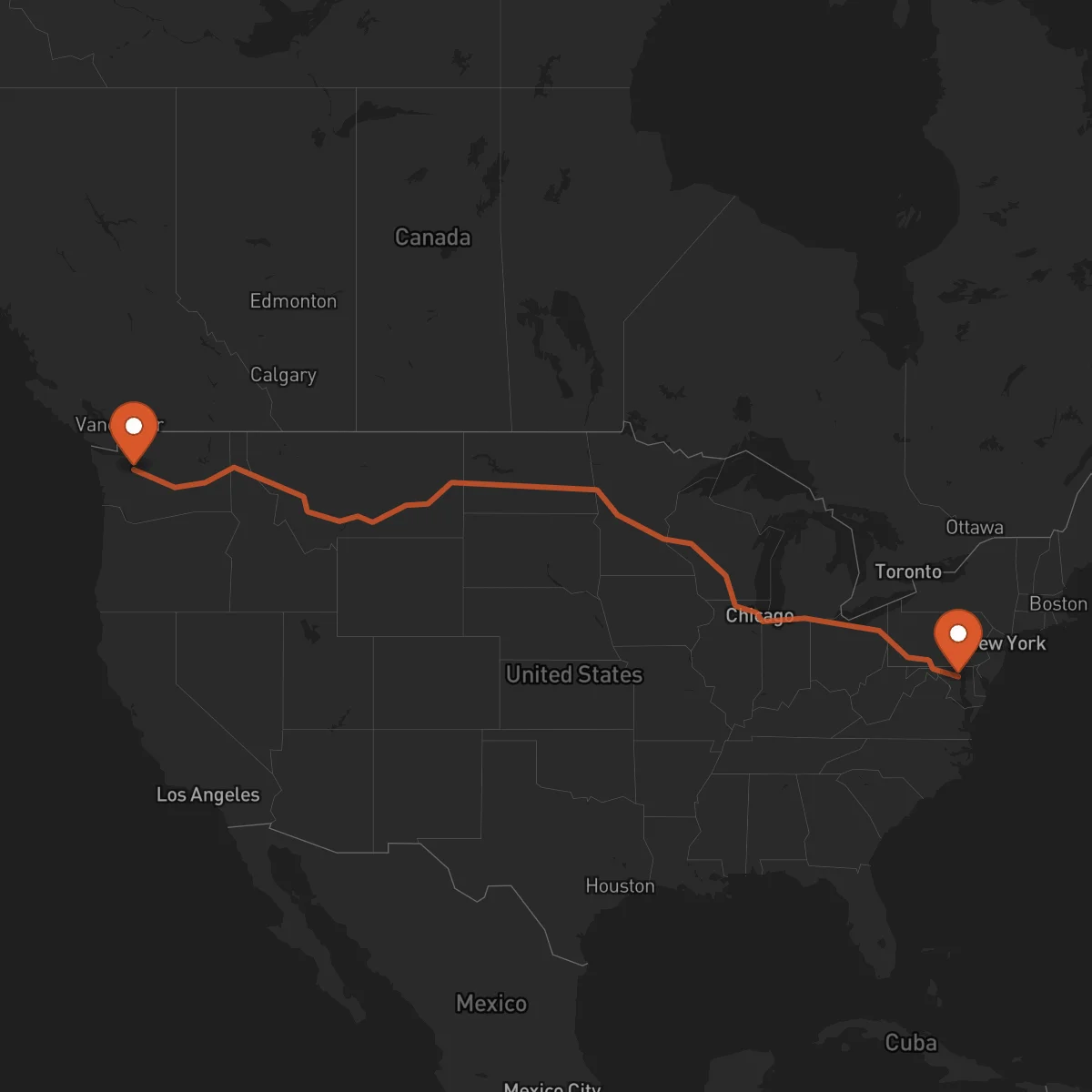
Seattle to Baltimore
Baltimore → SeattleFTL freight transportation service between Seattle and Baltimore. Reliable logistics solutions for your business.
Route Description
Everything you need to know about the corridor Seattle - Baltimore
The Seattle to Baltimore corridor represents one of the most important logistics routes in the United States, connecting the Pacific Northwest with the East Coast through a distance of approximately 3747 km. This transcontinental route is vital for the national supply chain, enabling the efficient movement of goods between two major economic hubs. The corridor traverses multiple states and crosses diverse geographical regions, making it a complex but essential transportation artery for American commerce.
The economic significance of this route cannot be overstated. Seattle serves as a gateway to Asian markets and is a major technology and manufacturing center, while Baltimore functions as a critical East Coast port and distribution hub. The corridor facilitates trade between these two dynamic regions, supporting industries ranging from aerospace and technology to automotive and pharmaceuticals. This route enables just-in-time inventory management and supports the growing e-commerce sector by providing reliable transportation across the country.
Control Terrestre specializes in full truckload (FTL) services along this corridor, offering dedicated transportation solutions that ensure cargo moves efficiently from origin to destination. Our network of certified carriers provides the capacity and reliability needed for time-sensitive shipments, while our expertise in cross-country logistics helps optimize routes and minimize transit times. We understand the unique challenges of this transcontinental route and provide the support necessary to keep your supply chain moving smoothly.
Services for this Route
Available services for the corridor Seattle - Baltimore
 Origin
Seattle
Seattle, Washington serves as a strategic logistics hub on the West Coast, offering unparalleled access to Pacific trade routes and Asian markets. The city's location provides direct connections to major interstate highways, including I-90 and I-5, facilitating efficient ground transportation across the country. Seattle's Port is one of the busiest in the United States, handling millions of containers annually and serving as a critical gateway for international trade. The city's robust transportation infrastructure includes extensive rail networks, international airports, and a well-developed road system that supports seamless cargo movement.
The Seattle metropolitan area is home to major technology companies, aerospace manufacturers, and a thriving maritime industry. Key economic sectors include software development, cloud computing, commercial aircraft production, and advanced manufacturing. Companies like Boeing, Microsoft, and Amazon have established significant operations in the region, creating substantial freight transportation demand. The area's strong agricultural sector, particularly in the surrounding Pacific Northwest, also contributes to the volume of goods moving through Seattle's logistics network.
 Destination
Baltimore
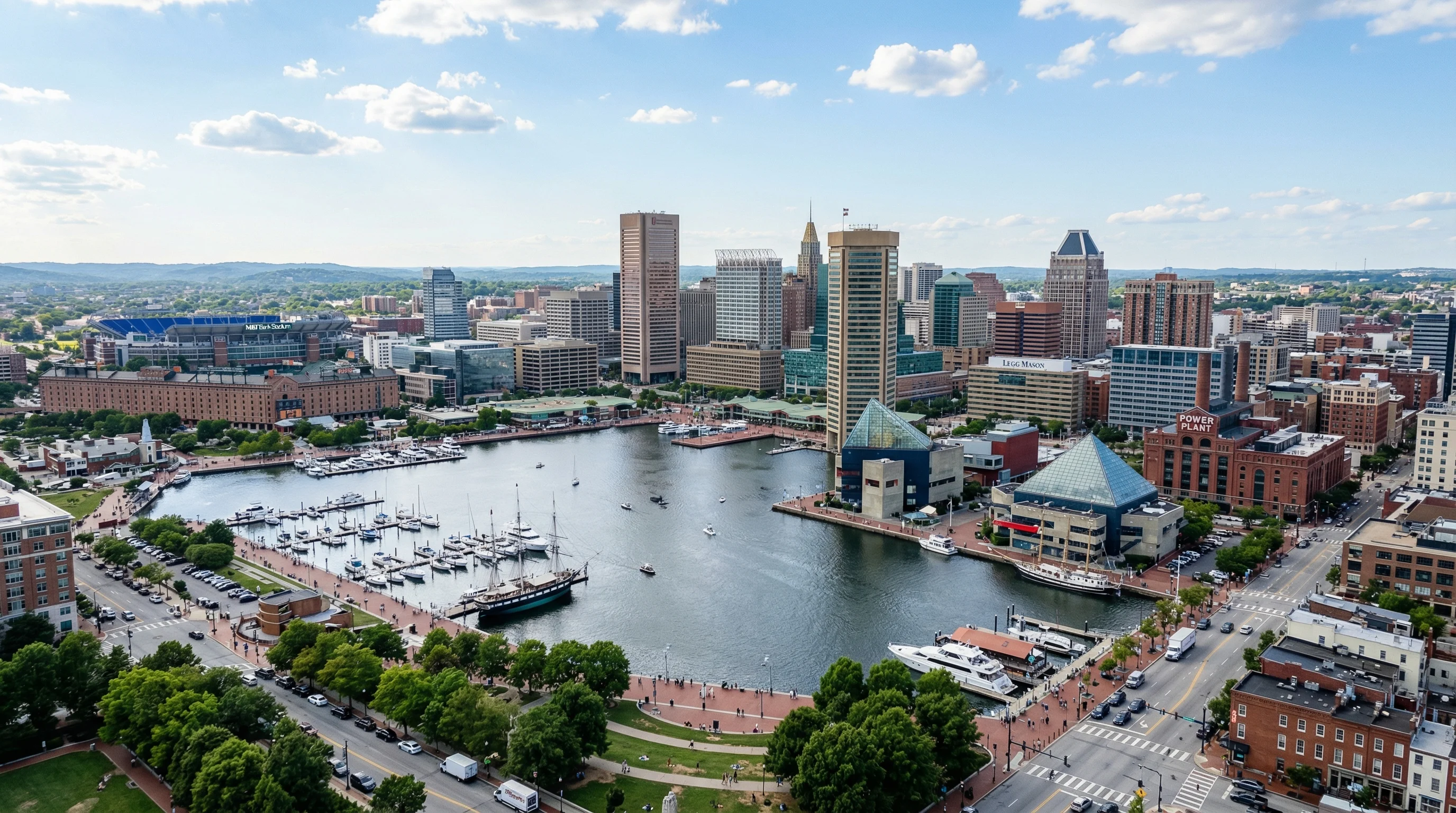
Baltimore, Maryland stands as a strategic logistics center on the East Coast, offering exceptional connectivity to major metropolitan areas and international markets. The city's Port of Baltimore is one of the most efficient container ports in the nation, with direct access to the Atlantic Ocean and extensive rail connections to inland destinations. Baltimore's location provides proximity to Washington D.C., Philadelphia, and New York, making it an ideal distribution point for the Mid-Atlantic region. The city's transportation infrastructure includes major highways such as I-95 and I-70, facilitating smooth cargo movement throughout the eastern United States.
The Baltimore metropolitan area hosts a diverse range of industries, including healthcare, biotechnology, financial services, and advanced manufacturing. The region is home to major research institutions and government agencies, creating significant demand for specialized freight services. Baltimore's automotive industry, particularly its vehicle processing and export operations, represents a substantial portion of the port's cargo volume. The city's strategic location and comprehensive logistics capabilities make it an essential endpoint for freight moving from the West Coast and beyond.










