Saltillo to Liberia
Liberia → SaltilloFTL freight transportation service between Saltillo and Liberia. Reliable logistics solutions for your business.
Route Description
Everything you need to know about the corridor Saltillo - Liberia
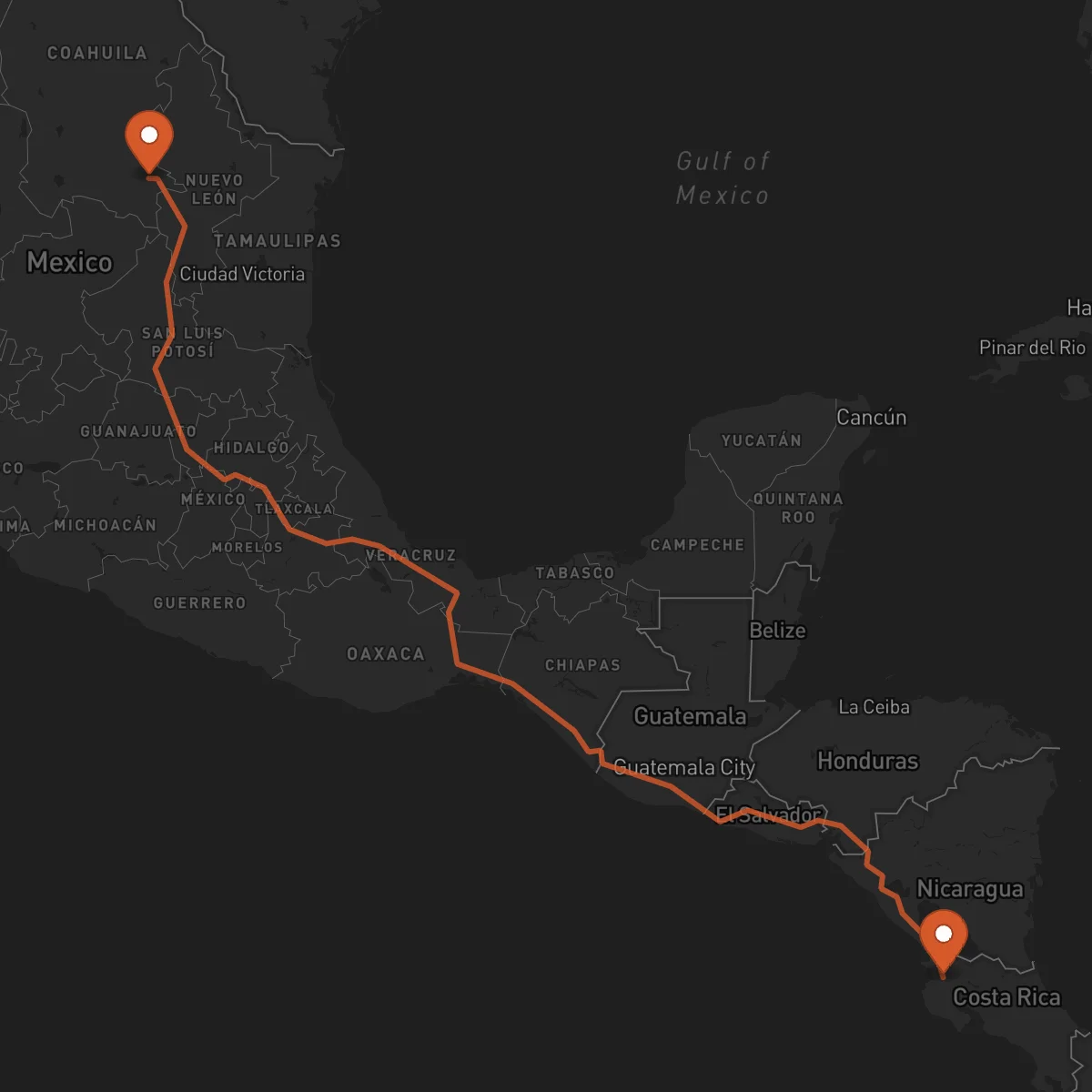
The Saltillo-Liberia corridor represents a vital north-south logistics artery connecting Mexico's industrial heartland with Costa Rica's Pacific gateway. Spanning approximately 2,321 kilometers, this cross-border route is strategically crucial for moving full truckload (FTL) freight between major manufacturing centers and key consumption/production zones in Central America. The corridor facilitates the flow of goods through multiple countries, requiring seamless coordination across diverse regulatory environments and infrastructure systems. Its importance is underscored by the volume of automotive parts, industrial machinery, agricultural products, and consumer goods it supports, bridging the supply chains of North and Central America.
Economically, the corridor links the thriving industrial region of northern Mexico—particularly the automotive and manufacturing cluster around Saltillo—with Costa Rica's dynamic economy, driven by tourism, agriculture (coffee, pineapples), and high-tech exports. The primary industries utilizing this route include automotive manufacturers and suppliers, agribusiness exporters, industrial equipment distributors, and retail logistics networks requiring dedicated, reliable overland transport. The infrastructure backbone primarily comprises Mexico's toll highway MX 40D (Autopista Saltillo-Monterrey) connecting to the federal highway network south, transitioning through Central America via the Pan-American Highway (CA-1) through Guatemala, El Salvador, Honduras, Nicaragua, and into Costa Rica. Key border crossings, such as those at El Paso/Ciudad Juárez (USA-Mexico) and Tecún Umán (Guatemala-Mexico), demand expert customs facilitation.
Control Terrestre facilitates operations on this complex corridor through our alliance of specialized, certified carriers. Our providers hold critical certifications like C-TPAT, FAST, and BASC, ensuring compliant and efficient cross-border processing. We exclusively manage FTL shipments—dedicated, expedited, specialized, or refrigerated—matching specific cargo needs with appropriate equipment like 53' dry vans, reefers, or flatbeds. Our model provides clients with a single point of contact for the entire journey, leveraging our partners' deep experience with regional customs procedures, infrastructure nuances, and transit challenges to optimize supply chain reliability without compromising on safety or sustainability standards.
We handle the intricate logistics of coordinating multiple border crossings, customs documentation, and carrier handoffs across five countries. This allows our clients—manufacturers and exporters in Saltillo and importers/distributors in Liberia—to benefit from a streamlined, door-to-door FTL service. Our focus is on providing transparent, human-centric logistics support, ensuring that full truckloads move efficiently from the factory floor in Coahuila to the distribution centers or ports of Guanacaste, all while adhering to responsible transportation practices.
Services for this Route
Available services for the corridor Saltillo - Liberia
 Origin
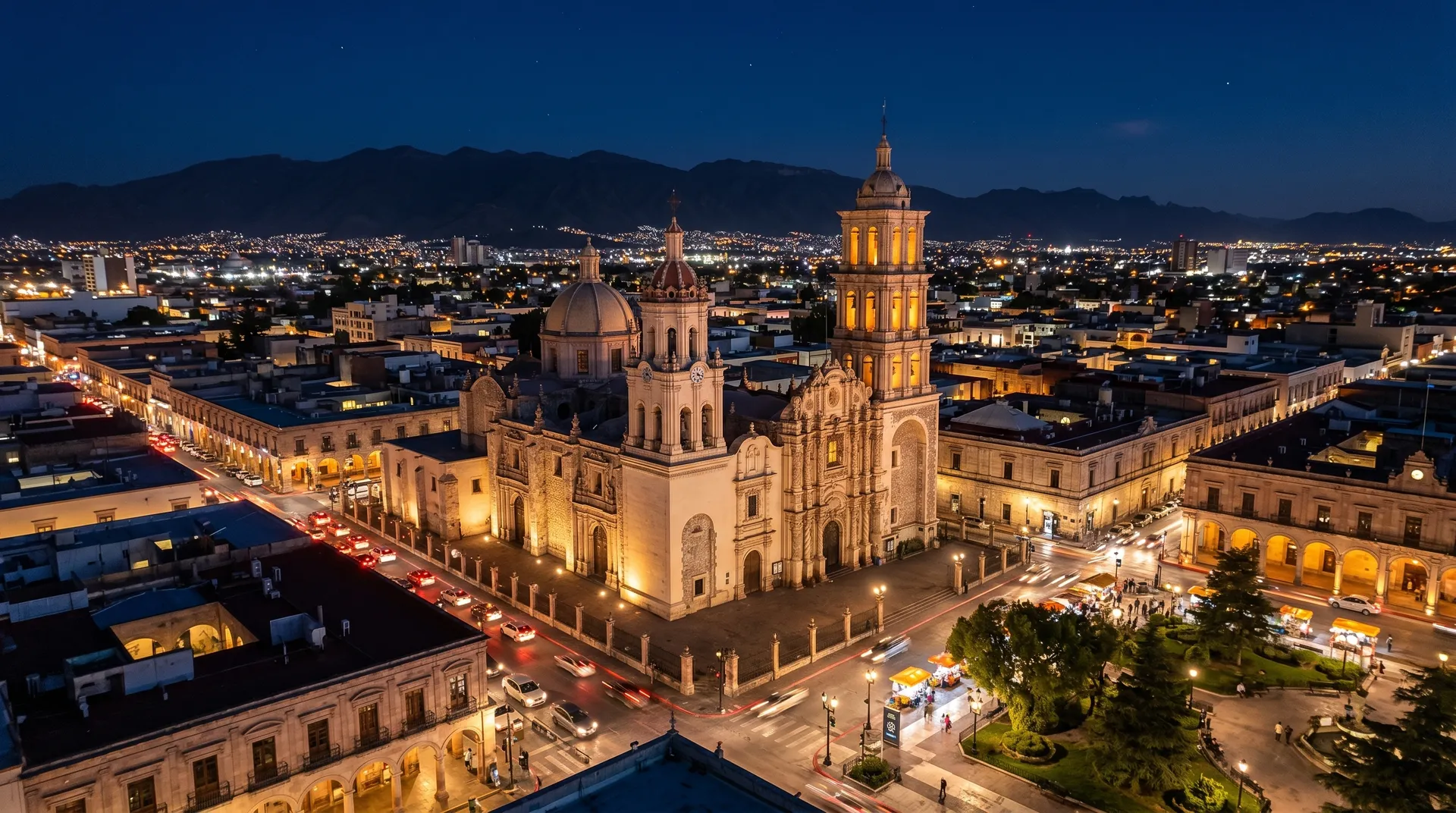
Saltillo, the capital of Coahuila, is a pivotal industrial and logistics hub in northeastern Mexico. Its strategic location places it within the core of the country's manufacturing corridor, just south of the Texas border and connected to major metropolitan areas like Monterrey. This positioning provides exceptional access to U.S. markets via multiple border crossings and a robust multi-modal infrastructure network. The city is a major center for the automotive industry, hosting assembly plants for General Motors and Stellantis, along with a vast ecosystem of Tier 1 and Tier 2 suppliers producing engines, transmissions, and components. Beyond automotive, its economy is diversified with strong manufacturing in steel, appliances, and plastics.
Saltillo's transportation infrastructure is highly developed. It is a critical junction for Mexican Federal Highways, including the high-capacity MX 40D toll road linking directly to Monterrey and the border. The city is also served by a significant rail freight network and is within reach of major Texas seaports (like Laredo) and airports. For FTL freight, this means efficient consolidation and dispatch from industrial parks directly onto the national highway system. The presence of a skilled workforce and established support services for logistics further cements its role as a primary origin point for goods moving south into Mexico and Central America, or north into the United States.
 Destination
Liberia
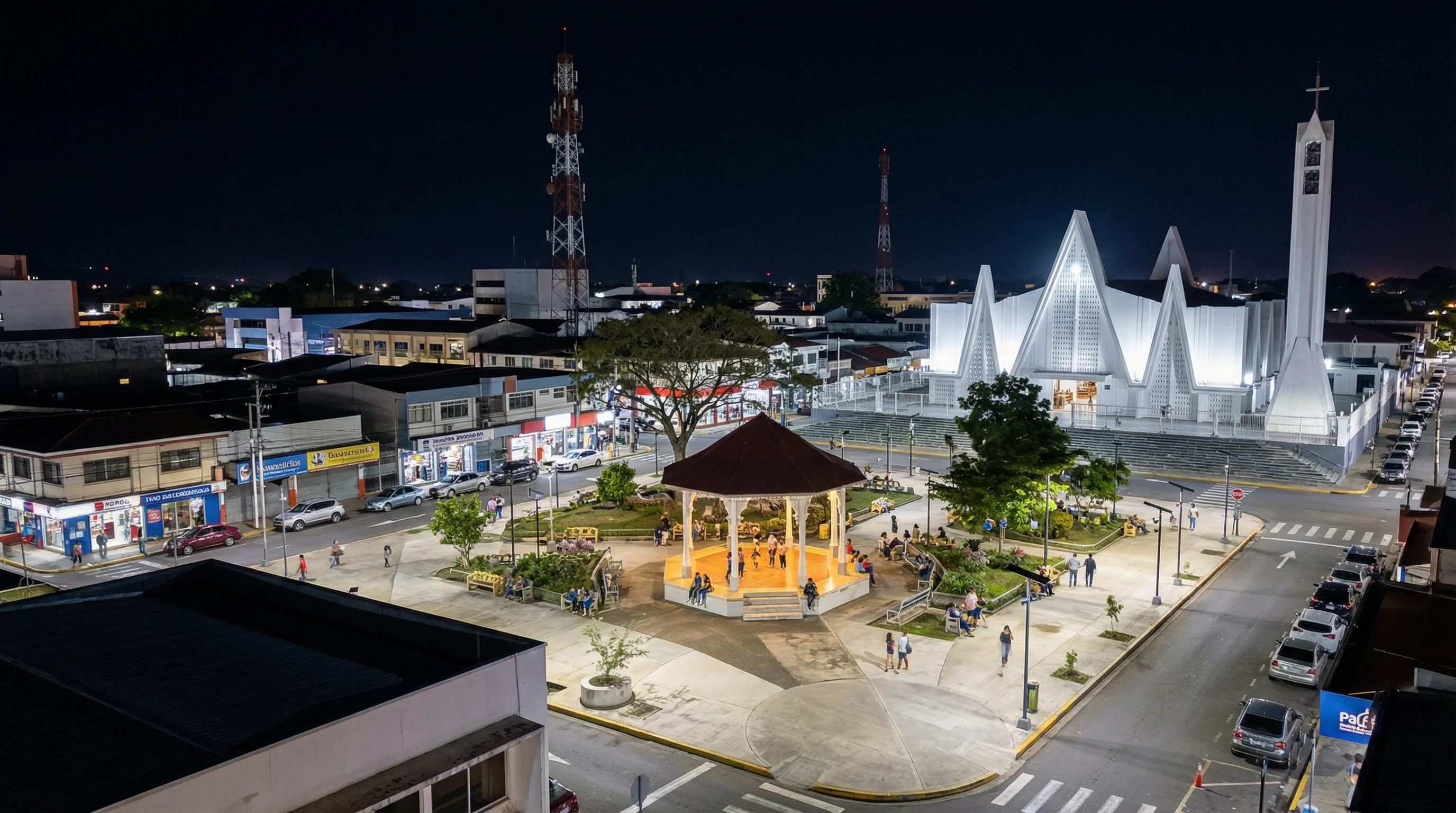
Liberia, the capital of Costa Rica's Guanacaste province, serves as the principal logistics and commercial gateway to the country's Pacific coast and northern Central America. Its strategic importance is derived from its role as a hub for the region's dominant economic sectors: tourism, agriculture, and light industry. Guanacaste is Costa Rica's agricultural powerhouse, renowned for exporting coffee, sugarcane, melons, and pineapples. Simultaneously, Liberia's Daniel Oduber Quirós International Airport (LIR) is a major entry point for tourists visiting the Pacific beaches and national parks, driving demand for goods movement. The city itself is a center for distribution, warehousing, and services supporting these industries.
The available transportation infrastructure is tailored to support both domestic and international freight. Liberia is connected to the rest of Costa Rica via the Pan-American Highway (Route 1), providing the critical land bridge to the rest of Central America. For maritime connections, the Port of Caldera, Costa Rica's main Pacific port, is located nearby, facilitating ocean freight. This combination of a major international airport, a key seaport, and a primary highway junction makes Liberia an essential destination node. For FTL operations, it means that full truckloads can be efficiently routed to final destinations across Guanacaste or to other Central American countries via the contiguous land corridor, with Liberia often serving as the final distribution hub for international cargo entering the region.










