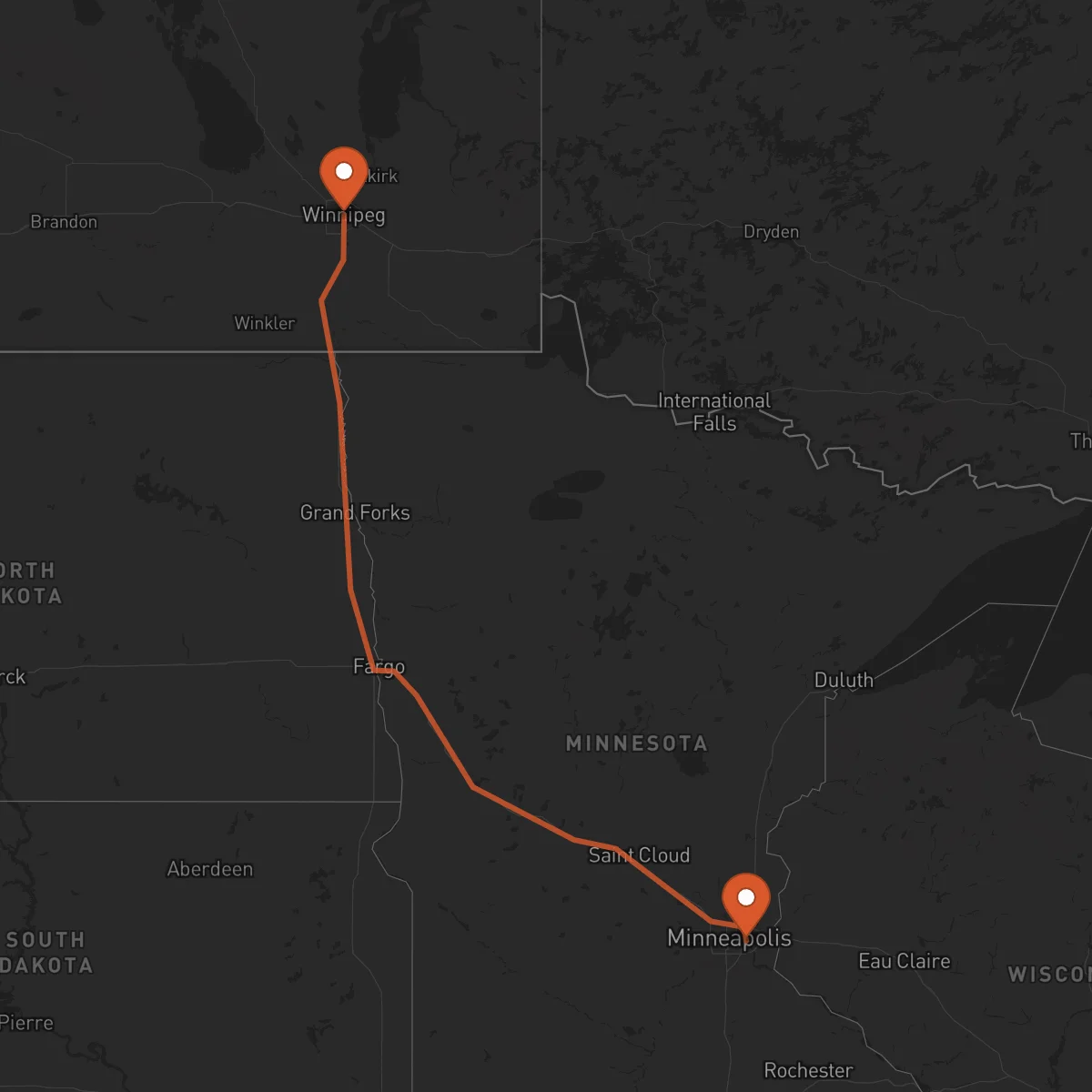
Saint Paul to Winnipeg
Winnipeg → Saint PaulFTL freight transportation service between Saint Paul and Winnipeg. Reliable logistics solutions for your business.
Route Description
Everything you need to know about the corridor Saint Paul - Winnipeg
The logistics corridor connecting Saint Paul, Minnesota, to Winnipeg, Manitoba, represents a vital cross-border freight route between the United States and Canada. This 628-kilometer corridor serves as a critical link between the Upper Midwest region and the Canadian Prairies, facilitating the movement of goods between two major economic zones. The route traverses diverse landscapes, from the urban centers of Minnesota through the agricultural heartland of North Dakota and into the Canadian Prairies, making it essential for industries requiring reliable transportation between these regions.
The corridor's strategic importance stems from its role in connecting major industrial and agricultural centers. Saint Paul serves as a key distribution hub for the Upper Midwest, with strong ties to manufacturing, food processing, and agricultural sectors. Winnipeg, known as the "Gateway to the West," functions as a major transportation and distribution center for Western Canada, particularly for the Prairie provinces. This corridor enables efficient movement of raw materials, finished goods, and agricultural products between these complementary economies.
Key industries utilizing this corridor include agriculture and food products, manufacturing components, retail goods, and industrial equipment. The route primarily follows Interstate 94 through Minnesota and North Dakota, transitioning to Provincial Highway 1 in Manitoba. The main border crossing at Pembina, North Dakota/Emerson, Manitoba, serves as the primary point of entry, offering efficient customs processing for commercial vehicles. Control Terrestre facilitates seamless operations on this corridor through our network of certified carriers, expertise in cross-border documentation, and understanding of both US and Canadian transportation regulations, ensuring reliable full truckload (FTL) service for our clients.
Services for this Route
Available services for the corridor Saint Paul - Winnipeg
 Origin
Saint Paul
Saint Paul, Minnesota, serves as a strategic logistics hub in the Upper Midwest region of the United States. Located along the Mississippi River, the city benefits from excellent multimodal transportation infrastructure, including major highways, rail connections, and proximity to the Port of Saint Paul. The metropolitan area of Minneapolis-Saint Paul, known as the "Twin Cities," represents one of the largest economic centers in the Midwest, with strong logistics and distribution networks. The region's central location provides access to major markets across the northern United States, making it an ideal origin point for freight transportation.
The city's economy is diverse, with major industries including food processing, medical technology, retail, and manufacturing. Several Fortune 500 companies have headquarters or major operations in the area, creating consistent demand for freight services. The presence of major distribution centers, warehousing facilities, and manufacturing plants ensures a steady flow of goods requiring transportation. Saint Paul's transportation infrastructure includes direct access to Interstate 94, which provides a direct route to Winnipeg, as well as connections to other major highways serving the Midwest region.
 Destination
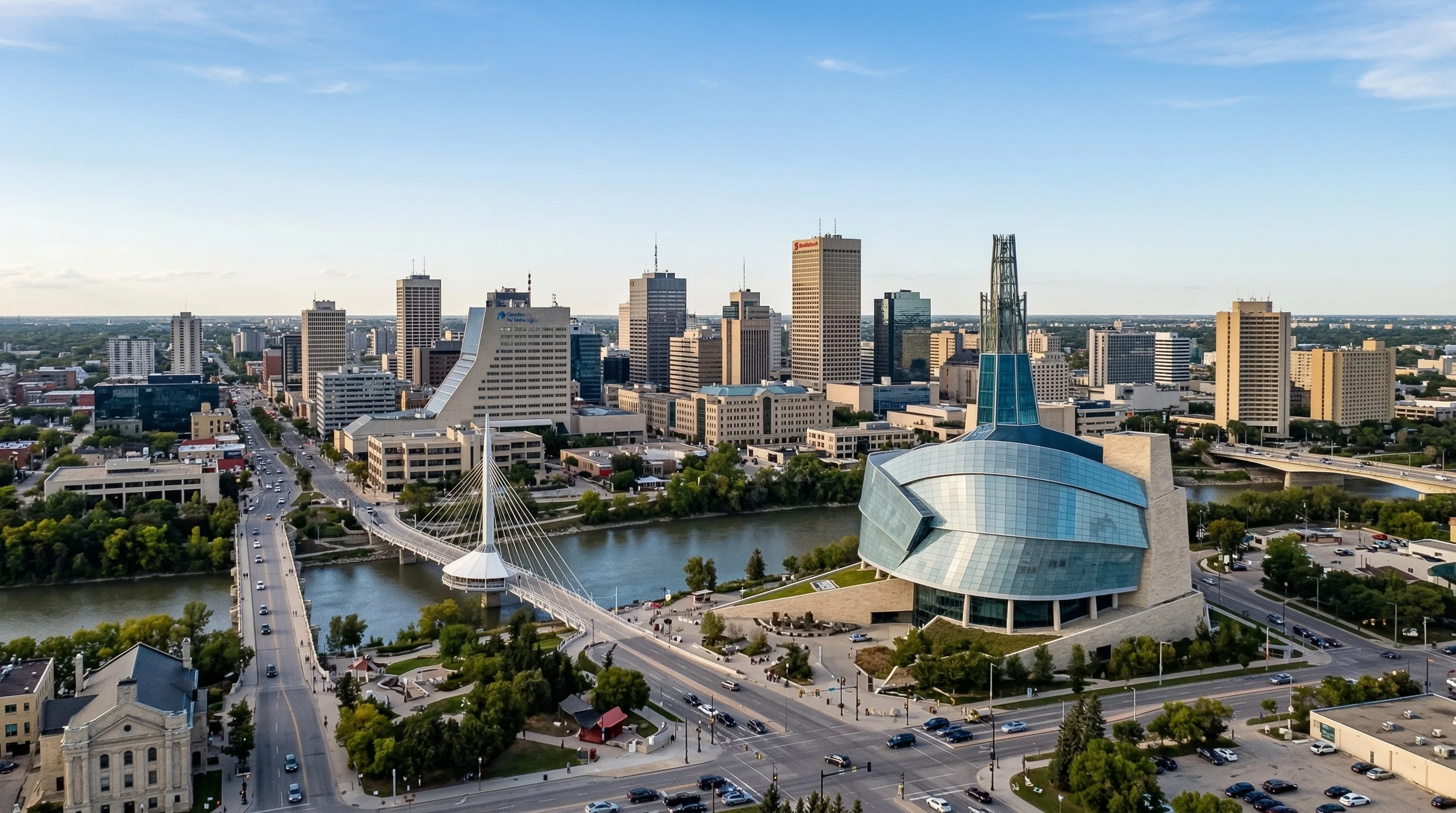
Winnipeg, Manitoba, stands as a critical logistics and distribution center for Western Canada, earning its reputation as the "Gateway to the West." Located at the geographic center of North America and at the confluence of the Red and Assiniboine rivers, Winnipeg serves as a natural transportation hub. The city's strategic position makes it the primary distribution point for goods moving to and from the Prairie provinces of Manitoba, Saskatchewan, and Alberta. Winnipeg's transportation infrastructure includes major highways, rail connections, and an international airport, supporting its role as a key logistics center.
The city's economy is anchored by industries such as agriculture, manufacturing, transportation, and wholesale trade. Winnipeg is particularly important for the agricultural sector, serving as a major grain collection and processing center for Western Canada. The presence of the Canadian Museum of Human Rights, growing technology sector, and government offices further diversifies the local economy. The city's logistics infrastructure includes the CentrePort Canada development, North America's first and only tri-modal inland port, which enhances Winnipeg's capacity to handle freight movements efficiently.


Ready to ship your cargo?
Get a personalized quote for your freight.
Quote Now Saint Paul - Winnipeg








