Saint Paul to Calgary
Calgary → Saint PaulFTL freight transportation service between Saint Paul and Calgary. Reliable logistics solutions for your business.
Route Description
Everything you need to know about the corridor Saint Paul - Calgary
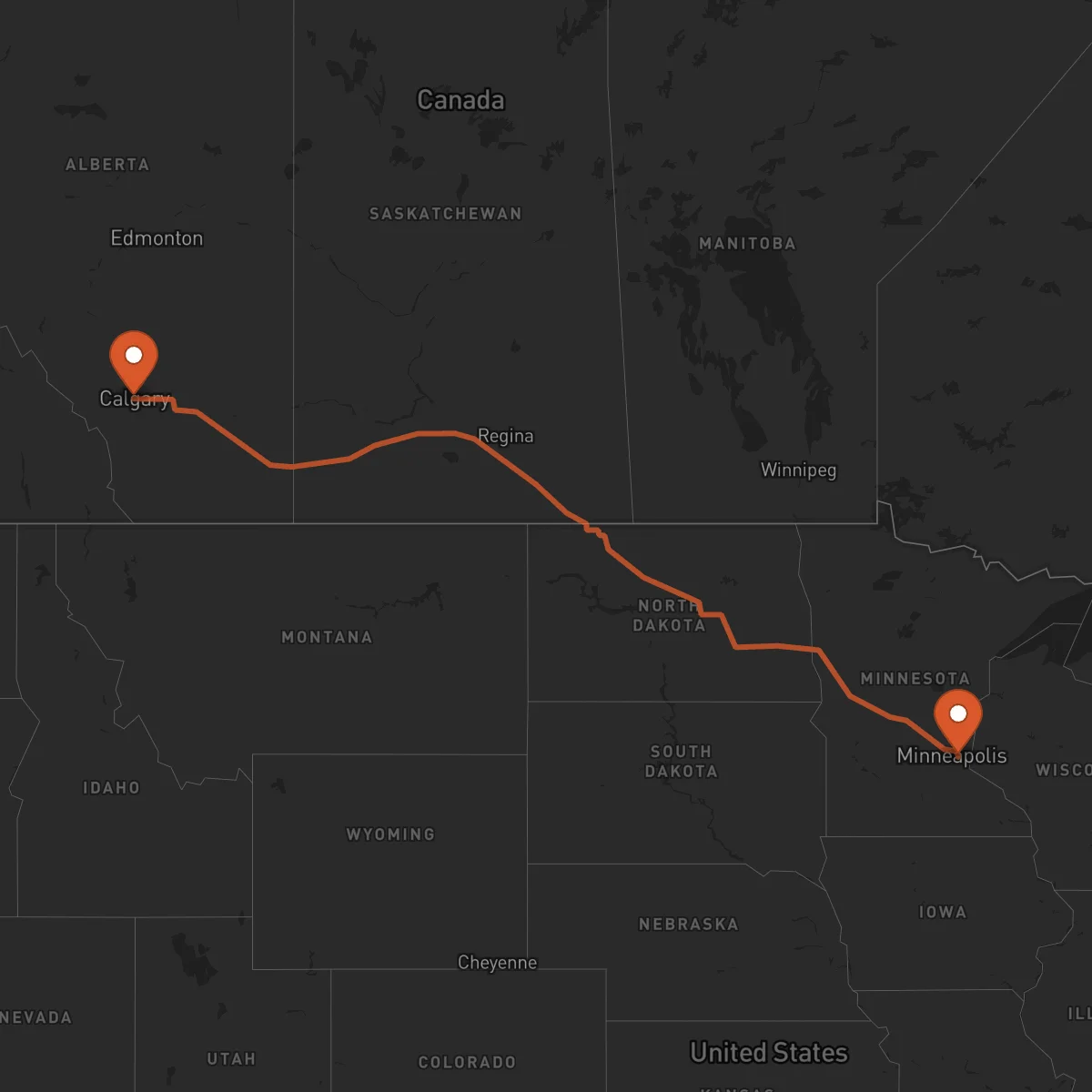
The Saint Paul to Calgary corridor represents a vital cross-border freight transportation route connecting the economic heart of Minnesota with Alberta's energy and industrial hub. This strategic 1,694 km corridor facilitates the movement of goods between the United States and Canada, serving as a critical link in North American supply chains. The route traverses diverse landscapes and connects major industrial centers, making it essential for businesses operating in both countries.
The corridor's economic significance stems from the complementary industrial strengths of both regions. Saint Paul serves as a major distribution center for the Upper Midwest, with strong manufacturing, food processing, and agricultural sectors. Calgary, known as the energy capital of Canada, drives demand for specialized equipment, construction materials, and industrial supplies. This creates a robust two-way freight flow that requires reliable transportation solutions.
Transportation infrastructure along this corridor includes major highways such as I-94 and Highway 2, providing efficient connections between key markets. The corridor crosses the international border at multiple points, with the Pembina-Emerson crossing being a primary route for commercial traffic. Control Terrestre's expertise in cross-border operations ensures seamless customs clearance and compliance with both US and Canadian regulations, minimizing delays and optimizing transit times for our clients.
Services for this Route
Available services for the corridor Saint Paul - Calgary
 Origin
Saint Paul
Saint Paul, Minnesota serves as a strategic logistics hub in the Upper Midwest, offering excellent connectivity to major markets across the United States. The city's location along the Mississippi River and its proximity to major interstate highways make it an ideal origin point for freight distribution. Saint Paul's robust infrastructure includes multiple intermodal facilities, warehousing centers, and direct access to rail networks, supporting efficient freight consolidation and distribution operations.
The region's economy is diverse, with strong manufacturing, food processing, healthcare, and technology sectors driving freight demand. Major industries in the area include agricultural equipment manufacturing, medical device production, and food processing, all of which require reliable transportation solutions. The presence of numerous distribution centers and the city's role as a regional economic center make Saint Paul an optimal starting point for cross-border shipments to Canada.
 Destination
Calgary, Alberta stands as a major economic center in Western Canada, serving as the gateway to the country's energy-rich province of Alberta. The city's strategic location provides access to both domestic Canadian markets and efficient cross-border connections to the United States. Calgary's transportation infrastructure includes extensive highway networks, an international airport, and rail connections that facilitate seamless freight movement across Western Canada.
The Calgary economy is dominated by the energy sector, including oil and gas exploration, renewable energy development, and related industries. Additionally, the city has strong construction, technology, and agricultural sectors that generate significant freight demand. Calgary's role as a major distribution center for Western Canada, combined with its proximity to the US border, makes it a crucial destination for cross-border freight operations, requiring specialized logistics expertise to navigate Canadian regulations and customs procedures.










