Saint Paul to Surrey
Surrey → Saint PaulFTL freight transportation service between Saint Paul and Surrey. Reliable logistics solutions for your business.
Route Description
Everything you need to know about the corridor Saint Paul - Surrey
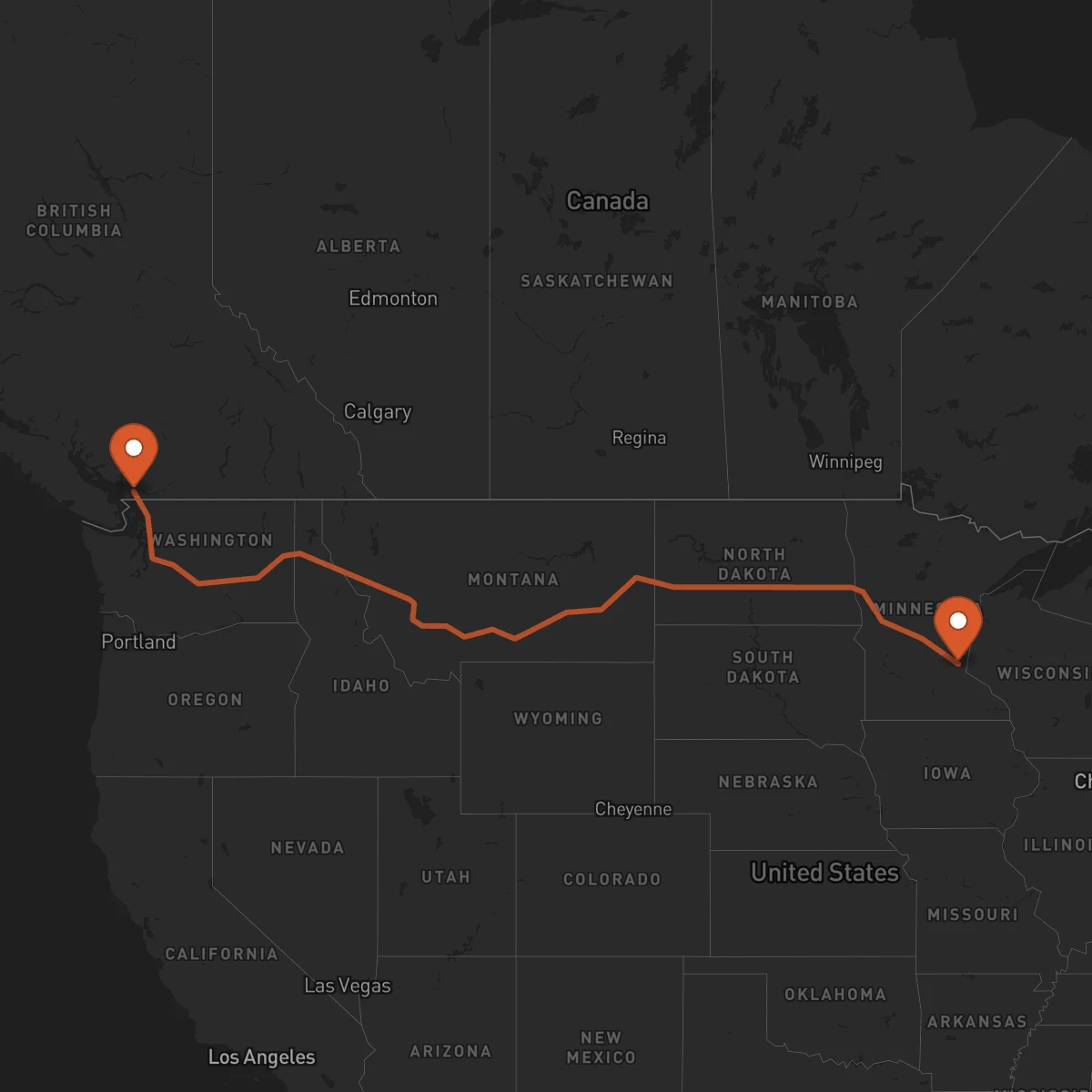
The logistics corridor connecting Saint Paul, Minnesota, to Surrey, British Columbia, represents a vital cross-border freight transportation route in North America. This 2,287-kilometer corridor links the economic heart of the Midwest with Canada's Pacific gateway, facilitating the movement of goods between the United States and Canada. The route traverses diverse landscapes and crosses multiple states and provinces, making it a critical artery for international trade and supply chain operations.
Saint Paul serves as a strategic logistics hub in the Upper Midwest, with its proximity to major manufacturing centers and agricultural regions. The corridor supports industries such as automotive, technology, healthcare, and food processing, which rely on efficient transportation to reach markets in Western Canada. Surrey, as part of Metro Vancouver, functions as a major distribution center for goods entering and leaving Canada's west coast, with strong connections to Asian markets through the Port of Vancouver.
The primary transportation infrastructure along this corridor includes Interstate 94 and Interstate 29 in the United States, transitioning to Highway 39 and the Trans-Canada Highway in Canada. Key border crossings include Pembina, North Dakota, and Emerson, Manitoba, which offer efficient processing for commercial vehicles. Control Terrestre's expertise in cross-border operations ensures seamless customs clearance and compliance with regulations in both countries, minimizing delays and optimizing transit times for our clients' freight shipments.
Services for this Route
Available services for the corridor Saint Paul - Surrey
 Origin
Saint Paul
Saint Paul, Minnesota, stands as a strategic logistics center in the Upper Midwest, benefiting from its location at the confluence of major transportation networks. The city serves as a gateway to the northern United States, with excellent connectivity via road, rail, and air. Saint Paul's economy is diverse, with strong presence in healthcare, education, manufacturing, and technology sectors. The region is home to numerous corporate headquarters and distribution centers, making it a natural origin point for freight movements.
The transportation infrastructure in Saint Paul includes multiple interstate highways, including I-94, I-35, and I-494, providing direct access to major markets across the country. The city's proximity to the Twin Cities metropolitan area enhances its logistics capabilities, with access to the Minneapolis-Saint Paul International Airport and the Port of Duluth for intermodal transportation. Saint Paul's central location within North America makes it an ideal starting point for cross-border shipments to Canada and beyond.
 Destination
Surrey
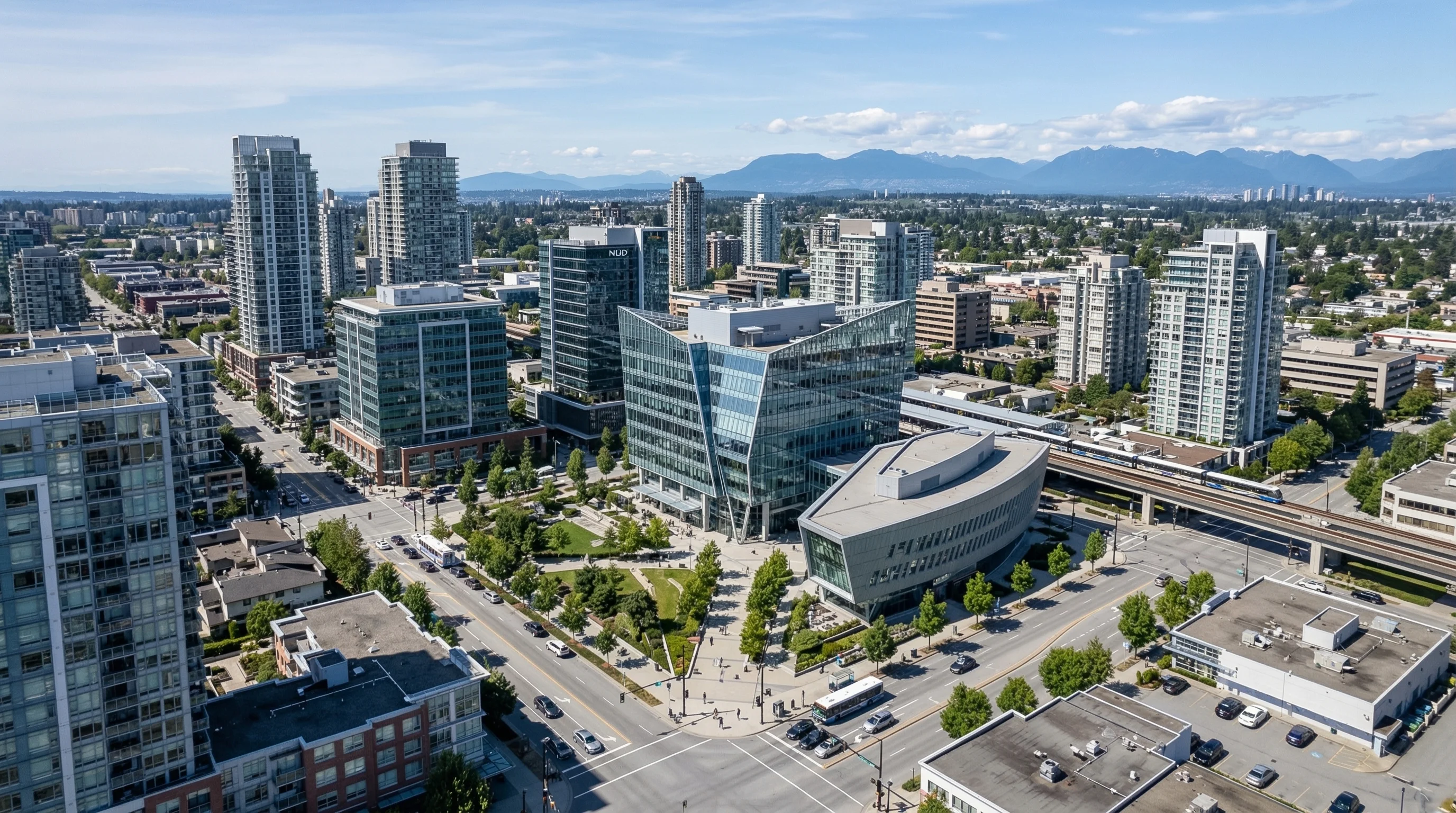
Surrey, British Columbia, represents a key logistics hub in Canada's Pacific Northwest, strategically positioned within Metro Vancouver. As one of Canada's fastest-growing cities, Surrey has developed into a major distribution center, particularly for goods destined for Western Canada and export markets. The city's location provides direct access to the Port of Vancouver, Canada's largest port, facilitating international trade with Asia and other global markets.
The economic landscape of Surrey includes strong sectors in technology, clean energy, health, and agriculture. The city's proximity to the U.S. border and major transportation corridors makes it an ideal destination for cross-border freight. Surrey's transportation infrastructure includes Highway 1 (Trans-Canada Highway), providing connections to Vancouver and the rest of Canada, as well as direct routes to the U.S. border at Blaine, Washington. The region's well-developed logistics network supports efficient distribution and warehousing operations for businesses of all sizes.










