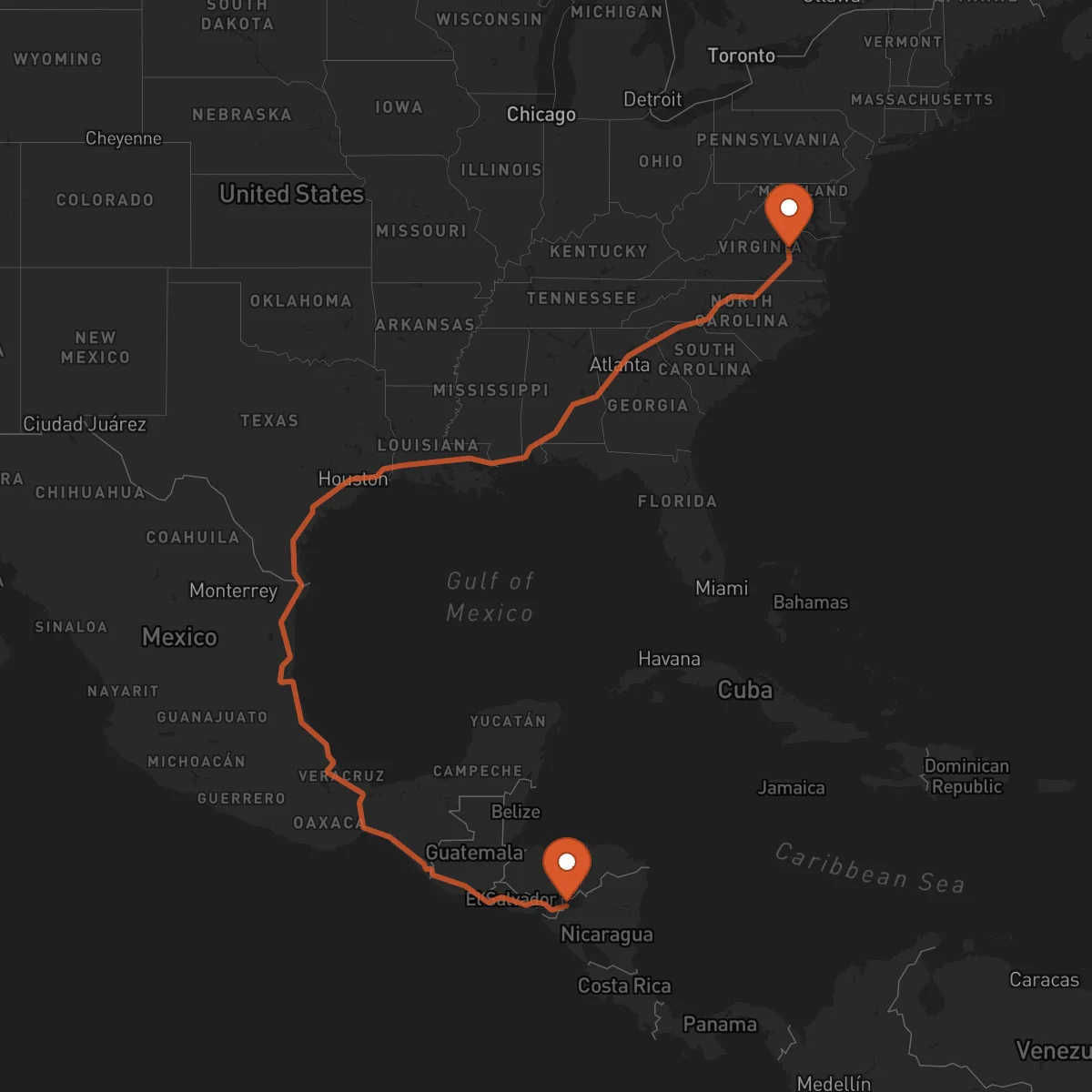
Richmond to Somoto
Somoto → RichmondFTL freight transportation service between Richmond and Somoto. Reliable logistics solutions for your business.
Route Description
Everything you need to know about the corridor Richmond - Somoto
The Richmond, Virginia to Somoto, Nicaragua corridor is a critical north-south artery connecting the U.S. East Coast with Central America. This strategic route facilitates essential trade flows, moving manufactured goods, industrial components, and consumer products southward while supporting the export of agricultural commodities like coffee, beans, and tropical fruits northward. The corridor's economic vitality is driven by robust manufacturing sectors in Virginia and agricultural heartlands in Nicaragua's Madriz region. Key industries utilizing this lane include automotive parts, processed foods, textiles, and agricultural inputs. The primary transportation infrastructure relies on Interstate 95 south through Virginia, transitioning to Mexico's federal highways 150D and 57, then traversing Guatemala and Honduras via the Pan-American Highway network before reaching the Guasaule border crossing into Nicaragua. Navigating the multi-national customs landscape requires expertise in U.S., Mexican, Guatemalan, Honduran, and Nicaraguan regulations. Control Terrestre streamlines this complex journey through our alliance of certified providers, holding credentials such as C-TPAT, BASC, and Responsible Care. We exclusively offer full truckload (FTL) solutions—from dry vans and reefers to flatbeds and tankers—ensuring dedicated capacity, specialized handling for hazardous or oversized cargo, and seamless cross-border coordination for a secure, efficient, and transparent logistics experience.
Richmond, Virginia, serves as a pivotal origin point due to its deepwater port (Port of Virginia), extensive intermodal facilities, and strategic position along the I-95 corridor. The region's economy is anchored by advanced manufacturing, chemical production, and agriculture (notably tobacco and poultry). This industrial diversity generates consistent demand for outbound FTL freight. The city's infrastructure includes direct highway access to major U.S. markets, Class I rail connections, and a international airport, creating a multi-modal hub that efficiently consolidates cargo for long-haul transport.
Somoto, located in Nicaragua's Madriz department near the Honduran border, is a strategic gateway for Central American trade. Its economy is predominantly agricultural, focusing on coffee, maize, beans, and livestock, with growing light manufacturing. The town's logistics significance stems from its proximity to the Guasaule border crossing, a primary entry point between Honduras and Nicaragua. While local road infrastructure connects to Nicaragua's broader highway network, including segments of the Pan-American, the corridor's efficiency depends on reliable cross-border processing and onward distribution to Managua or Pacific ports.
Services for this Route
Available services for the corridor Richmond - Somoto
 Origin
Richmond
Richmond, Virginia, is a major logistics origin on the U.S. East Coast, strategically positioned at the intersection of I-95, I-64, and I-295. This provides direct, high-capacity highway access to the entire Eastern Seaboard, the Midwest, and border crossings with Mexico. The city benefits from the Port of Virginia, one of the deepest harbors in the Americas, offering significant container and break-bulk capabilities complemented by robust rail intermodal services. Richmond's economic base includes strong manufacturing sectors (machinery, chemicals, plastics), food processing, and agriculture, generating consistent volumes of full truckload freight requiring domestic and cross-border transportation.
 Destination
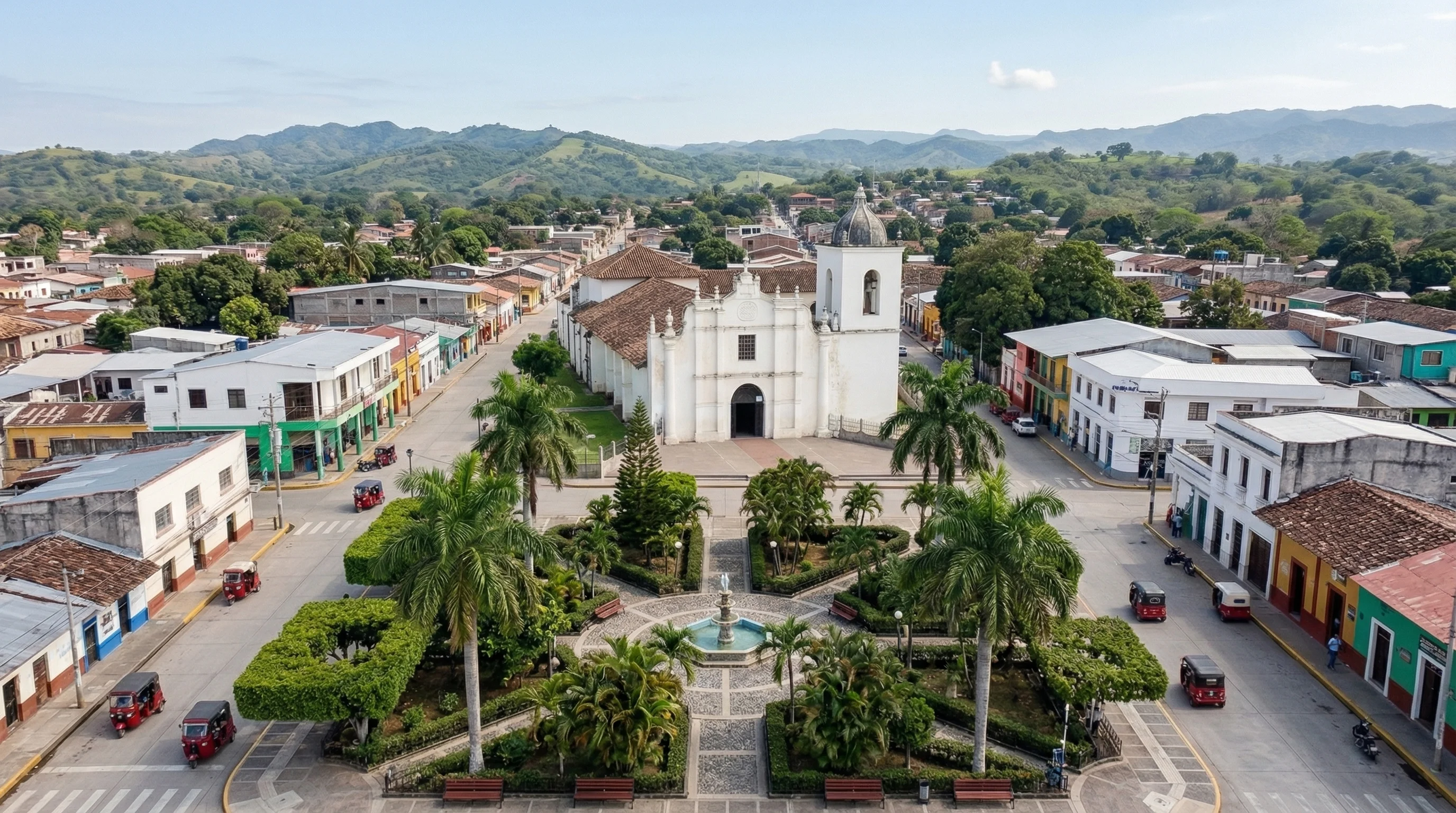
Somoto, Madriz, Nicaragua, is a key destination in northern Nicaragua, functioning as a primary cross-border logistics node due to its immediate proximity to the Guasaule border crossing with Honduras. This location is essential for trade moving between Central America and North America. The local and regional economy is heavily centered on agriculture, with coffee, basic grains, and livestock as primary products, creating demand for inbound inputs (fertilizers, equipment) and outbound agricultural exports. The town connects to Nicaragua's national road network, which links to major hubs like Managua and Pacific ports, though infrastructure quality can vary, making reliable FTL carrier partnerships critical for consistent transit.










