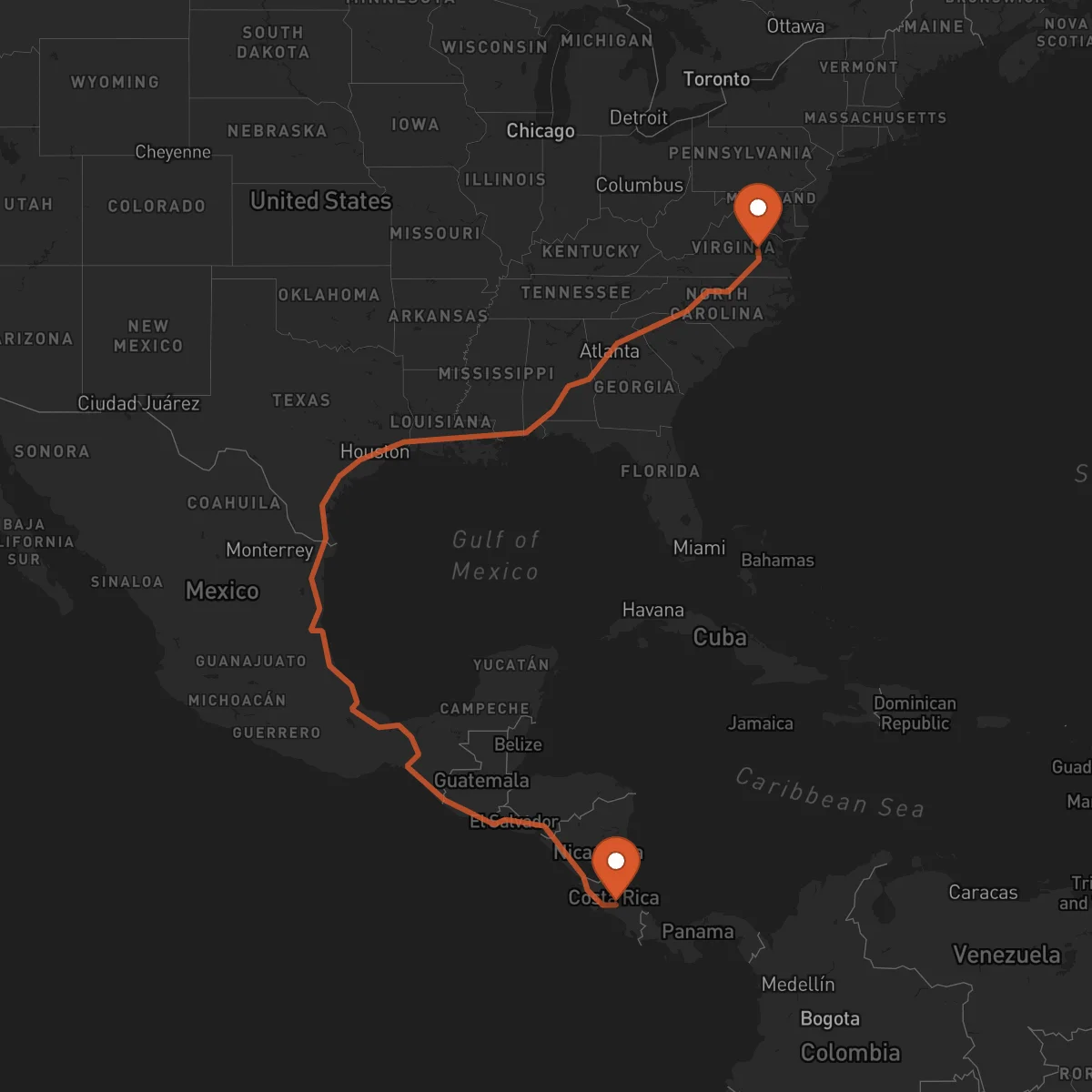
Richmond to San José
San José → RichmondFTL freight transportation service between Richmond and San José. Reliable logistics solutions for your business.
Route Description
Everything you need to know about the corridor Richmond - San José
The Richmond to San José corridor is a critical North-South logistics artery, connecting the industrial heartland of the U.S. East Coast with the economic hub of Central America. This cross-border route spans approximately 3,142 km, facilitating essential trade flows between major manufacturing centers and growing consumer markets. The corridor's strategic importance is underscored by its role in moving a diverse range of goods, from manufactured products and machinery to agricultural commodities and specialized cargo.
Economically, the corridor links Virginia's robust industrial base—characterized by advanced manufacturing, chemicals, and tobacco products—with Costa Rica's dynamic economy, driven by high-tech electronics, medical devices, and agricultural exports like coffee and bananas. Key industries utilizing this route include automotive parts suppliers, food and beverage producers, technology firms, and companies handling oversized or hazardous materials. The seamless movement of these goods is vital for just-in-time supply chains across both regions.
Transportation infrastructure relies on a network of major highways. From Richmond, the primary artery is I-95 southward to the Laredo border crossing. South of the U.S.-Mexico border, the route traverses Mexico's federal highway network before entering Central America via the CA-1 (Pan-American Highway), which runs through Guatemala, Honduras, Nicaragua, and into Costa Rica. This corridor involves multiple international border crossings, each with distinct customs procedures. Control Terrestre leverages our alliance of certified providers—holding C-TPAT, FAST, and BASC credentials—to navigate these complexities efficiently, ensuring compliant and streamlined clearance for your full truckload shipments.
We facilitate operations on this corridor by providing dedicated, door-to-door FTL services with a full spectrum of equipment, including dry vans, reefers, and flatbeds. Our expertise in cross-border documentation, customs coordination, and strategic carrier partnerships allows us to manage the entire journey as a single, cohesive operation. By focusing exclusively on full truckload solutions, we eliminate consolidation delays, offering you direct, secure, and optimized transit from origin to destination across this vital international trade lane.
Services for this Route
Available services for the corridor Richmond - San José
 Origin
Richmond
Richmond, Virginia, serves as a pivotal logistics origin point on the U.S. East Coast, benefiting from a deep-water port and a central position within the I-95 corridor. The city's strategic location provides direct highway access to major population centers from Boston to Miami, making it an ideal launchpad for cross-continental and international freight. Key economic sectors include advanced manufacturing (automotive parts, plastics, and chemicals), tobacco processing, and a growing distribution and warehousing industry supported by significant intermodal facilities. The metropolitan area is also a hub for federal government logistics and data centers.
Richmond's transportation infrastructure is robust and multi-modal. The Port of Virginia in nearby Hampton Roads is one of the nation's deepest natural harbors, offering seamless container-on-barge connections to the Atlantic. Dominant highway infrastructure includes I-95, I-64, and I-295, which converge in Richmond, providing efficient north-south and east-west connectivity. Furthermore, the city is served by two Class I railroads (CSX and Norfolk Southern), enhancing intermodal options. For FTL freight, this means reliable, high-capacity road access to the southern border and beyond, supported by a network of trucking providers specializing in long-haul and cross-border routes.
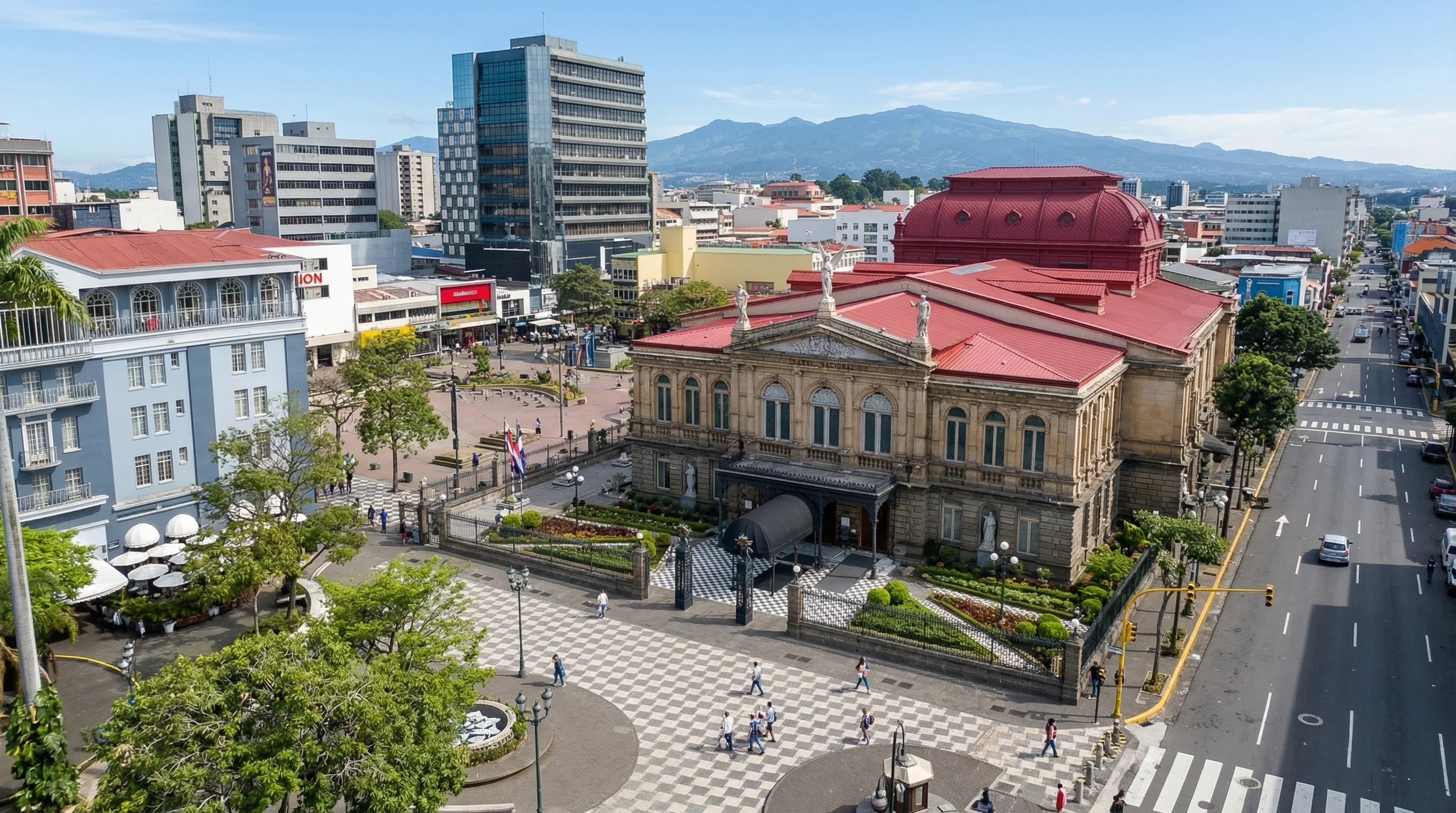 Destination
San José
San José, the capital of Costa Rica, is the country's primary economic, political, and logistical nexus. Its strategic location in the Central Valley provides a central base for distribution to both Pacific and Caribbean coasts, as well as to other Central American nations. The city's economy is powered by high-value industries, including medical device manufacturing (a top global exporter), technology and software development (hosting major firms like Intel and IBM), and tourism-related services. Crucially, it serves as the aggregation point for Costa Rica's key agricultural exports, such as coffee, bananas, and pineapples, which require specialized refrigerated transport.
San José's logistics infrastructure is well-developed for a region of its size. The Juan Santamaría International Airport (SJO) is a major cargo hub for high-value, time-sensitive goods. The primary highway network, including the CA-1 (General Cañas Highway) and Route 27, connects the capital to the Pacific port of Caldera and the Caribbean port of Limón, enabling multimodal flexibility. The road network extends south to the Panamanian border, integrating Costa Rica into the Central American freight corridor. For FTL operations, this translates to accessible, paved highways radiating from the city, though terrain can present challenges requiring experienced carriers with appropriate equipment, such as reefers for perishables and dry vans for manufactured goods.










