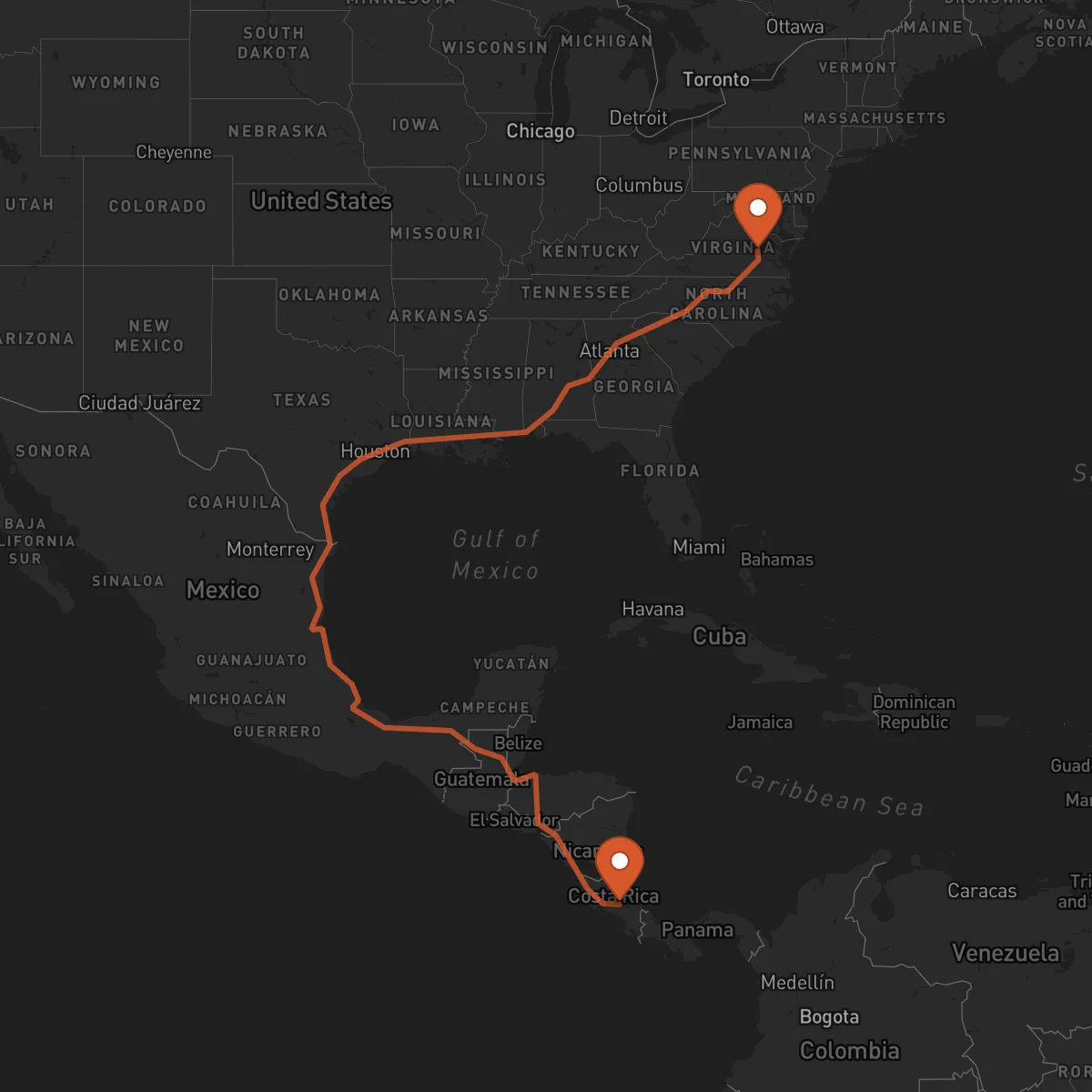
Richmond to Cartago
Cartago → RichmondFTL freight transportation service between Richmond and Cartago. Reliable logistics solutions for your business.
Route Description
Everything you need to know about the corridor Richmond - Cartago
The Richmond, Virginia to Cartago, Costa Rica corridor represents a critical North-South logistics artery, connecting the industrial heartland of the U.S. East Coast with the dynamic production centers of Central America. This cross-border route is strategically vital for supply chains requiring reliable, full truckload (FTL) movement between these key economic zones. The corridor traverses a complex geography, moving south from the U.S. through Mexico and into Central America, demanding expert navigation of multiple customs jurisdictions and infrastructure networks.
Economically, this corridor serves a vibrant region. The U.S. Mid-Atlantic and Southeast are hubs for manufacturing, agriculture, and consumer goods. Mexico's northern and central states along the route are industrial powerhouses with massive automotive, electronics, and manufacturing sectors. Costa Rica, the final destination, is a leader in high-tech agriculture, medical devices, and pharmaceuticals. The primary industries utilizing this corridor include automotive parts and vehicle transport, agricultural products (both temperate and tropical), manufactured consumer goods, electronics, and specialized industrial equipment.
Infrastructure is defined by a sequential reliance on major highways. The journey begins on the U.S. Interstate system, primarily I-95 South, connecting to key border crossings like Laredo/El Paso. From there, routes follow Mexico's federal highways (e.g., Fed. 57, 90, 150) towards the southern border. The final leg crosses the Mexico-Guatemala border (such as at Ciudad Hidalgo/Tecún Umán) and continues through Guatemala and into Costa Rica via the Pan-American Highway (CA-1). Each border crossing presents unique customs procedures; for instance, the U.S.-Mexico border requires rigorous compliance with programs like C-TPAT and FAST, while the Mexico-Central America crossings involve distinct Central American integration processes.
Control Terrestre facilitates seamless operations on this corridor through our alliance of certified providers. Our expertise in cross-border freight transportation ensures all shipments benefit from partners holding essential certifications like C-TPAT, FAST, and BASC for the northern leg, and a deep understanding of southern customs protocols. We manage the entire door-to-door FTL process, coordinating dedicated, expedited, or specialized cargo (including refrigerated and oversized) across all borders. Our role is to be the single, human point of contact that simplifies the complexity of this multinational route, providing our clients with a streamlined, reliable connection from Richmond's industrial parks to Cartago's production facilities.
Services for this Route
Available services for the corridor Richmond - Cartago
 Origin
Richmond
Richmond, Virginia, is a strategically significant logistics origin in the U.S. Southeast. Its location provides direct access to the I-95 Interstate corridor, the primary north-south artery on the Eastern Seaboard, enabling efficient connections to major markets from Boston to Miami. The city is a hub for intermodal transport, with significant rail infrastructure and proximity to the Port of Virginia in Hampton Roads, one of the deepest natural ports on the East Coast. This multi-modal connectivity makes Richmond an ideal consolidation point for full truckload freight destined for international corridors.
The economic engine of the Richmond region is diverse and robust. Key industries include advanced manufacturing (chemicals, plastics, and fabricated metals), food and beverage processing, agriculture (particularly tobacco and poultry), and a growing technology and professional services sector. Major distribution centers for retail and e-commerce giants are also prevalent, leveraging the area's transport infrastructure. These sectors generate consistent demand for outbound FTL services, moving raw materials in and finished goods out to national and international markets.
For freight transportation, Richmond offers unparalleled highway access via I-95, I-64, and I-295, creating a web that efficiently funnels cargo to the primary southern border crossings in Texas. The region's well-developed network of distribution centers and industrial parks is designed for high-volume truck traffic, supporting dedicated and spot freight operations. This mature infrastructure foundation allows Control Terrestre to deploy assets like 53' dry vans and refrigerated units effectively, ensuring reliable pickup times and optimal routing from the point of origin.
 Destination
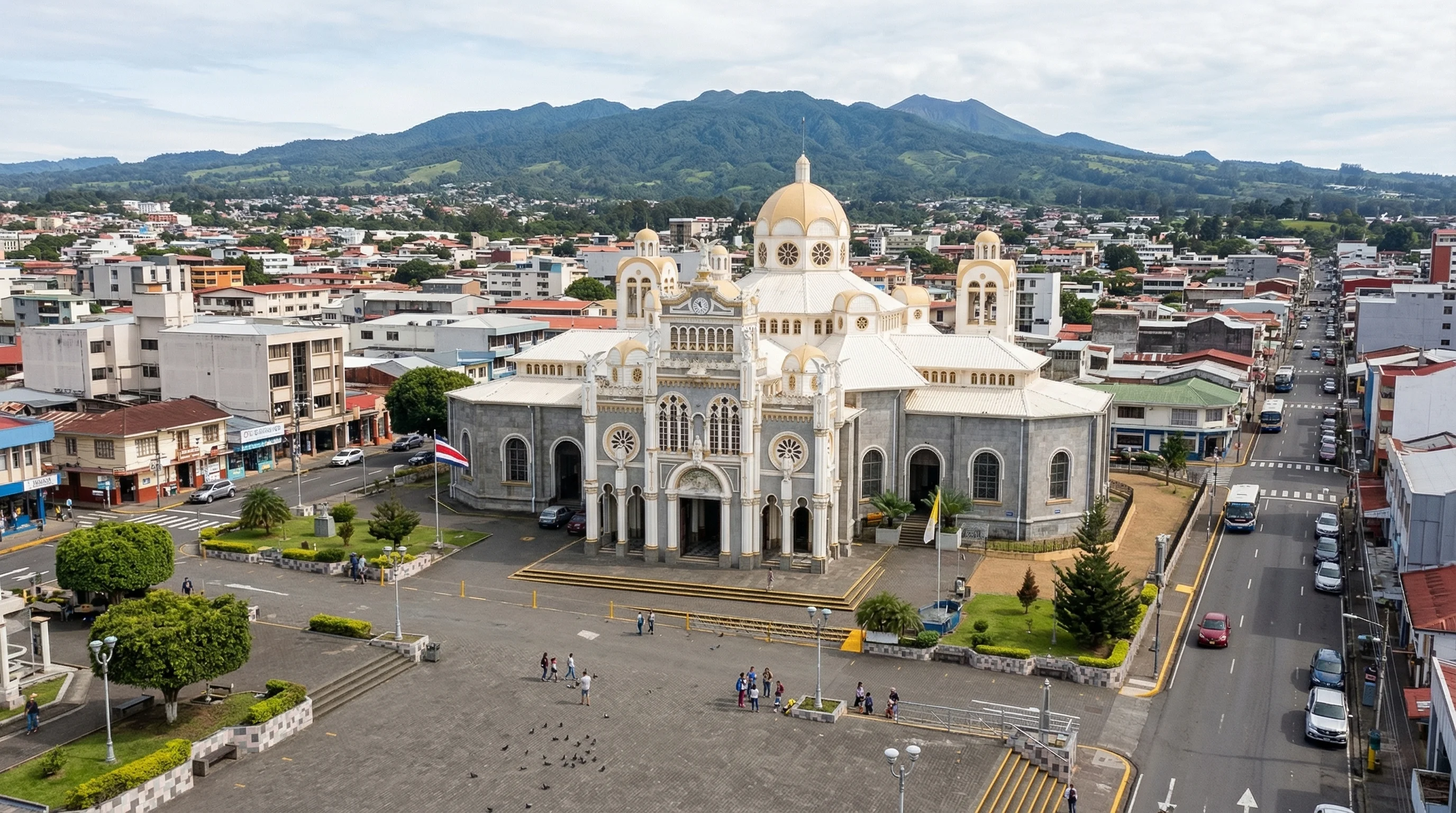
Cartago
Cartago, located in Costa Rica's Central Valley, is a pivotal logistics destination in Central America. Its strategic value stems from its central position within the country's primary industrial and agricultural corridor, surrounded by the major cities of San José, Heredia, and Alajuela. The city is well-connected by Costa Rica's national highway network, most notably Route 2 (the Pan-American Highway), which provides the direct north-south link to the Nicaraguan border and the rest of the continent. This positioning makes Cartago a natural hub for distributing goods throughout Costa Rica and for cross-border transit.
Economically, Cartago and its surrounding valley are central to Costa Rica's high-value production. The region is a powerhouse for agriculture, exporting premium coffee, tropical fruits (like bananas and pineapples), and cut flowers. It is also a cornerstone of Costa Rica's renowned medical device and pharmaceutical manufacturing industry, hosting numerous free-trade zone operations for global companies. Additionally, light manufacturing and food processing are significant sectors. These industries require precise, reliable inbound logistics for raw materials and outbound transport for finished products, often under specialized conditions like refrigerated transit.
The available transportation infrastructure is tailored for industrial freight. The Pan-American Highway (Route 2) is the main arterial road for international trucking, connecting directly to the Peñas Blancas border crossing with Nicaragua. While Costa Rica's road network is generally good for Central America, it requires experienced management for oversized or heavy cargo. Cartago's location provides efficient last-mile access to the country's primary international airport (Juan Santamaría) and the Atlantic and Pacific port complexes. Control Terrestre leverages this infrastructure, utilizing equipment like dry vans, reefers, and flatbeds to navigate from the border to Cartago's industrial parks and farms, ensuring door-to-door service for export and import freight.










