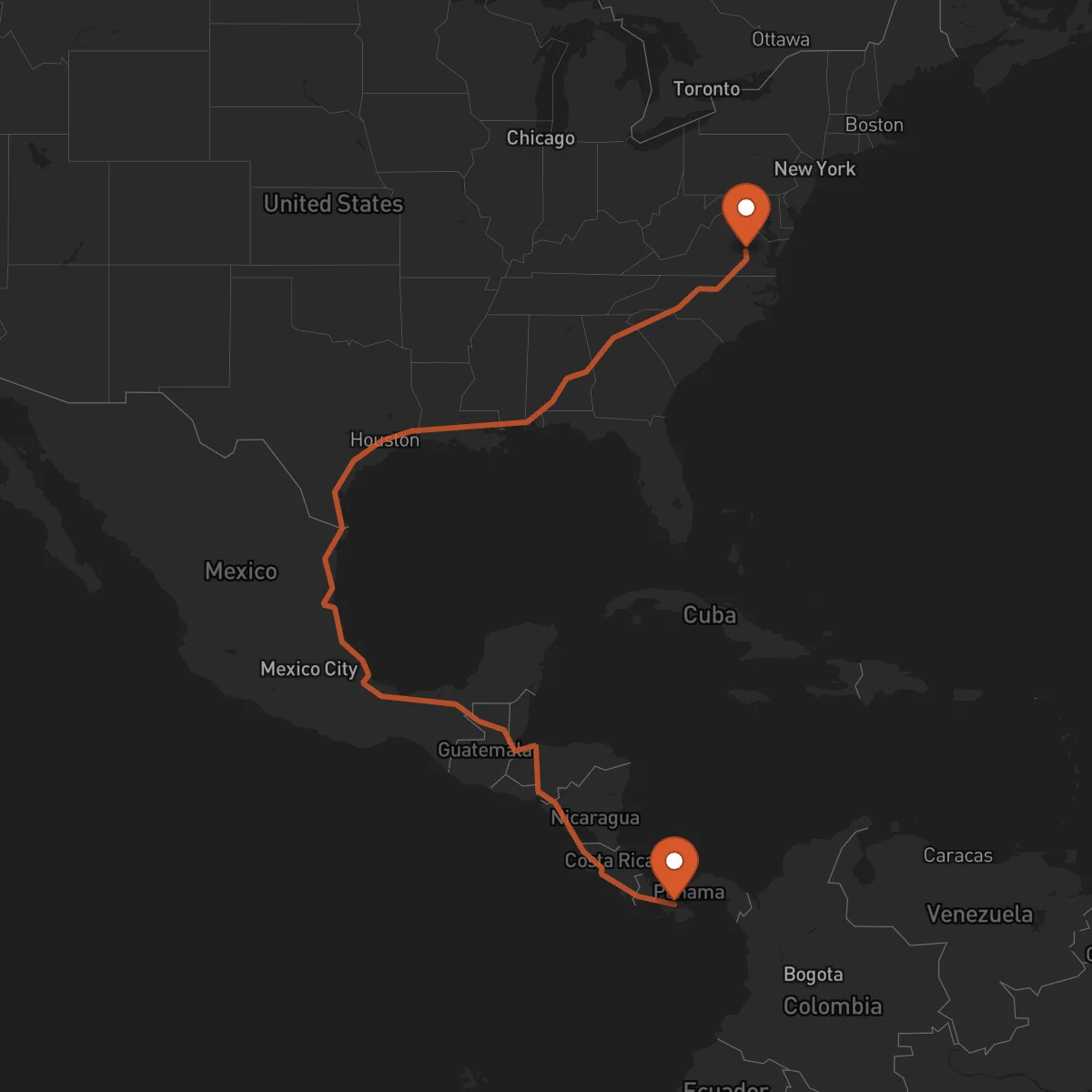
Richmond to Santiago de Veraguas
Santiago de Veraguas → RichmondFTL freight transportation service between Richmond and Santiago de Veraguas. Reliable logistics solutions for your business.
Route Description
Everything you need to know about the corridor Richmond - Santiago de Veraguas
The Richmond, VA to Santiago de Veraguas, Panama corridor represents a critical North-South logistics artery connecting the industrial heartland of the U.S. East Coast with the vibrant commercial centers of central Panama. This strategic cross-border route facilitates the essential flow of goods, supporting regional economic integration and supply chain resilience across a diverse landscape. The corridor traverses the Eastern U.S., through Mexico's extensive highway network, and into Central America, culminating in Panama—a pivotal hub due to the Panama Canal's global trade significance. Key industries leveraging this route include agricultural producers, manufacturers of industrial and consumer goods, and distributors serving retail and wholesale markets throughout Central America. The transportation infrastructure relies primarily on the U.S. Interstate Highway System (notably I-95 South), Mexico's federal highways, and the Pan-American Highway through Central America. Critical border crossings, such as those at the U.S.-Mexico border (e.g., Laredo/El Paso corridors) and the Guatemala-Panama border (at Paso Canoas), involve complex customs and regulatory procedures. Control Terrestre facilitates seamless operations on this corridor through our robust alliance of certified carriers. Our providers hold key accreditations including C-TPAT, FAST, and BASC, which streamline customs clearance and enhance security. We exclusively manage Full Truckload (FTL) shipments—from dedicated and expedited to specialized cargo like oversized or refrigerated units—ensuring a direct, secure, and efficient door-to-door solution without the complexities of consolidation. Our expertise in cross-border documentation and regulatory compliance provides our clients with a single, expert point of contact for this challenging international route.
The economic and industrial context of the corridor is defined by complementary trade flows. The U.S. exports high-value manufactured goods, machinery, and agricultural products, while Central America, and Panama specifically, serves as a growing market and a transshipment point. The region's economy is bolstered by agriculture (bananas, coffee, sugar), manufacturing, and a booming services sector linked to the Canal. This creates consistent demand for reliable FTL freight to move raw materials inbound and finished goods outbound. The main industries using this corridor are agriculture and agribusiness, industrial manufacturing, construction materials, and retail goods distribution. The infrastructure, while extensive, presents varying conditions; from the well-maintained U.S. interstates to the more challenging segments of the Pan-American Highway, requiring experienced carriers. Control Terrestre’s network is specifically vetted for this corridor, with equipment like 53' dry vans, reefers, and flatbeds readily available to match cargo needs. We navigate the multi-national customs landscape, managing requirements from U.S. CBP, Mexican SAT, and Panamanian ANA, mitigating delays for our clients.
Relevant border crossings are the operational linchpins of this corridor. The primary U.S.-Mexico gateway is often the Laredo, Texas / Nuevo Laredo, Tamaulipas crossing, a major freight hub. South of Mexico, the border between Guatemala and Panama at Paso Canoas is the final terrestrial crossing before entering Panama. Each crossing has distinct customs protocols, documentation needs (such permits, certificates of origin), and potential wait times. Our role is to orchestrate the entire journey. Control Terrestre acts as the logistics integrator, assigning the optimal carrier with the right certification (e.g., FAST for U.S.-Canada/Mexico, or BASC for security standards in the Americas) for each segment. We provide our clients with transparency and a single contract for the entire door-to-door movement, handling the coordination between different national carriers and ensuring all phytosanitary, customs, and safety documentation is in order. This eliminates the client's need to manage multiple providers across four countries, reducing administrative burden and risk while maintaining the integrity of an FTL shipment from origin to destination.
Services for this Route
Available services for the corridor Richmond - Santiago de Veraguas
 Origin
Richmond
Richmond, Virginia, is a strategically vital logistics origin point on the U.S. East Coast. Its location provides efficient access to the dense population centers of the Northeast, Southeast, and Mid-Atlantic via the Interstate 95 corridor, the primary north-south freight artery. The city is a major rail hub, served by CSX and Norfolk Southern, offering intermodal options that complement road transport. Richmond's economy is diverse and robust, with significant manufacturing in chemicals, plastics, and tobacco products, alongside a strong agricultural sector in Virginia's surrounding counties producing poultry, grains, and timber. The Port of Richmond, while smaller than neighboring Hampton Roads, offers barge service on the James River, adding a multimodal layer. Key industrial and distribution parks surround the city, making it a consolidated origin for full truckloads bound for the southern U.S. and international gateways. The available transportation infrastructure is mature and high-capacity, featuring direct connections to I-95, I-64, and I-295, ensuring rapid consolidation and dispatch of FTL shipments toward the southern border crossings en route to Central America.
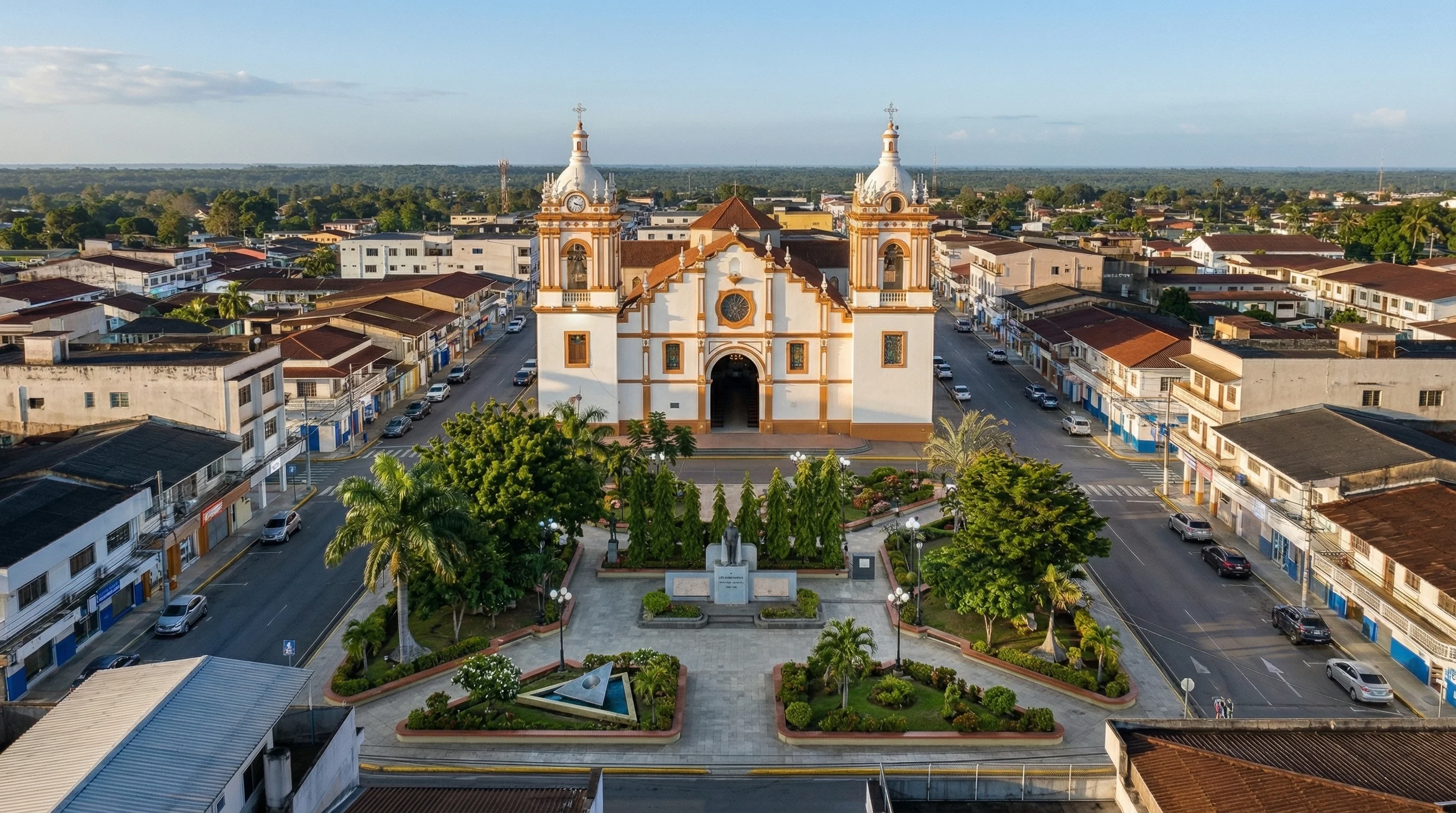 Destination
Santiago de Veraguas is the capital of the Veraguas province in central Panama, serving as a key agricultural, commercial, and transportation hub for the region's interior. Its strategic location is defined by its position on the Pan-American Highway (Carretera Panamericana), providing the essential terrestrial link to the rest of Central America and the Caribbean coast. The city anchors a productive agricultural zone known for coffee, sugar cane, citrus fruits, and livestock. It functions as a collection and distribution center for goods moving to and from Panama's western provinces and the Azuero Peninsula. The local infrastructure includes a network of paved and maintained highways connecting it to the Pan-American, the port of Puerto Armuelles on the Pacific coast, and the broader national road system. While not a seaport itself, its proximity to the Pacific coast and the Pan-American route makes it a critical inland destination for FTL freight arriving from North America, serving as a final-mile distribution point for regional wholesalers, processors, and retailers. The availability of warehouse and logistics facilities supports the receipt and onward movement of full truckloads.


Ready to ship your cargo?
Get a personalized quote for your freight.
Quote Now Richmond - Santiago de Veraguas








