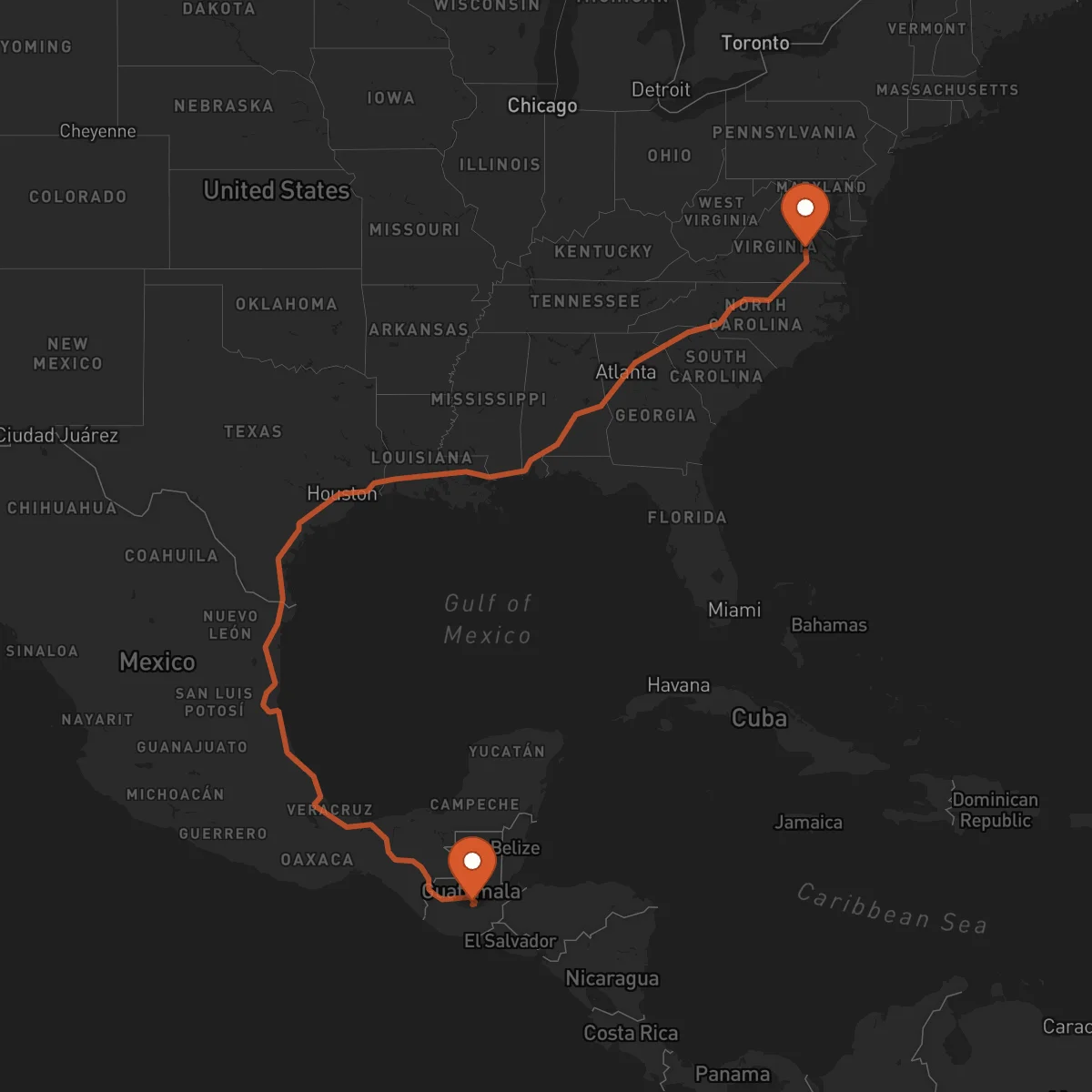
Richmond to Salamá
Salamá → RichmondFTL freight transportation service between Richmond and Salamá. Reliable logistics solutions for your business.
Route Description
Everything you need to know about the corridor Richmond - Salamá
The Richmond to Salamá corridor is a critical North-South artery connecting the industrial Mid-Atlantic United States with the agricultural heartland of Central America. Spanning approximately 2,799 km, this cross-border route is strategically vital for moving goods efficiently between two dynamic economic zones, leveraging a network of major highways to bridge the U.S., Mexico, and Guatemala. The corridor's importance is underscored by the robust trade flows in manufactured goods, agricultural products, and industrial components that sustain supply chains across the region.
Economically, Richmond serves as a major hub for manufacturing, distribution, and port-related activities on the U.S. East Coast, while Salamá is a pivotal center for agriculture and basic goods distribution in Guatemala's Baja Verapaz department. Key industries utilizing this corridor include food and beverage processing, agricultural inputs and outputs, construction materials, consumer packaged goods, and industrial manufacturing components. The route facilitates the export of U.S. finished products and machinery southward, and the import of tropical produce, coffee, and raw materials northward.
Transportation infrastructure relies on a phased highway network: I-95 South from Richmond through Virginia, the Carolinas, Georgia, and Alabama; connecting to I-20 and I-10 through Texas; followed by Mexican Federal Highways 85 and 150D through Monterrey and Mexico City to the southern border; and finally, Guatemalan routes like CA-14 from the border to Salamá. The primary border crossing is typically at Laredo, Texas / Nuevo Laredo, Tamaulipas, a high-volume commercial port requiring meticulous customs documentation. Additional considerations include Mexican customs procedures and Guatemalan import regulations.
Control Terrestre facilitates seamless operations on this complex corridor through our alliance of certified providers. We manage the entire cross-border process, leveraging partners with C-TPAT, FAST, and BASC certifications to ensure security and compliance. Our expertise in coordinating documentation, customs clearance support, and dedicated asset management for full truckload (FTL) shipments—including dry vans, reefers, and specialized equipment—mitigates the inherent challenges of a multi-country transit. We provide a single point of contact to optimize your supply chain, offering the reliability needed for time-sensitive and specialized cargo moving between these key economic regions.
Services for this Route
Available services for the corridor Richmond - Salamá
 Origin
Richmond
Richmond, Virginia, is a strategic logistics origin with exceptional connectivity. Its location places it within a day's drive of 60% of the U.S. population and provides direct access to the Port of Virginia, one of the deepest natural ports on the East Coast. The city is a major intermodal hub, intersecting critical north-south (I-95) and east-west (I-64) interstate corridors, with extensive rail service from CSX and Norfolk Southern. Key economic sectors driving outbound freight include advanced manufacturing, food and beverage production, chemicals, and distribution/warehousing. This infrastructure supports efficient consolidation and dispatch for long-haul, cross-border freight transportation.
 Destination
Salamá
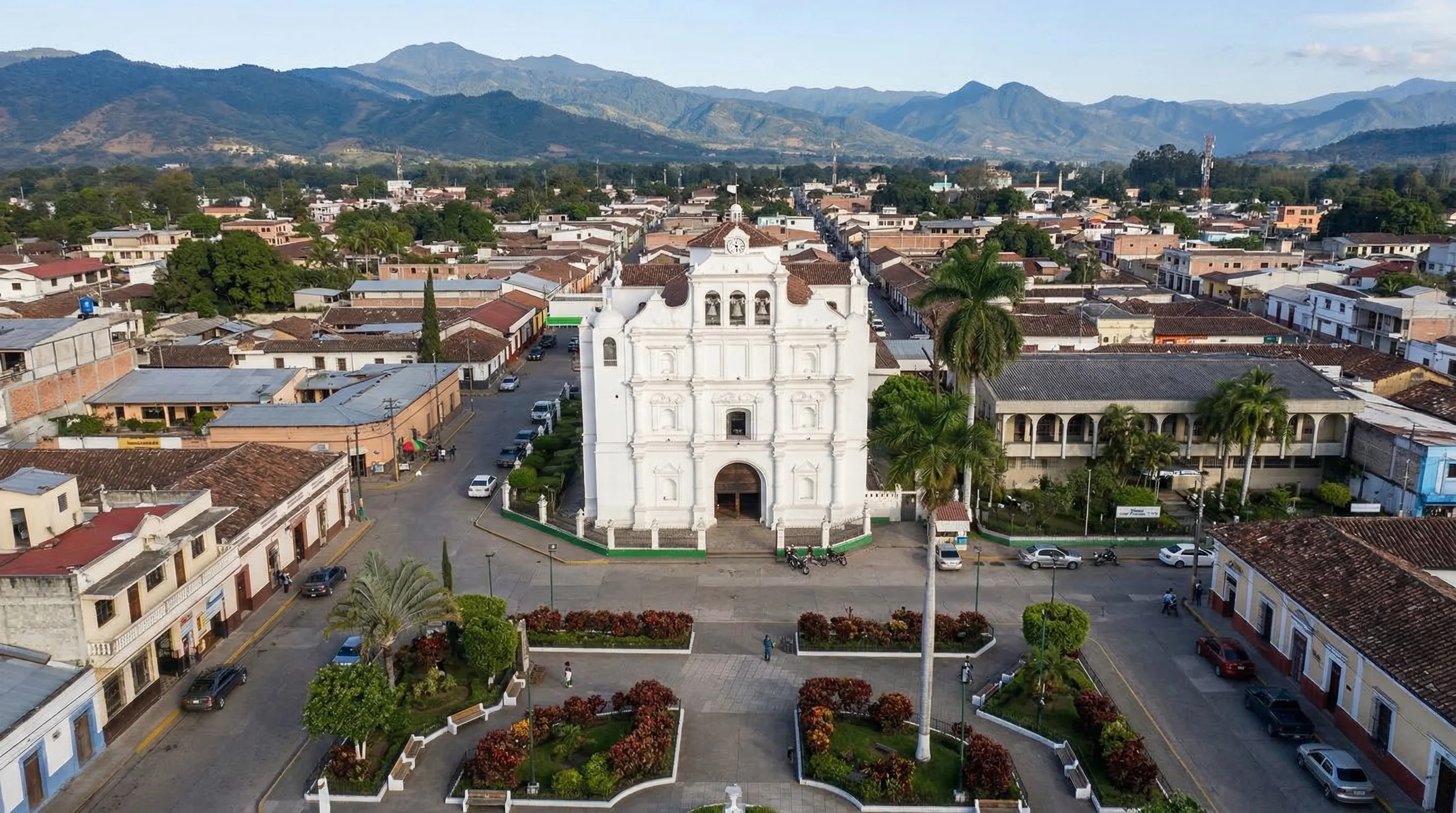
Salamá, the capital of Guatemala's Baja Verapaz department, is a strategic agricultural and commercial hub in the Central American highlands. Its location provides access to rich coffee-growing regions and key production areas for cardamom, citrus, and vegetables. The city functions as a distribution center for the region, connected by the CA-14 highway which links it to the major Atlantic port of Puerto Barrios and the capital, Guatemala City. Primary industries generating freight demand include coffee processing, agricultural commodity exports, basic consumer goods manufacturing, and construction materials distribution. The road infrastructure is essential for moving goods from this production zone to international markets via the southern Mexican border.










