Richmond to Ottawa
Ottawa → RichmondFTL freight transportation service between Richmond and Ottawa. Reliable logistics solutions for your business.
Route Description
Everything you need to know about the corridor Richmond - Ottawa
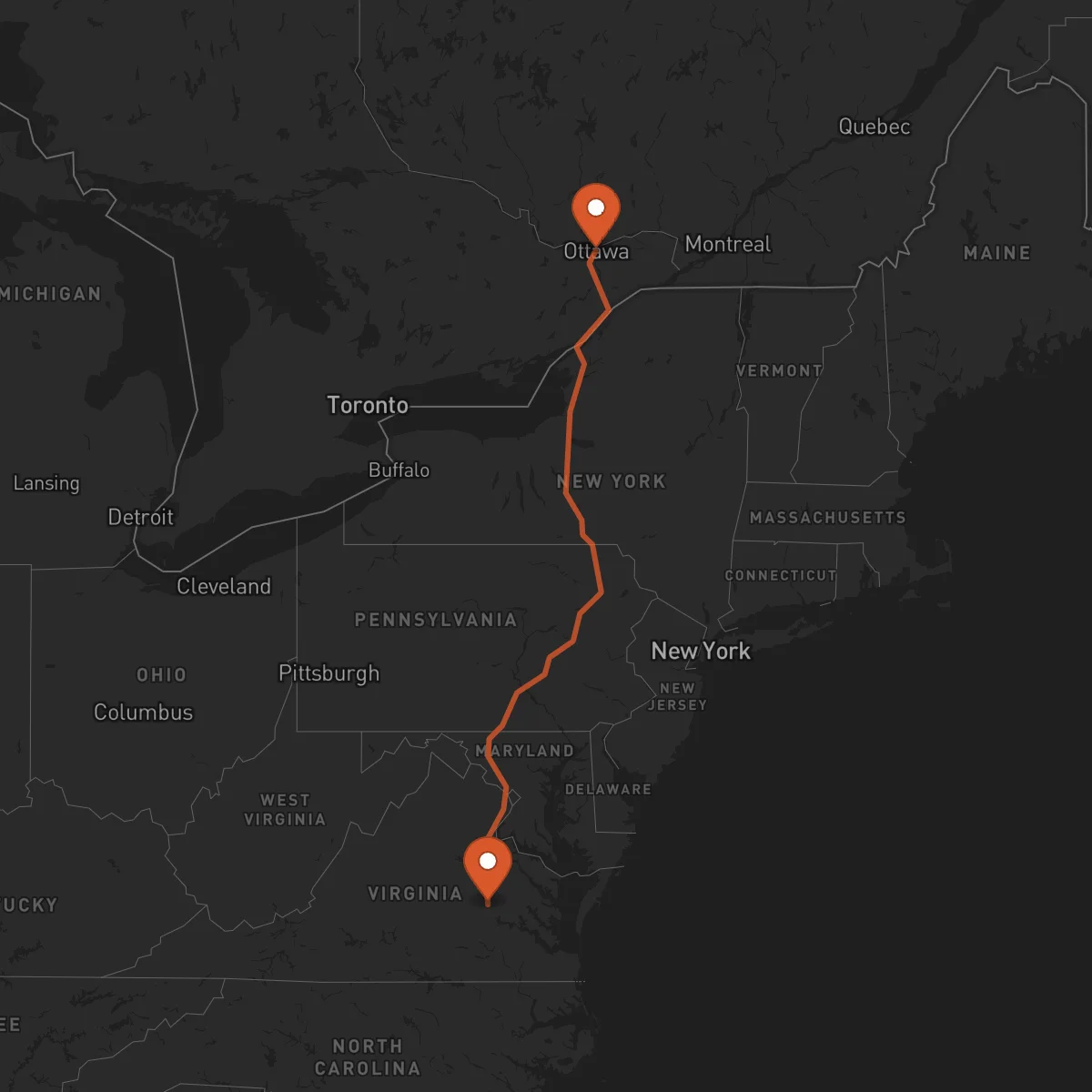
The Richmond-Ottawa corridor represents a vital cross-border freight transportation route connecting the industrial heartland of Virginia with Canada's capital. This 888-kilometer corridor traverses key economic regions, facilitating the movement of goods between the United States and Canada. The route passes through major transportation hubs including Washington D.C., Baltimore, and Montreal, making it a strategic link for North American trade. Control Terrestre specializes in managing the complexities of this cross-border operation, ensuring seamless freight movement across international boundaries.
The economic significance of this corridor is substantial, connecting Richmond's diverse manufacturing base with Ottawa's government and technology sectors. Richmond serves as a major distribution center for the southeastern United States, while Ottawa functions as a key logistics hub for eastern Canada. The corridor supports industries ranging from automotive and aerospace to pharmaceuticals and consumer goods, with freight volumes steadily increasing due to growing trade between the two nations.
Key transportation infrastructure along this route includes Interstate 95, the New York State Thruway, and Autoroute 20 in Quebec. The corridor features several major border crossings, with the Thousand Islands Bridge and the Lacolle border crossing being the most frequently used for commercial freight. Control Terrestre's expertise in cross-border documentation, customs clearance, and compliance with both US and Canadian regulations ensures efficient transit times and minimizes potential delays at border checkpoints.
Services for this Route
Available services for the corridor Richmond - Ottawa
 Origin
Richmond
Richmond, Virginia serves as a strategic logistics hub on the East Coast, offering excellent connectivity to major markets along the Atlantic seaboard. The city's location provides direct access to Interstate 95, facilitating efficient distribution throughout the eastern United States. Richmond's transportation infrastructure includes the Port of Richmond, multiple rail terminals, and a network of highways that support robust freight movement. The region's economy is diverse, with strong presence in advanced manufacturing, food processing, and distribution centers serving the southeastern market.
 Destination
Ottawa, Ontario represents a crucial logistics center in eastern Canada, strategically positioned along the Quebec-Ontario corridor. The city's location provides access to major transportation routes including the Trans-Canada Highway and proximity to Montreal's international transportation networks. Ottawa's infrastructure includes intermodal facilities, warehousing districts, and efficient connections to both US and Canadian markets. The region's economy is characterized by government services, technology, and advanced manufacturing, creating consistent demand for reliable freight transportation services.










