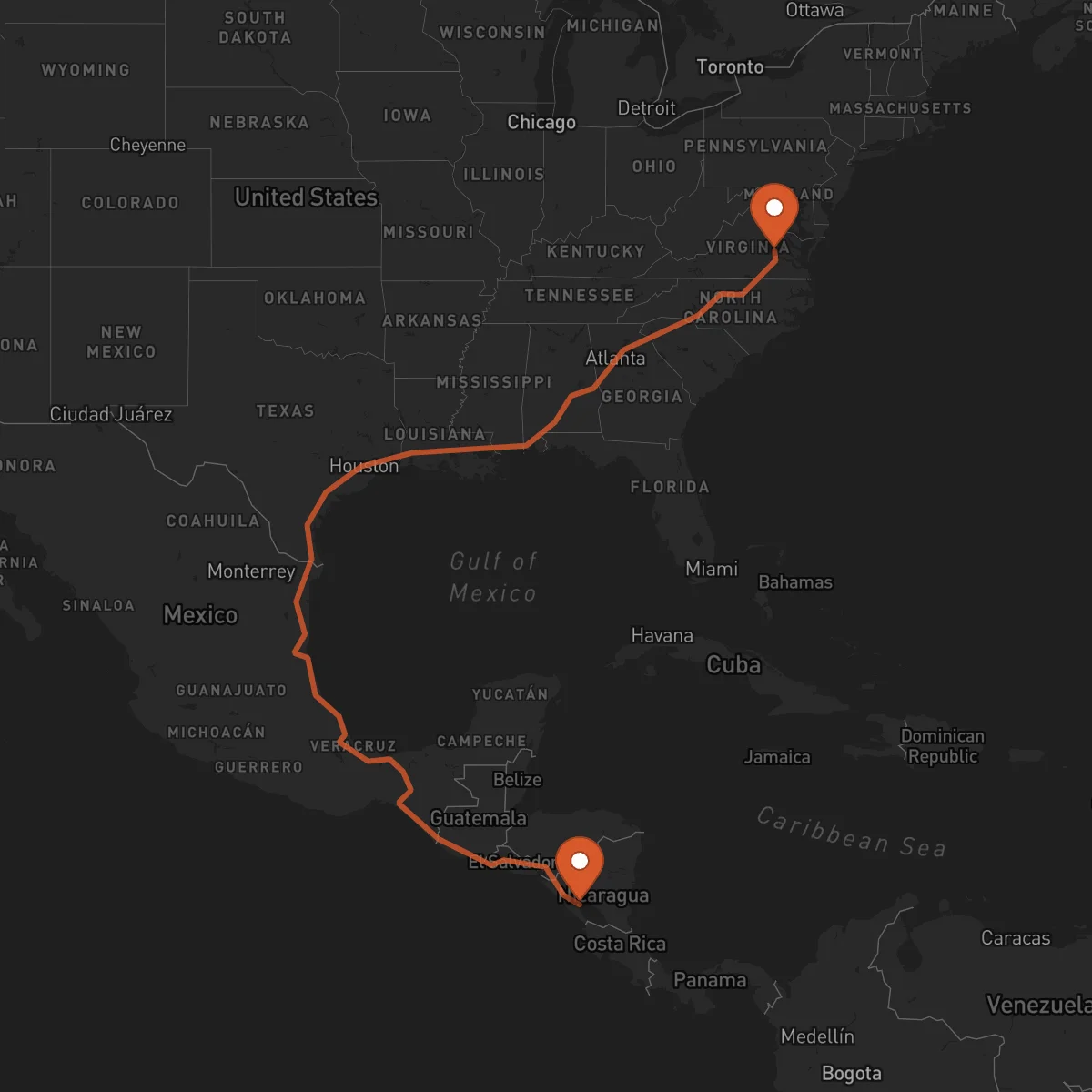
Richmond to Granada
Granada → RichmondFTL freight transportation service between Richmond and Granada. Reliable logistics solutions for your business.
Route Description
Everything you need to know about the corridor Richmond - Granada
The logistics corridor connecting Richmond, Virginia, in the United States, to Granada, Nicaragua, represents a vital cross-border route spanning approximately 2,971 kilometers. This corridor serves as a strategic link between the robust industrial and commercial base of the U.S. Southeast and the growing markets of Central America. As trade between North America and Central America continues to expand, this route has become increasingly important for companies seeking reliable full truckload (FTL) freight solutions to move goods efficiently across international borders.
Richmond anchors the northern end of this corridor as a major logistics hub in the Mid-Atlantic region, with direct access to Interstate 95 and Interstate 64, two of the most critical freight arteries in the eastern United States. From Richmond, freight moves southward through key corridors passing through states such as North Carolina, Georgia, and Florida before reaching southern ports and border crossing points that connect to the Central American trade network. The route leverages well-established highway infrastructure, including segments of I-95, I-75, and I-10, ensuring consistent ground transportation connectivity across thousands of kilometers of cross-border territory.
The main industries utilizing this corridor include manufacturing, agriculture, food and beverage, consumer goods, and industrial equipment. Companies in these sectors depend on dedicated FTL services to transport full truckload shipments that require direct, door-to-door delivery without intermediate handling. Cross-border operations along this corridor involve navigating customs procedures at key transit points, requiring experienced freight forwarders who understand documentation requirements, cargo compliance, and the regulatory frameworks of both the United States and Nicaragua.
At Control Terrestre, we facilitate seamless operations along this corridor through our alliance of experienced and certified transportation providers. We offer dedicated full truckload services with equipment options including 48' and 53' dry vans, refrigerated units, and flatbeds, ensuring that every shipment is matched with the right trailer for its cargo type. Our providers hold certifications such as C-TPAT, FAST, and BASC, which streamline customs processing and enhance cargo security throughout the journey. Whether your freight originates in Richmond or is destined for Granada, we provide the expertise and network to keep your supply chain moving with reliability and care for the environment.
Services for this Route
Available services for the corridor Richmond - Granada
 Origin
Richmond
Richmond, Virginia, is a strategically significant logistics hub located in the heart of the U.S. Mid-Atlantic region. Its position at the intersection of Interstate 95 and Interstate 64 provides direct freight connectivity to major markets along the entire Eastern Seaboard, from the Northeast to the Southeast. The Port of Virginia, located nearby in the Hampton Roads area, further strengthens Richmond's role as a multimodal logistics center, offering access to international maritime trade routes.
The city's economy is diversified, with strong sectors in manufacturing, food processing, pharmaceuticals, tobacco, chemicals, and consumer goods distribution. Richmond serves as a key distribution point for companies moving products throughout the eastern United States and exporting to international markets, including Central America. Its well-developed highway infrastructure, proximity to major interstates, and access to rail and port facilities make Richmond an ideal origin point for full truckload shipments heading south toward Central American destinations.
 Destination
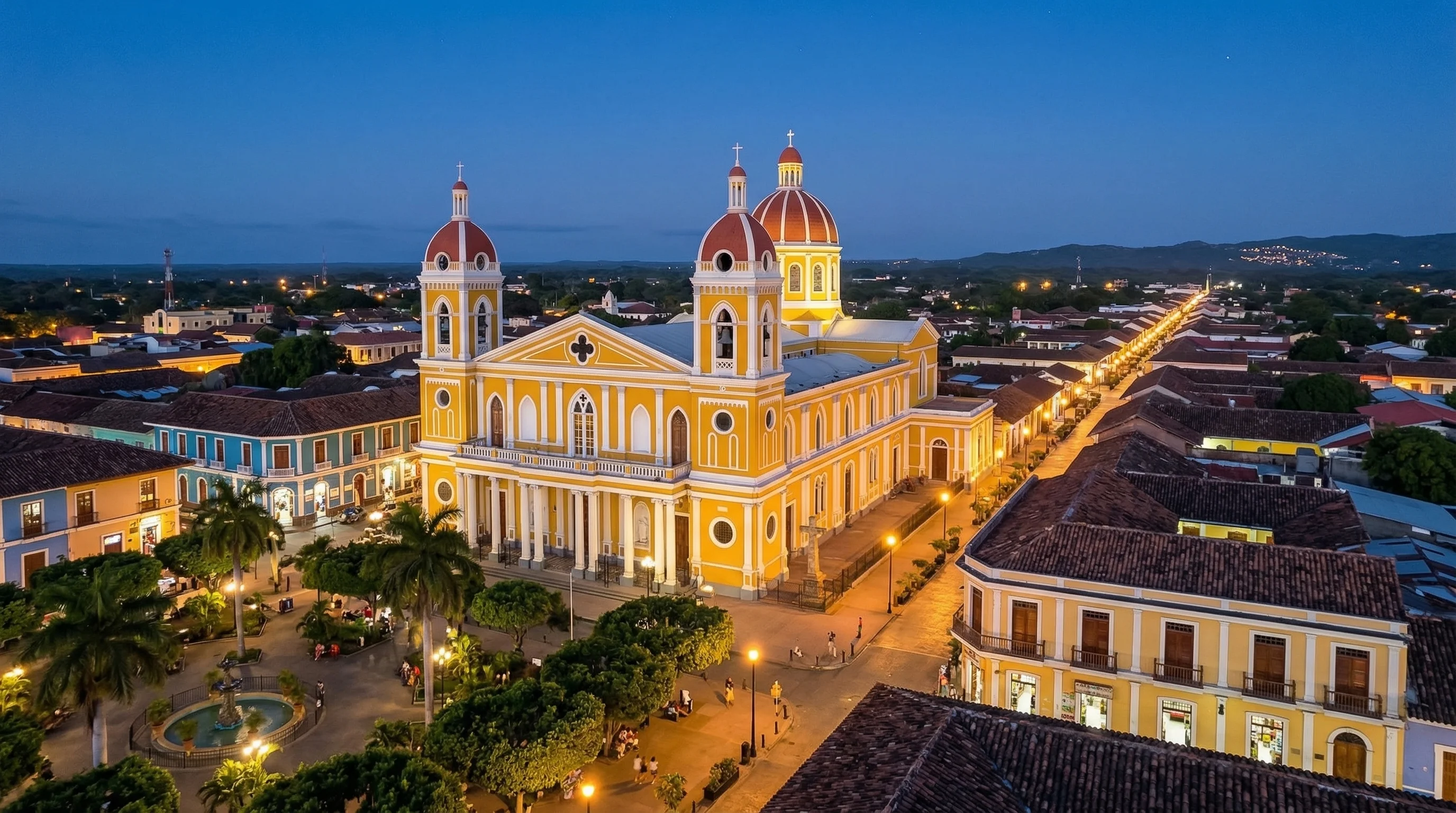
Granada, Nicaragua, is one of the country's most historically and economically significant cities, located on the northwestern shore of Lake Nicaragua along the Pan-American Highway. Its strategic position provides access to Nicaragua's interior and serves as a gateway for goods moving throughout the country and the broader Central American region. Granada's location along major road networks connects it to Managua, the capital, and to key border crossings that facilitate trade with neighboring Honduras and Costa Rica.
The local economy is driven by agriculture, tourism, manufacturing, and commercial distribution. Granada receives a variety of imported goods, including industrial equipment, consumer products, construction materials, and food products, making it an important destination for cross-border freight. The city's road infrastructure, centered on the Pan-American Highway and connecting regional routes, supports ground transportation operations and enables efficient last-mile delivery for companies distributing products throughout western Nicaragua.










