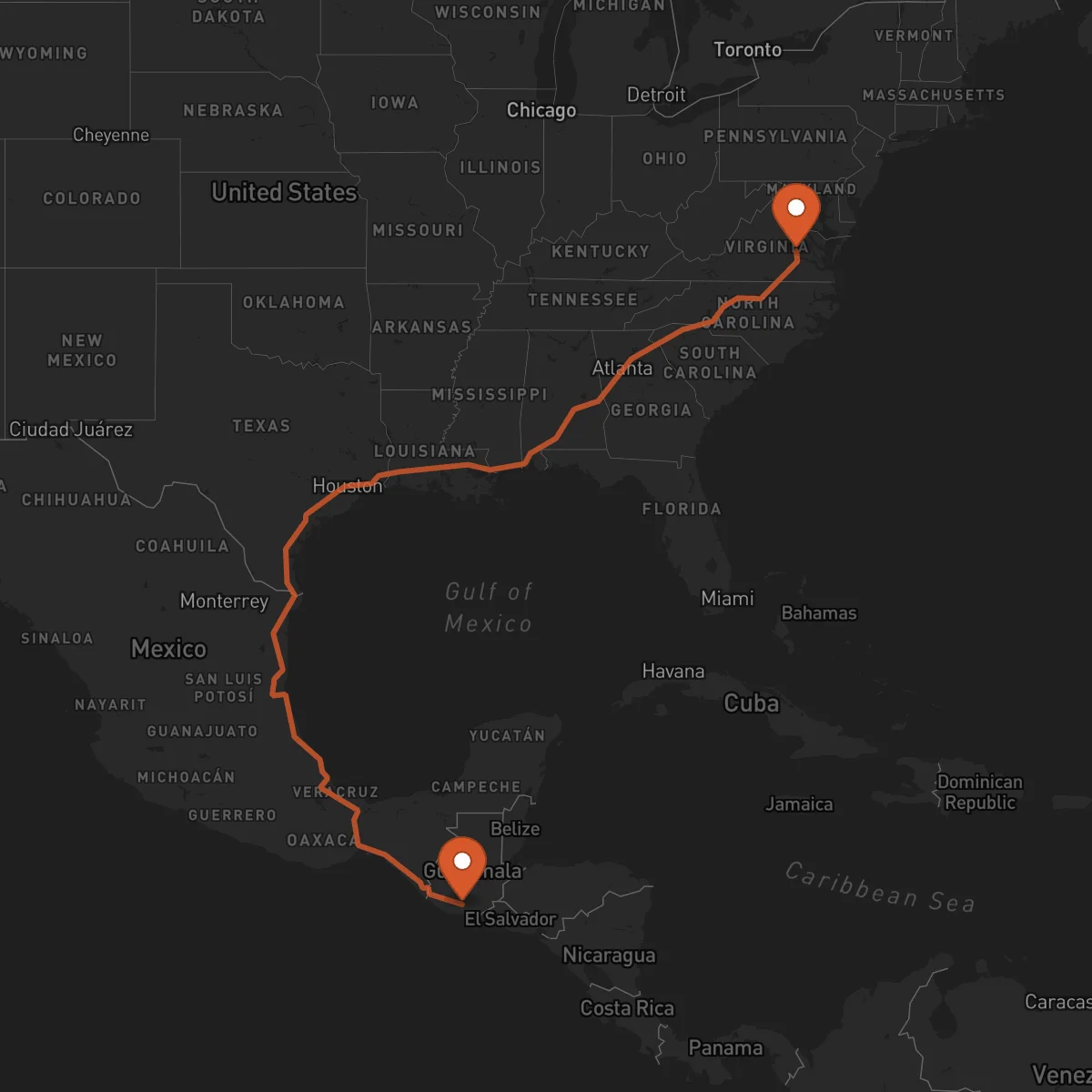
Richmond to Escuintla
Escuintla → RichmondFTL freight transportation service between Richmond and Escuintla. Reliable logistics solutions for your business.
Route Description
Everything you need to know about the corridor Richmond - Escuintla
The Richmond, Virginia to Escuintla, Guatemala corridor represents a critical North-South trade artery connecting the industrial heartland of the U.S. East Coast with the dynamic export economy of Central America. Spanning approximately 2,900 km, this cross-border route is vital for moving full truckload (FTL) freight that fuels manufacturing, agriculture, and consumer goods sectors across both regions. The economic context is defined by Richmond's role as a diversified production and distribution hub and Escuintla's position as Guatemala's agricultural and industrial gateway, creating a consistent flow of goods including raw materials, processed foods, textiles, and manufactured components.
Key industries leveraging this corridor include agriculture (coffee, bananas, sugar), textiles and apparel, chemical products, and general manufactured goods. The transportation infrastructure relies on a sequential network: departing Richmond via I-95 South, transitioning to I-40 West through the U.S., traversing the Mexican interior via federal highways (such as routes connecting to Laredo/El Paso border crossings), and continuing through Mexico and into Guatemala via primary highways like CA-9. The most significant border considerations occur at the U.S.-Mexico crossing (requiring C-TPAT/FAST certification for expedited clearance) and the Mexico-Guatemala crossing at Ciudad Hidalgo/Tecún Umán, where customs and documentation compliance is paramount.
Control Terrestre facilitates seamless operations on this complex corridor through our strategic alliance of certified providers. Our partners hold essential credentials including C-TPAT, FAST, and BASC, ensuring secure and efficient cross-border processing. We exclusively provide dedicated FTL solutions—whether standard dry van, refrigerated, flatbed, or tanker—tailored to the specific cargo needs of this route. Our expertise in managing the layered customs environments of three countries, combined with our 'door-to-door' service philosophy, allows us to mitigate common challenges like transfer delays and regulatory hurdles, offering our clients a streamlined, human-centric logistics experience from origin to destination.
Services for this Route
Available services for the corridor Richmond - Escuintla
 Origin
Richmond
Richmond, Virginia, serves as a strategic logistics origin due to its prime location on the U.S. East Coast, approximately 100 miles from the Port of Virginia. This provides excellent multimodal connectivity, blending deep-water ocean access with robust interstate highway networks, primarily I-95 and I-64. The city's economy is diversified, with major sectors including manufacturing (chemicals, plastics, tobacco), finance, and logistics/distribution. Its central position within the Eastern Seaboard's manufacturing belt makes it an ideal launch point for north-south freight corridors. The available transportation infrastructure is comprehensive, featuring major interstates, direct rail connections (CSX, Norfolk Southern), and the world-class port, enabling efficient consolidation and dispatch of full truckload freight destined for international markets.
 Destination
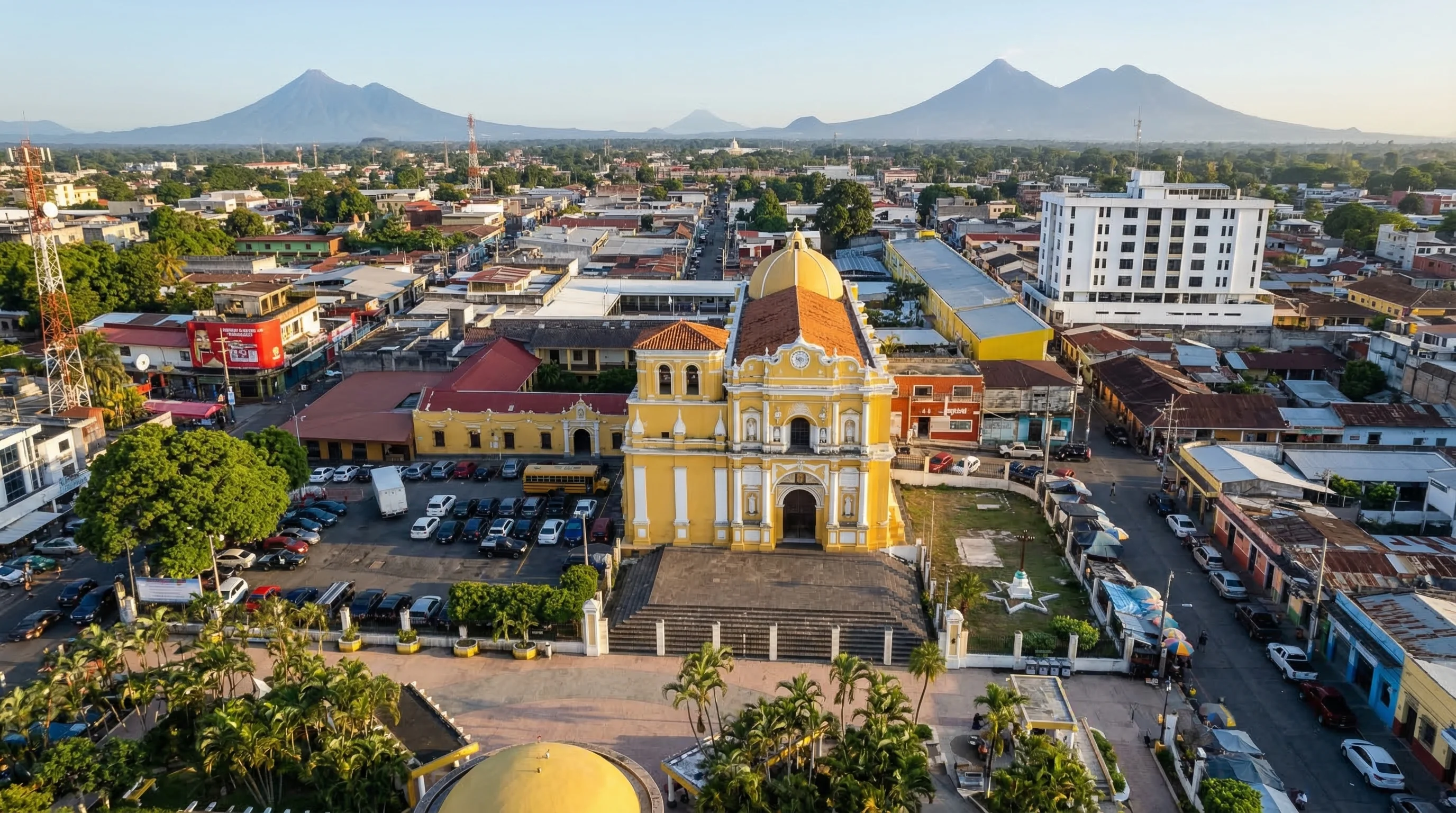
Escuintla, Guatemala, is a strategically vital logistics destination as the capital of the department of the same name and a key node in Central America's supply chain. It sits at the crossroads of Guatemala's primary north-south (CA-9) and east-west (CA-2) highways, providing direct land access to the Pacific port of Puerto San José and the capital, Guatemala City. Economically, Escuintla is an agricultural powerhouse, central to the production and export of sugar cane, bananas, coffee, and palm oil. It also hosts significant industrial activity, including food processing plants, textile factories, and fertilizer production. The available infrastructure is geared towards supporting these sectors, with well-maintained highways connecting to major ports and border crossings, making it a primary reception point for imported raw materials and machinery via cross-border FTL freight from North America.










