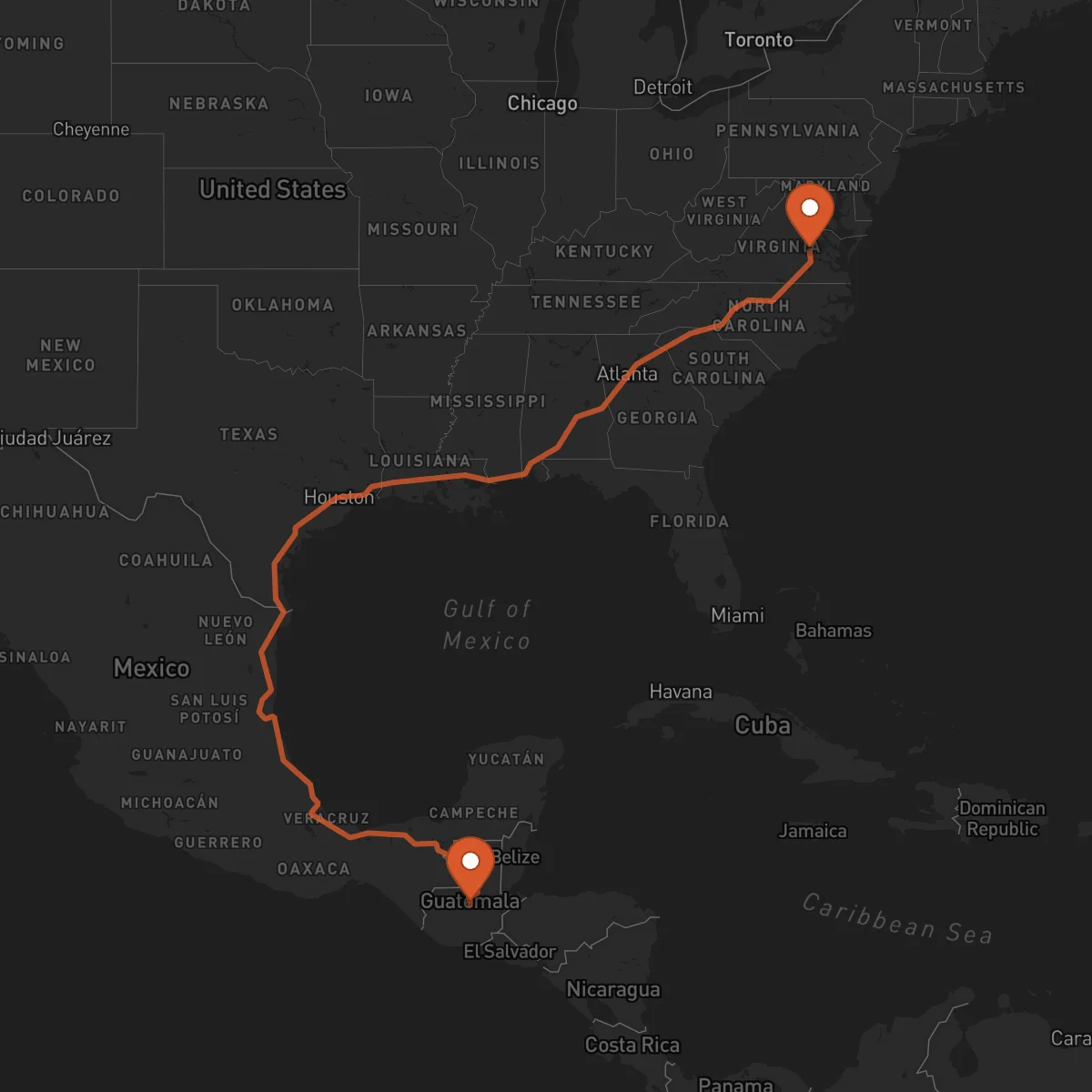
Richmond to Cobán
Cobán → RichmondFTL freight transportation service between Richmond and Cobán. Reliable logistics solutions for your business.
Route Description
Everything you need to know about the corridor Richmond - Cobán
The Richmond to Cobán corridor represents a critical North-South logistics artery, bridging the industrial Mid-Atlantic United States with the highlands of Central America. This strategic cross-border route facilitates the essential flow of goods between a major U.S. manufacturing and distribution hub and Guatemala's key agricultural and commercial heartland. Its importance is underscored by the complex, multi-country transit required, making expert coordination and regulatory compliance paramount for efficient supply chain management.
Economically, the corridor connects the diverse manufacturing base of Virginia—spanning chemicals, machinery, and fabricated metals—with Guatemala's vital agricultural exports, particularly coffee and cardamom from the Alta Verapaz region. It also supports the reverse flow of consumer goods, construction materials, and processed foods necessary for Central American development. The primary industries leveraging this route include agribusiness, food and beverage processing, industrial manufacturing, and retail distribution.
Transportation infrastructure relies on a sequence of major highways: from Richmond, I-95 South leads to the I-81 corridor, connecting to key border crossings in Texas. After crossing into Mexico, the route typically follows Mexican Federal Highway 190 and the Pan-American network through Chiapas, culminating in the crucial Mexico-Guatemala border crossing at Tecún Umán/El Carmen. From there, Guatemalan route CA-13 provides direct access to Cobán. Navigation requires meticulous planning for Mexican transit regulations, Central American customs unification efforts, and the specific documentation for cross-border freight.
Control Terrestre facilitates seamless operations on this demanding corridor through our alliance of certified providers. Our partners hold essential credentials like C-TPAT, FAST, and BASC, ensuring security and expedited processing at the U.S.-Mexico border and beyond. We exclusively manage full truckload (FTL) shipments, offering dedicated, expedited, and specialized options—including refrigerated and flatbed equipment—to match the cargo profile from Richmond's industries to Cobán's export needs. Our expertise in cross-border documentation and our network's deep regional knowledge transform this complex multi-national journey into a reliable, door-to-door solution for your supply chain.
Services for this Route
Available services for the corridor Richmond - Cobán
 Origin
Richmond
Richmond, Virginia, serves as a pivotal logistics origin point on the U.S. East Coast, offering unparalleled strategic connectivity. Its central location within the Mid-Atlantic provides efficient access to major population centers and ports. The city is a multimodal nexus, anchored by the Port of Virginia—one of the deepest, most modern container ports in the Americas—and intersected by critical interstate highways I-95 and I-64, with I-81 providing a direct corridor to the southern U.S. border. A robust Class I railroad network further enhances its capacity for intermodal transfers.
Richmond's economic engine is diverse and robust, driving significant freight demand. Key industries include advanced manufacturing (chemicals, plastics, and pharmaceuticals), food processing, and the production of machinery and fabricated metal products. The region is also a major hub for logistics and distribution services themselves, supporting a vast array of supply chain operations. This industrial diversity generates consistent demand for FTL services moving a wide range of goods, from industrial components to processed foods, southward into Mexico and Central America.
 Destination
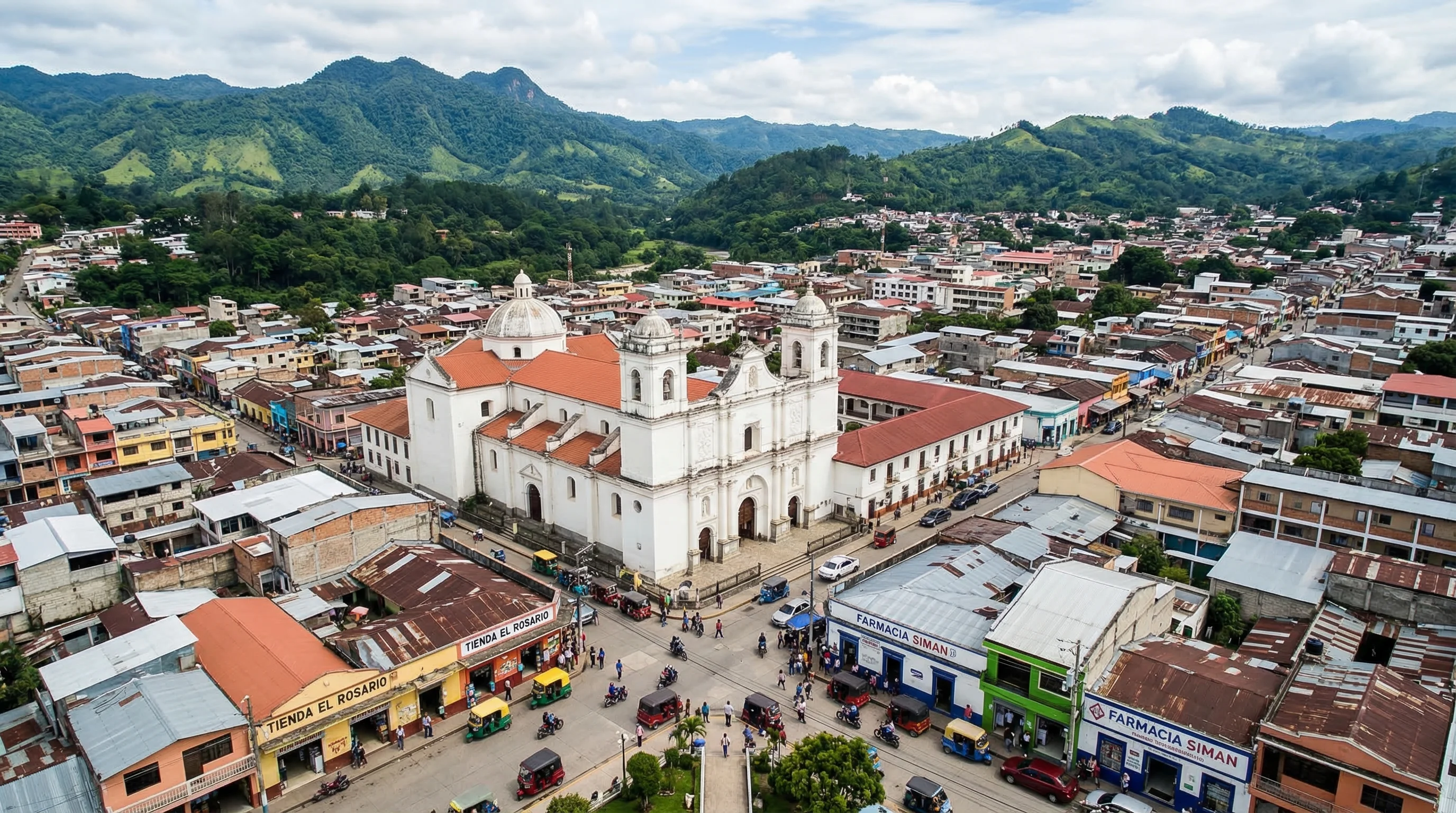
Cobán
Cobán, the capital of Guatemala's Alta Verapaz department, is a fundamental logistics destination and commercial gateway for northern Central America. Its strategic value lies in its position within the fertile Guatemalan highlands, serving as a collection and distribution point for the country's most important agricultural exports. The city's infrastructure is centered on connectivity to both the Caribbean port of Puerto Barrios and the Mexican border. The primary overland artery is the paved Guatemalan highway CA-13, which directly links Cobán to the Mexico-Guatemala border crossing at Tecún Umán, forming the final leg of the international freight corridor.
The economic lifeblood of the Cobán region is agriculture. It is the epicenter of Guatemala's premium coffee production and the world's primary source of cardamom. Supporting industries include timber processing, citrus cultivation, and a growing sector of agricultural equipment and consumer goods distribution to serve the local population and surrounding communities. This creates a consistent demand for inbound FTL freight carrying fertilizers, machinery, packaged foods, and consumer goods, while outbound shipments are dominated by high-value, time-sensitive agricultural exports requiring specialized handling, such as refrigerated transport.










