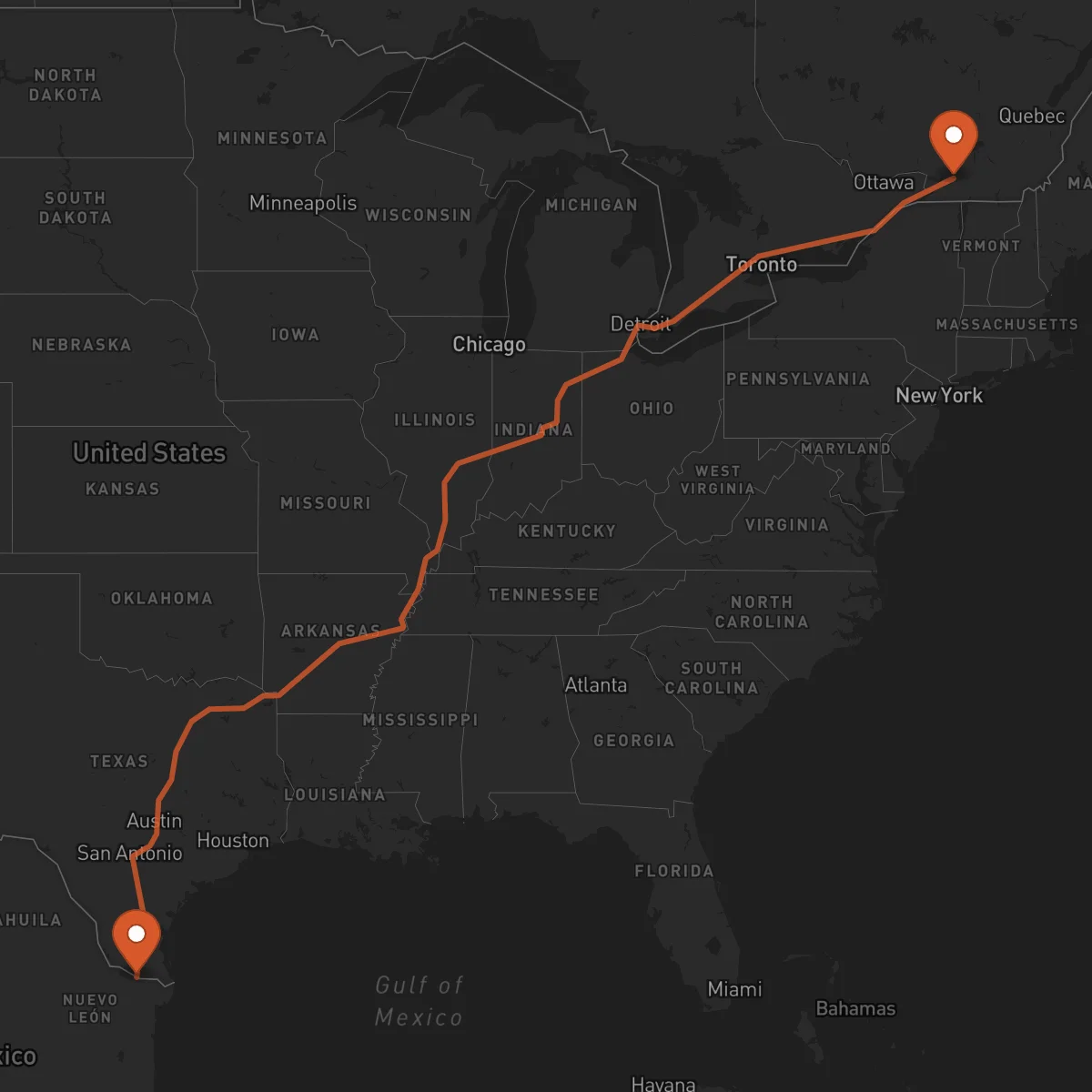
Reynosa to Montreal
Montreal → ReynosaFTL freight transportation service between Reynosa and Montreal. Reliable logistics solutions for your business.
Route Description
Everything you need to know about the corridor Reynosa - Montreal
The logistics corridor connecting Reynosa, Tamaulipas with Montreal, Quebec represents a vital trade artery linking Mexico's industrial heartland with Canada's major economic center. This cross-border route spans approximately 3,078 kilometers through three countries, facilitating the movement of goods between North America's most dynamic manufacturing and commercial regions. The corridor serves as a crucial link in the North American supply chain, connecting the maquiladora industry of northern Mexico with the sophisticated distribution networks of Eastern Canada.
The economic significance of this corridor is underscored by the complementary industrial strengths of both regions. Reynosa serves as a key manufacturing hub for automotive components, electronics, and medical devices, while Montreal functions as a major center for aerospace, pharmaceuticals, and advanced manufacturing. The corridor supports industries including automotive, technology, consumer goods, and industrial equipment, enabling seamless integration of production and distribution across the continent.
Transportation along this corridor relies on major highway networks including Mexico's Federal Highway 85, the United States' I-35 and I-94, and Canada's Autoroute 20 and Autoroute 25. Key border crossings at Laredo/Nuevo Laredo and Detroit/Windsor facilitate efficient cross-border movement. Control Terrestre provides comprehensive FTL services along this route, ensuring reliable door-to-door delivery with experienced drivers familiar with cross-border documentation, customs procedures, and the specific requirements of each jurisdiction along the journey.
Services for this Route
Available services for the corridor Reynosa - Montreal
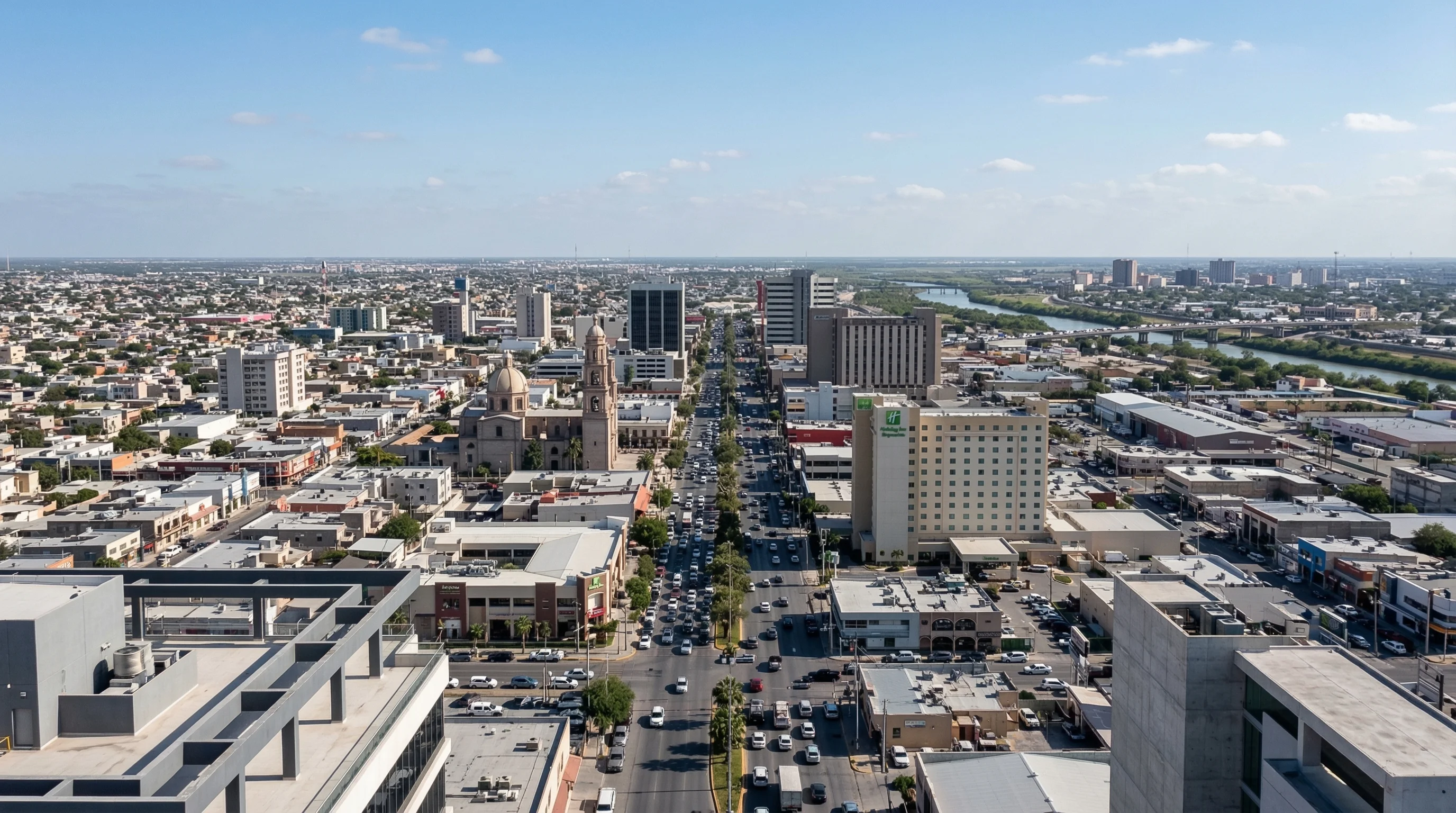 Origin
Reynosa
Reynosa, located in the state of Tamaulipas, stands as a strategic logistics hub in northeastern Mexico, positioned directly across the border from McAllen, Texas. The city's proximity to major U.S. markets and its integration with the maquiladora industry make it an ideal origin point for cross-border freight movements. Reynosa's location within the border region provides immediate access to major transportation infrastructure, including the Reynosa-Hidalgo International Bridge and connections to Mexico's Federal Highway 85, which links directly to the U.S. Interstate system.
The economic base of Reynosa centers on manufacturing and export-oriented industries, with particular strength in automotive parts production, electronics assembly, and medical device manufacturing. The city hosts numerous multinational corporations and benefits from specialized industrial parks designed for efficient logistics operations. Transportation infrastructure in Reynosa includes multiple industrial rail spurs, a modern international airport with cargo facilities, and extensive highway connections that facilitate rapid access to both Mexican and U.S. markets.
 Destination
Montreal, Quebec represents one of Canada's most important logistics and commercial centers, strategically positioned along the St. Lawrence River with access to both inland and international markets. As the largest city in Quebec and a major port destination, Montreal serves as a crucial distribution hub for Eastern Canada and the northeastern United States. The city's location provides multimodal transportation options, including the Port of Montreal, extensive rail connections through Canadian National Railway and Canadian Pacific Railway, and major highway networks that facilitate efficient distribution throughout the region.
The economic landscape of Montreal is characterized by advanced manufacturing, aerospace, pharmaceuticals, and technology sectors. The city hosts major corporations including Bombardier, CAE, and numerous biotech firms, creating consistent demand for reliable freight transportation. Montreal's transportation infrastructure includes Pierre Elliott Trudeau International Airport with dedicated cargo facilities, a comprehensive public transit system, and the Montreal-Trudeau Cargo Village, which provides specialized handling for time-sensitive and high-value shipments. The city's status as a bilingual commercial center also facilitates international trade relationships, particularly with European and Latin American markets.










