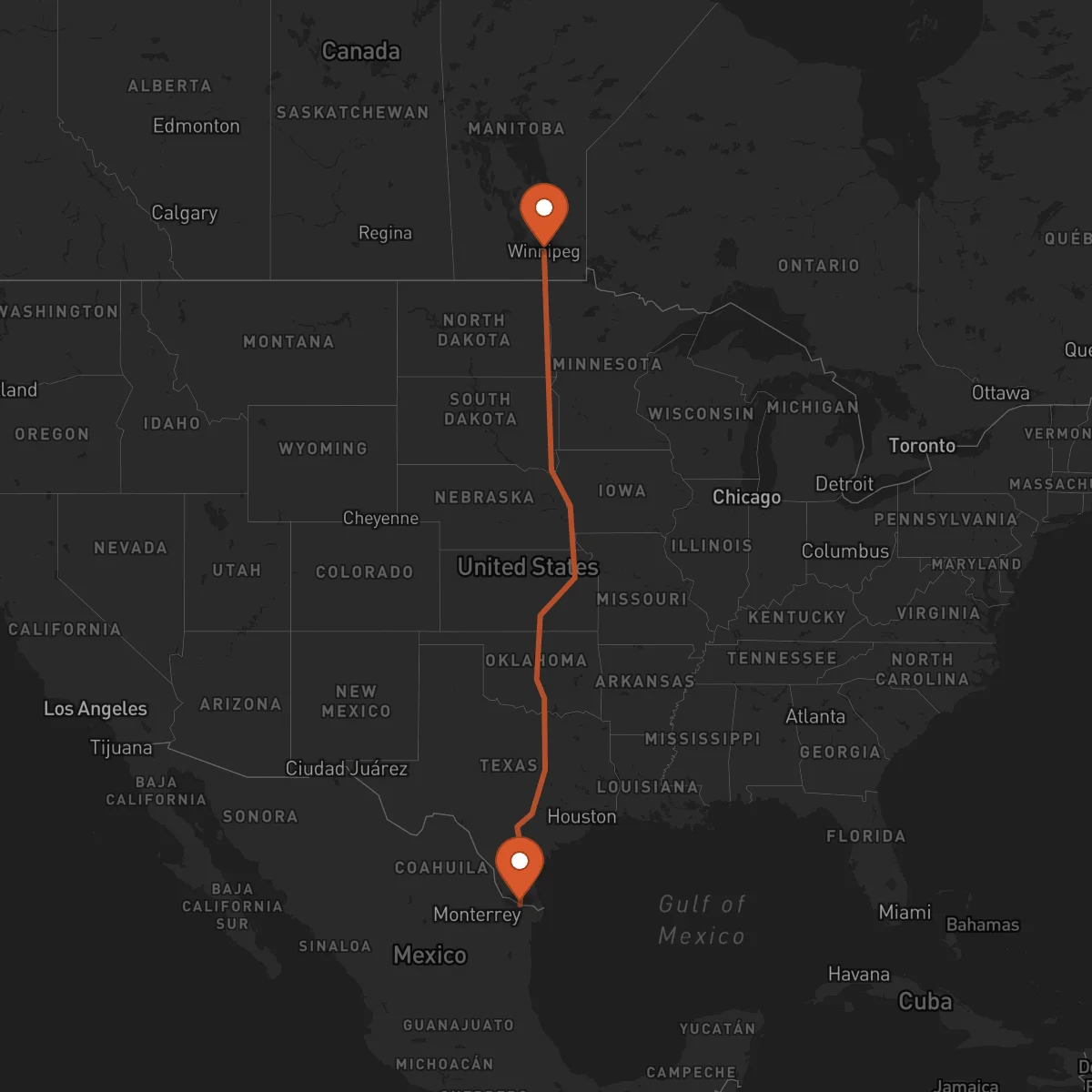
Reynosa to Winnipeg
Winnipeg → ReynosaFTL freight transportation service between Reynosa and Winnipeg. Reliable logistics solutions for your business.
Route Description
Everything you need to know about the corridor Reynosa - Winnipeg
The logistics corridor connecting Reynosa, Tamaulipas, with Winnipeg, Manitoba, represents a vital cross-border freight transportation route spanning approximately 2649 kilometers. This strategic corridor links Mexico's northeastern industrial hub with Canada's central transportation nexus, facilitating the movement of goods between North America's three major economies. The route traverses diverse terrain and crosses multiple state and provincial boundaries, requiring expert coordination and specialized knowledge of cross-border regulations.
The economic significance of this corridor cannot be overstated. Reynosa serves as a key manufacturing center within Mexico's Maquiladora industry, while Winnipeg functions as a crucial distribution point for goods destined for Western Canada and the northern United States. This north-south flow of commerce supports industries ranging from automotive and electronics to agriculture and consumer goods, creating a continuous demand for reliable full truckload transportation services.
Major transportation infrastructure along this corridor includes Mexico's Federal Highway 85, which connects to the United States via the Pharr International Bridge, and Canada's Trans-Canada Highway system. The route requires careful navigation of border crossings, with particular attention to customs documentation, security protocols, and compliance with both USMCA trade agreement requirements and individual country regulations. Control Terrestre's expertise in managing these complex cross-border operations ensures seamless freight movement from origin to destination.
Services for this Route
Available services for the corridor Reynosa - Winnipeg
 Origin
Reynosa
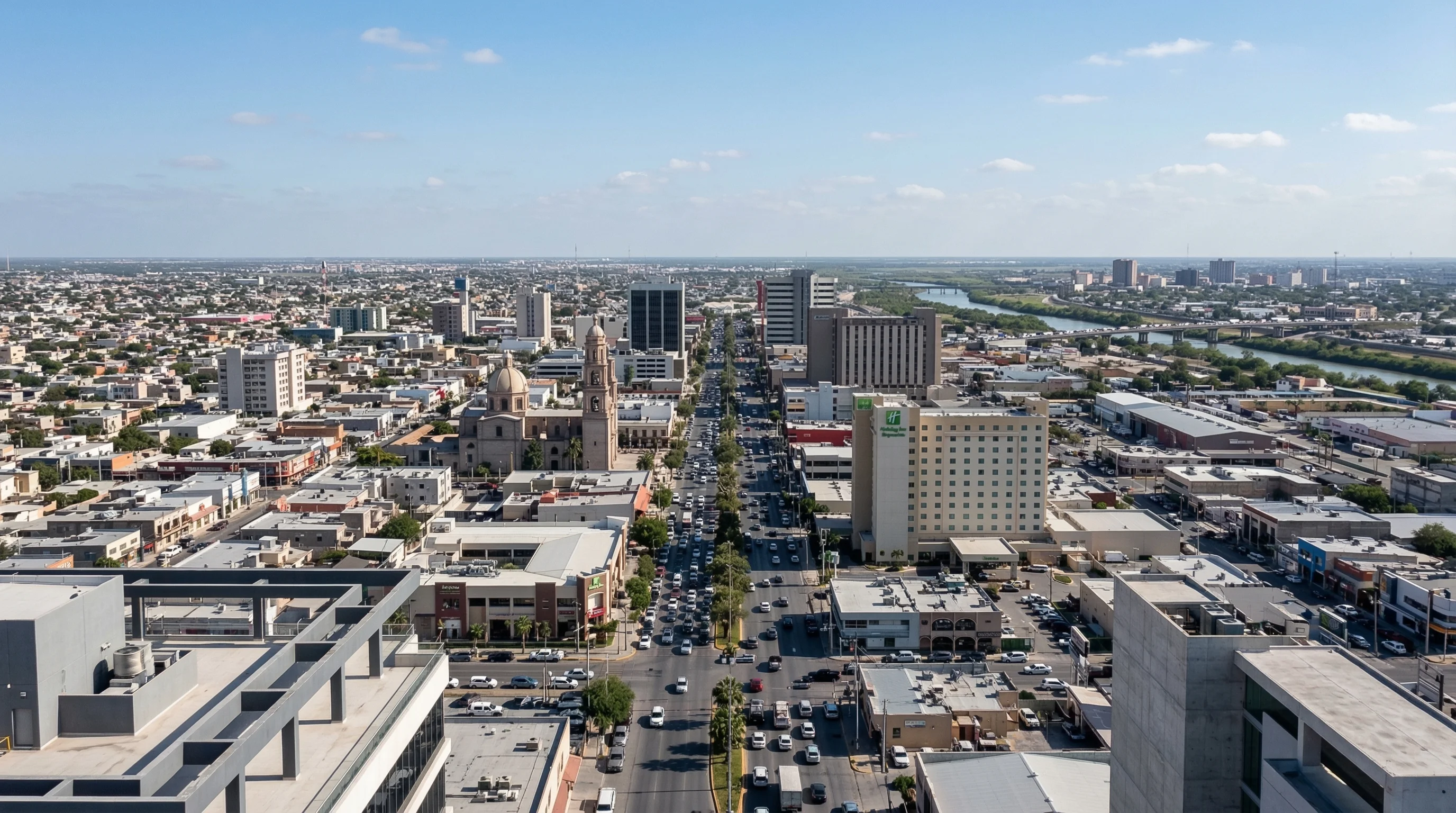
Reynosa, located in the state of Tamaulipas, Mexico, stands as a strategic logistics hub in northeastern Mexico. Positioned directly across the border from McAllen, Texas, Reynosa benefits from its proximity to major US markets while maintaining cost-effective manufacturing capabilities. The city serves as a critical entry point for goods entering Mexico and a departure point for exports heading north.
The region's economy is dominated by the Maquiladora industry, with strong presence in automotive manufacturing, electronics assembly, and medical device production. Reynosa's industrial parks house numerous international companies that rely on efficient freight transportation to maintain their just-in-time production schedules. The city's transportation infrastructure includes direct access to Mexico's Federal Highway 85, the Pharr International Bridge for US-Mexico border crossing, and the nearby General Lucio Blanco International Airport for air cargo operations.
 Destination
Winnipeg, the capital city of Manitoba, Canada, serves as a strategic logistics hub in the heart of North America. Located at the confluence of the Red and Assiniboine rivers, Winnipeg's central geographic position makes it an ideal distribution center for goods destined for Western Canada, the northern United States, and Arctic regions. The city's transportation infrastructure includes major highways, rail connections, and an international airport.
The Winnipeg economy encompasses diverse industries including manufacturing, agriculture, aerospace, and information technology. The city's strategic location at the eastern edge of the Prairies makes it a crucial point for agricultural product distribution, while its manufacturing sector requires reliable inbound supply chain management. Winnipeg's transportation network includes access to the Trans-Canada Highway, extensive rail connections through Canadian National and Canadian Pacific railways, and the Winnipeg James Armstrong Richardson International Airport, providing multiple options for freight movement and distribution.










