Raleigh to Houston
Houston → RaleighFTL freight transportation service between Raleigh and Houston. Reliable logistics solutions for your business.
Route Description
Everything you need to know about the corridor Raleigh - Houston
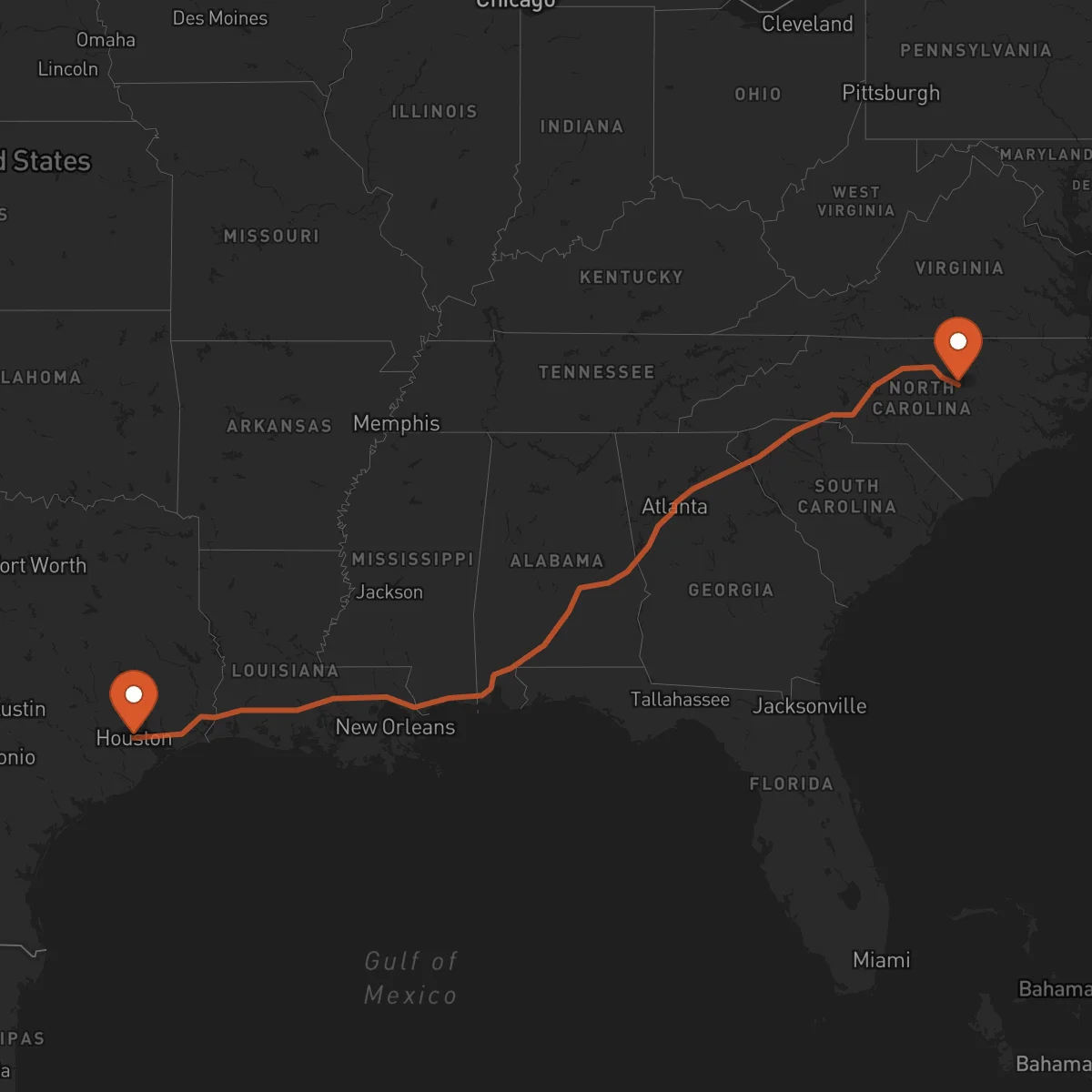
The logistics corridor connecting Raleigh, North Carolina to Houston, Texas represents a vital freight transportation route across the southeastern United States. This 1,699 km domestic corridor links two major economic hubs, facilitating the movement of goods between the Research Triangle region and the Gulf Coast's energy and industrial powerhouse. The route traverses diverse landscapes and crosses multiple state lines, requiring expertise in interstate logistics and regulatory compliance.
The corridor's strategic importance stems from the complementary economic profiles of both regions. Raleigh serves as a center for technology, research, and pharmaceuticals, while Houston dominates in energy, petrochemicals, and manufacturing. This creates a consistent flow of specialized cargo moving in both directions, from high-tech equipment and pharmaceutical products to industrial machinery and energy sector components.
Major transportation infrastructure along this corridor includes Interstate 85, Interstate 20, and Interstate 45, providing multiple routing options for freight carriers. These highways connect through key logistics centers like Atlanta and Birmingham, offering flexibility for time-sensitive shipments. The route also provides access to major ports and rail terminals, enabling seamless intermodal transportation solutions.
Control Terrestre specializes in optimizing freight movements along this corridor through our network of certified transportation providers. Our expertise in full truckload (FTL) services ensures dedicated capacity for your shipments, while our strategic partnerships enable efficient routing and competitive transit times. We understand the specific requirements of industries operating between these regions and provide tailored solutions for everything from standard palletized freight to specialized cargo requiring temperature control or hazardous materials handling.
Services for this Route
Available services for the corridor Raleigh - Houston
 Origin
Raleigh
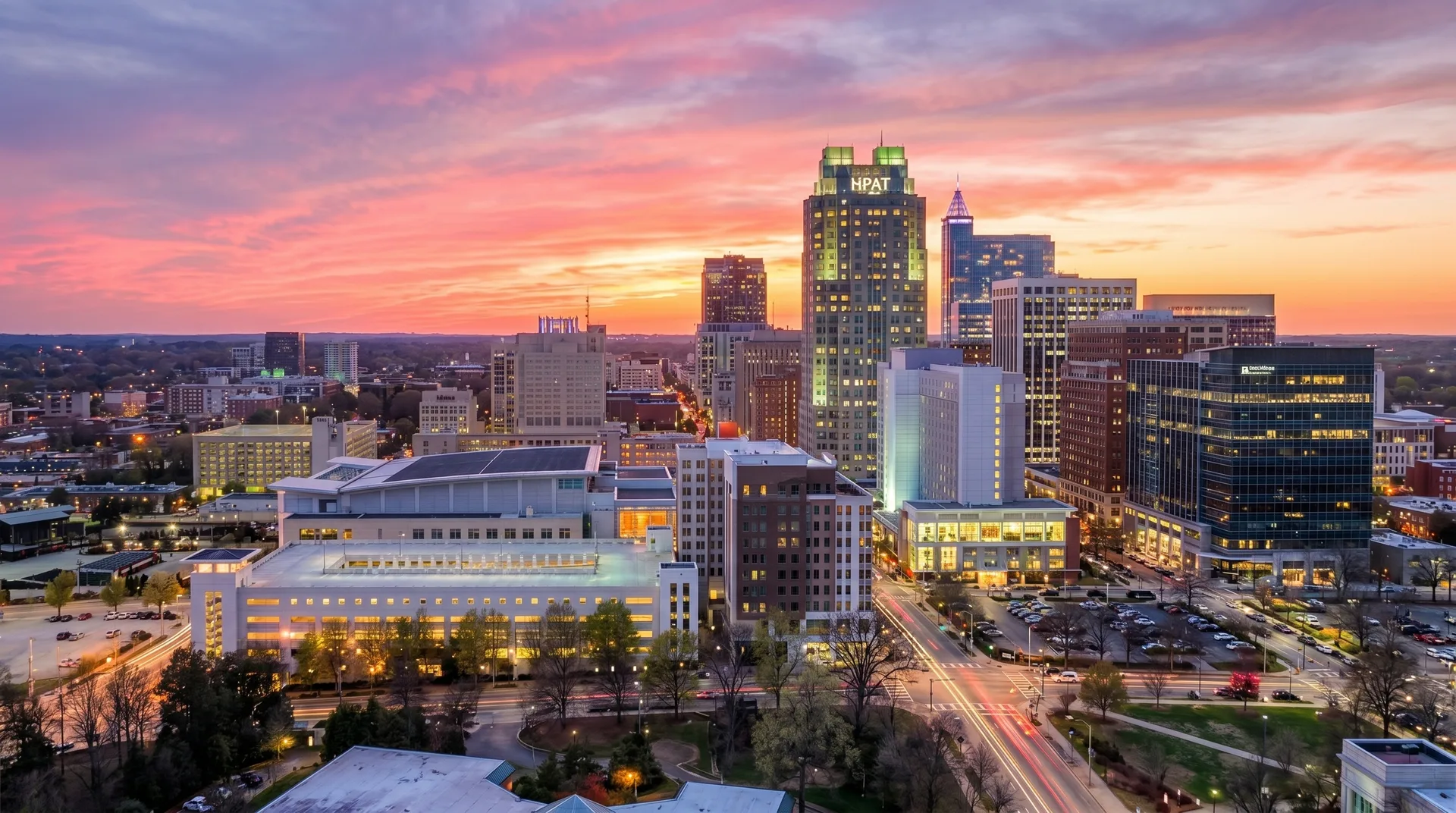
Raleigh, North Carolina serves as a strategic logistics hub in the southeastern United States, positioned within the dynamic Research Triangle region. The city's location provides excellent access to major East Coast markets while maintaining competitive transportation costs. Raleigh's infrastructure includes the Raleigh-Durham International Airport, extensive highway networks including I-40 and I-85, and proximity to the Port of Wilmington for ocean freight connections.
The region's economy is dominated by technology, research, and education sectors, with major employers in pharmaceuticals, biotechnology, and information technology. This creates consistent demand for specialized freight transportation, particularly for high-value, time-sensitive shipments. The presence of numerous universities and research institutions also generates regular movement of laboratory equipment, medical supplies, and scientific materials requiring careful handling and security.
 Destination
Houston
Houston, Texas stands as one of America's most important logistics and industrial centers, strategically positioned near the Gulf of Mexico and major international trade routes. The city's Port of Houston ranks among the busiest in the nation, while its extensive highway network including I-10, I-45, and I-69 provides excellent connectivity throughout the region and beyond. Houston's logistics infrastructure also includes George Bush Intercontinental Airport and William P. Hobby Airport for air freight operations.
The Houston metropolitan area is the energy capital of the United States, hosting headquarters and operations for major oil, gas, and petrochemical companies. This industrial base creates substantial demand for specialized freight transportation, including heavy equipment, hazardous materials, and oversized cargo. Additionally, Houston's growing healthcare sector, manufacturing industry, and international trade activities generate diverse freight transportation needs, from medical supplies to industrial components.










