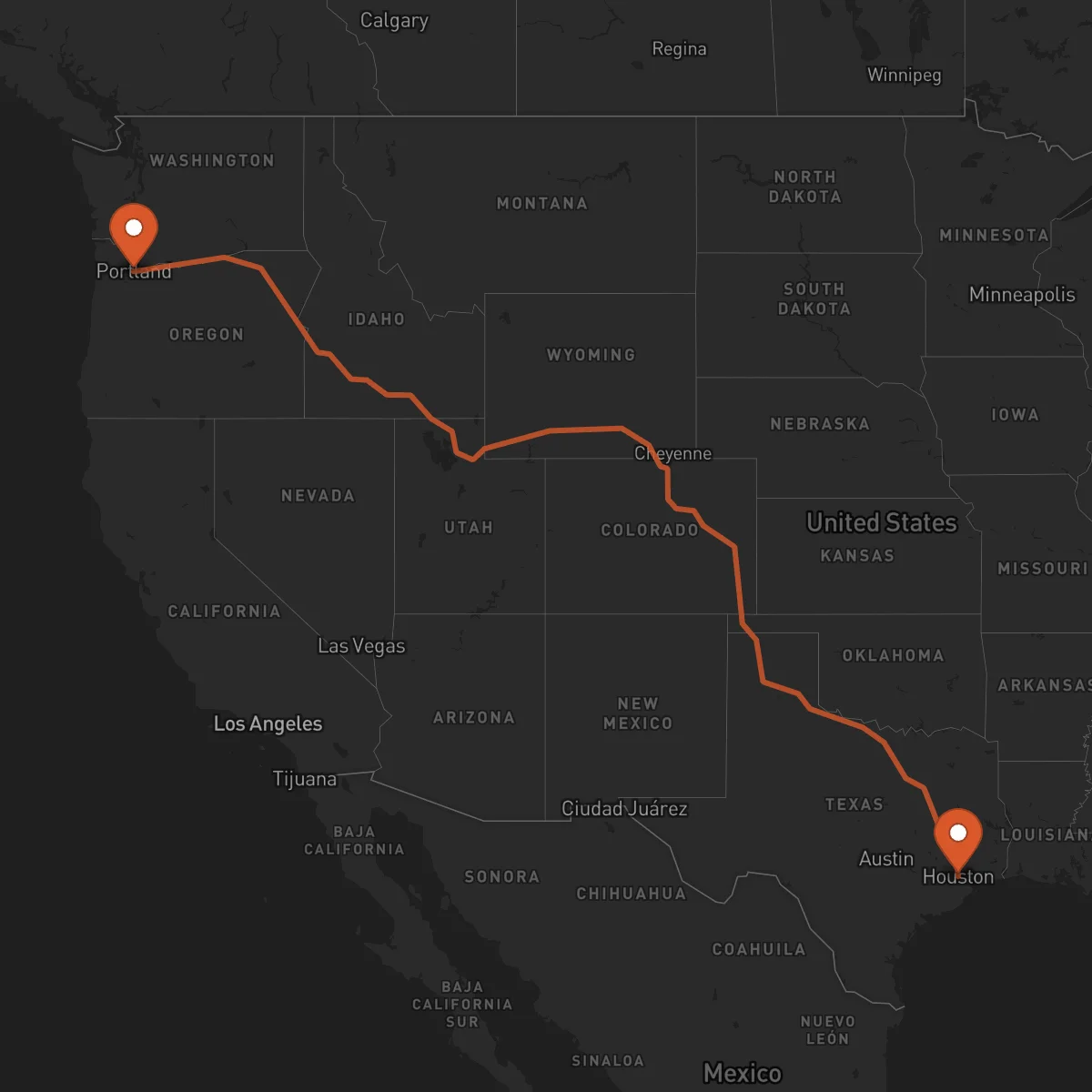
Portland to Houston
Houston → PortlandFTL freight transportation service between Portland and Houston. Reliable logistics solutions for your business.
Route Description
Everything you need to know about the corridor Portland - Houston
The logistics corridor connecting Portland, Oregon to Houston, Texas represents one of the most strategic freight transportation routes in the United States. Spanning approximately 2,951 kilometers, this corridor links the Pacific Northwest with the Gulf Coast, creating a vital connection between two major economic regions. This route traverses diverse landscapes and crosses multiple state lines, requiring expert coordination and comprehensive logistics management to ensure efficient freight movement.
The economic significance of this corridor cannot be overstated. Portland serves as a major gateway for international trade, with its proximity to the Pacific Ocean and extensive port facilities. Houston, on the other hand, stands as a global energy hub and one of the busiest ports in the United States. The corridor facilitates the movement of goods between these two economic powerhouses, supporting industries ranging from technology and manufacturing to energy and agriculture.
Control Terrestre specializes in providing full truckload (FTL) services along this crucial corridor. Our experienced network of transportation providers ensures reliable and efficient freight movement, utilizing the most optimal routes and equipment types. We understand the unique challenges of this long-haul route and have developed specialized solutions to meet the diverse needs of our clients, whether they require standard dry van transportation, refrigerated services, or specialized equipment for oversized cargo.
Services for this Route
Available services for the corridor Portland - Houston
 Origin
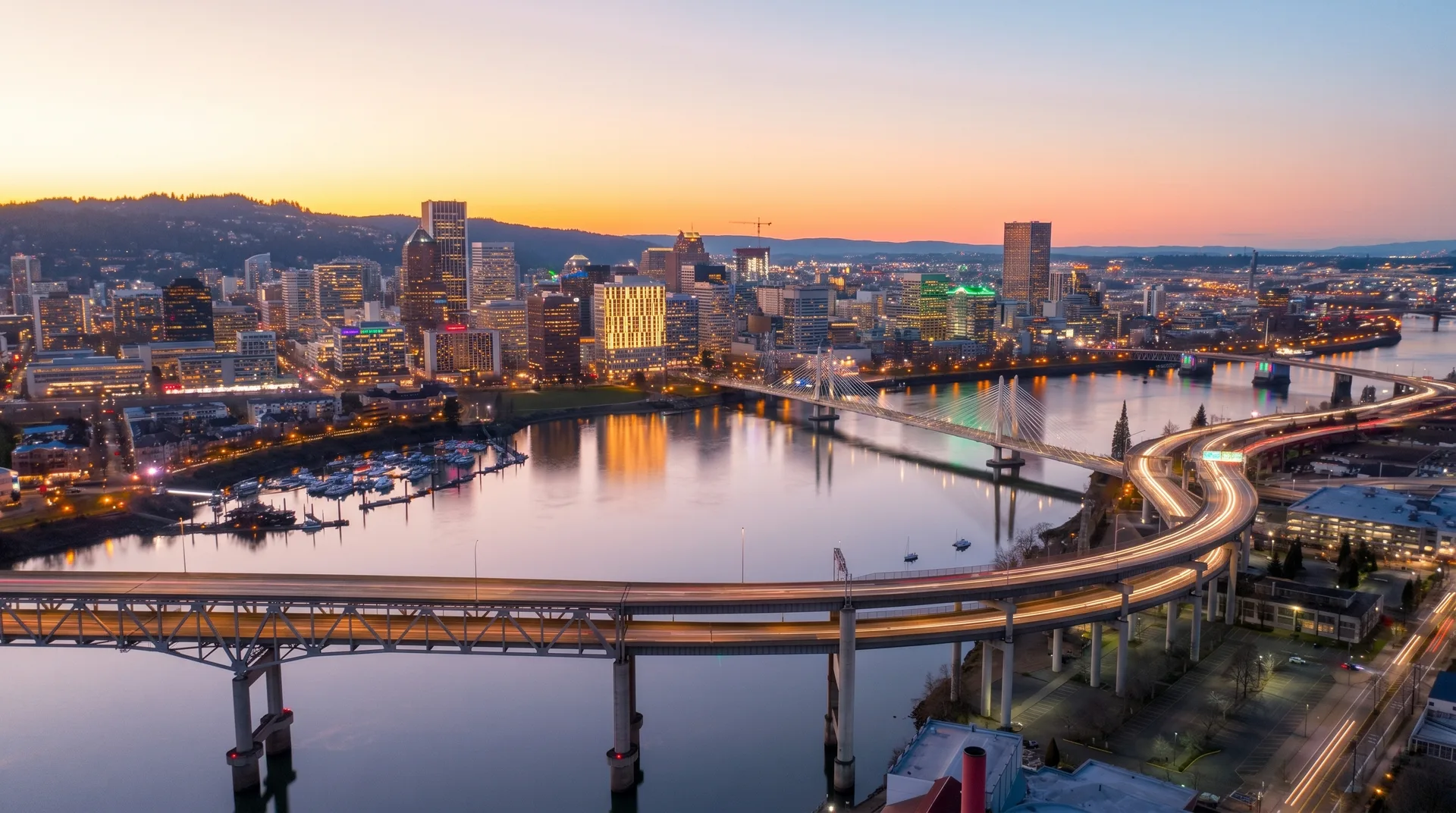
Portland
Portland, Oregon stands as a strategic logistics hub on the West Coast, offering exceptional connectivity for freight transportation. The city's location provides direct access to major interstate highways, including I-5, which serves as the primary north-south corridor along the West Coast. Portland's robust transportation infrastructure includes the Port of Portland, one of the largest commercial dry ports in the United States, and extensive rail connections through Union Pacific and BNSF railways. The region's commitment to efficient logistics is evident in its well-maintained road networks and advanced freight handling facilities.
The economic landscape of Portland is diverse and dynamic, with strong representation in technology, manufacturing, and sustainable industries. The city has become a major center for computer and electronic product manufacturing, with companies like Intel maintaining significant operations in the area. Additionally, Portland's thriving food and beverage industry, including craft breweries and specialty food producers, creates consistent demand for reliable freight transportation services. The region's focus on green technology and sustainable practices aligns with Control Terrestre's commitment to environmentally responsible logistics solutions.
 Destination
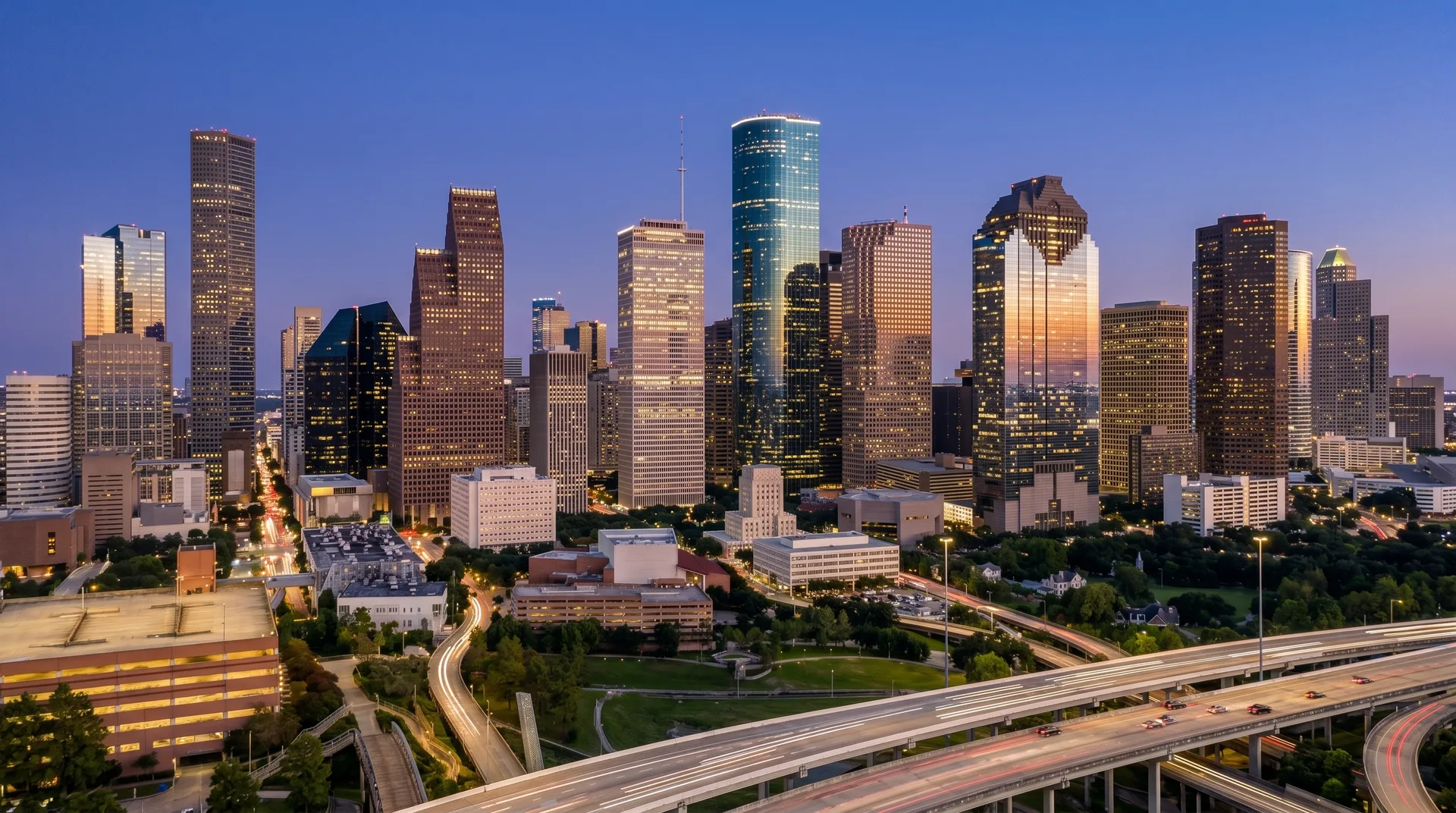
Houston
Houston, Texas represents one of the most important logistics and industrial centers in the United States, particularly for freight transportation along the Gulf Coast. The city's strategic location provides access to the Port of Houston, the busiest port in the nation for foreign tonnage, and extensive rail networks operated by major carriers. Houston's transportation infrastructure includes a comprehensive network of interstate highways, including I-10, I-45, and I-69, facilitating efficient movement of goods throughout the region and beyond.
The economic foundation of Houston is built on its prominence in the energy sector, with numerous oil and gas companies maintaining headquarters or major operations in the city. Beyond energy, Houston has developed strong manufacturing, healthcare, and aerospace industries. The Texas Medical Center, the world's largest medical complex, and NASA's Johnson Space Center contribute to the city's diverse economic profile. This industrial diversity creates consistent demand for specialized freight services, including the transportation of sensitive medical equipment, aerospace components, and energy-related materials.










