Olympia to Austin
Austin → OlympiaFTL freight transportation service between Olympia and Austin. Reliable logistics solutions for your business.
Route Description
Everything you need to know about the corridor Olympia - Austin
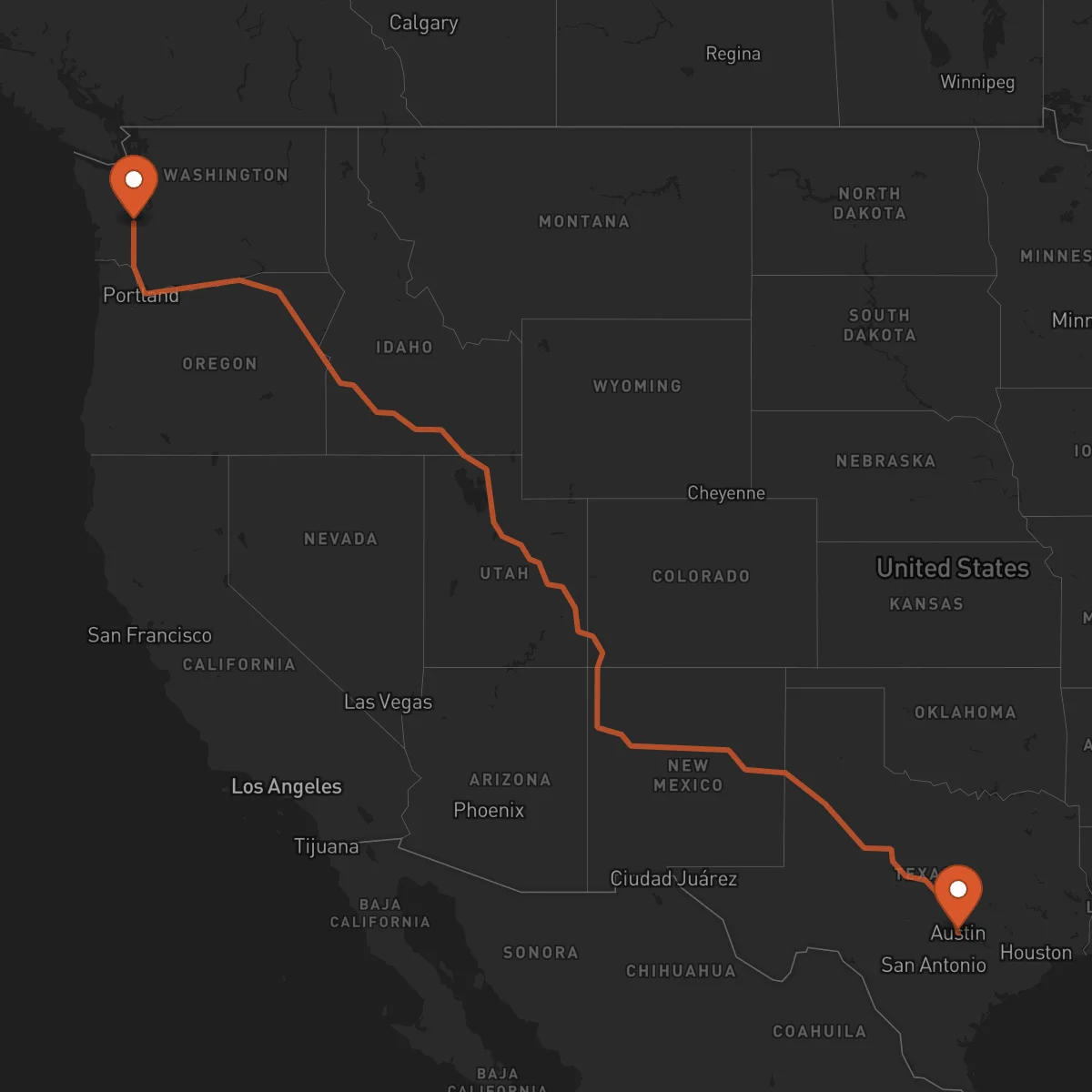
The logistics corridor connecting Olympia, Washington to Austin, Texas represents a vital freight transportation route spanning approximately 2,850 kilometers across the western and central United States. This north-south corridor traverses diverse landscapes and connects the Pacific Northwest with the thriving economic center of Texas, facilitating the movement of goods between two distinct regional markets. The route primarily follows Interstate 5 south through Washington, Oregon, and California, transitioning to Interstate 10 eastbound through Arizona, New Mexico, and into Texas, before connecting to Austin via major Texas highways.
The corridor serves as a critical link between the industrial and agricultural powerhouse of the Pacific Northwest and the rapidly growing technology and manufacturing hub of Central Texas. This route supports the exchange of goods between regions with complementary economic profiles, enabling businesses to optimize their supply chains and access broader markets. The diverse economic activities along this corridor create substantial freight demand, with companies relying on efficient transportation to maintain competitive advantages in their respective markets.
Control Terrestre facilitates seamless operations along this extensive corridor through our network of certified transportation providers. We offer full truckload (FTL) services that ensure dedicated capacity for your freight, eliminating the delays and handling risks associated with consolidated shipping. Our strategic partnerships with carriers along the entire route provide consistent service quality and reliable transit times, while our expertise in cross-country logistics helps customers navigate the complexities of interstate freight transportation. We understand the unique challenges of this long-haul corridor and provide tailored solutions that keep your supply chain moving efficiently from origin to destination.
Services for this Route
Available services for the corridor Olympia - Austin
 Origin
Olympia
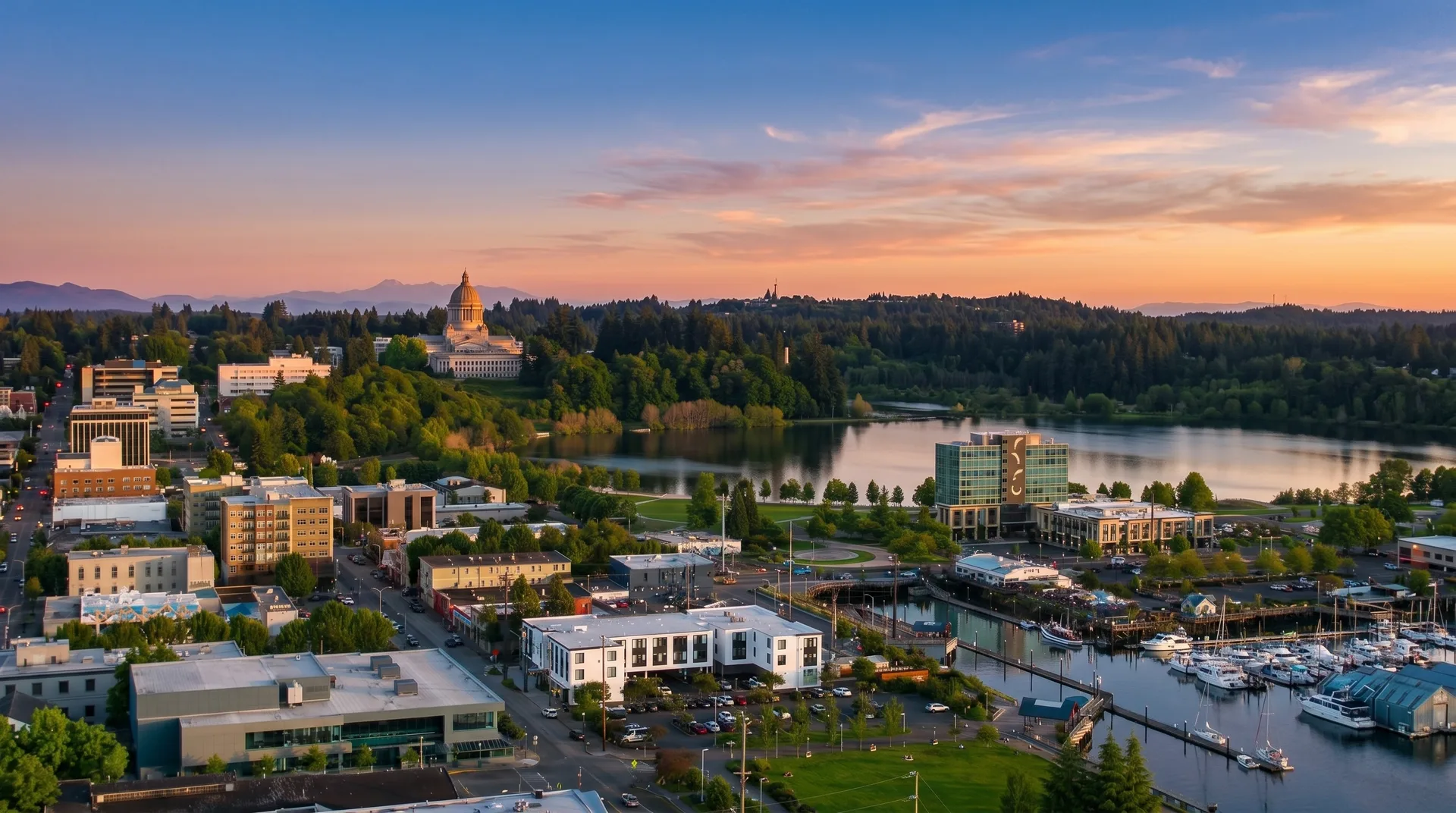
Olympia, Washington serves as a strategic gateway for freight movement in the Pacific Northwest, located at the southern end of Puget Sound. The city benefits from proximity to major ports and transportation hubs in the Seattle-Tacoma metropolitan area, providing excellent access to international shipping lanes and domestic distribution networks. Olympia's location near Interstate 5, the primary north-south artery along the West Coast, offers direct connections to major markets throughout the western United States and Canada.
The region's economy is characterized by a diverse mix of government services, technology, healthcare, and advanced manufacturing sectors. Olympia and surrounding Thurston County host numerous distribution centers and warehouses that serve both local businesses and national retailers. The area's strong agricultural presence, including dairy, berries, and specialty crops, creates consistent freight demand for temperature-controlled transportation. Additionally, the growing technology sector in nearby cities contributes to the demand for specialized logistics services supporting high-value, time-sensitive shipments.
 Destination
Austin
Austin, Texas has emerged as a major logistics and distribution hub in the central United States, strategically positioned to serve the growing markets of Texas and surrounding states. The city's location in Central Texas provides excellent access to major transportation corridors, including Interstate 35, which connects Austin north to Dallas and south to San Antonio. Austin-Bergstrom International Airport and nearby rail facilities further enhance the region's multimodal transportation capabilities, making it an ideal destination for freight distribution.
The Austin metropolitan area has experienced rapid economic growth, driven by its thriving technology sector, known as "Silicon Hills," which includes major employers in software development, semiconductors, and hardware manufacturing. The region also hosts significant healthcare, education, and government operations, creating diverse freight transportation needs. Austin's expanding population and business community generate substantial demand for consumer goods, industrial equipment, and raw materials, while the city's manufacturing base requires reliable inbound logistics for production inputs and outbound distribution of finished products.










