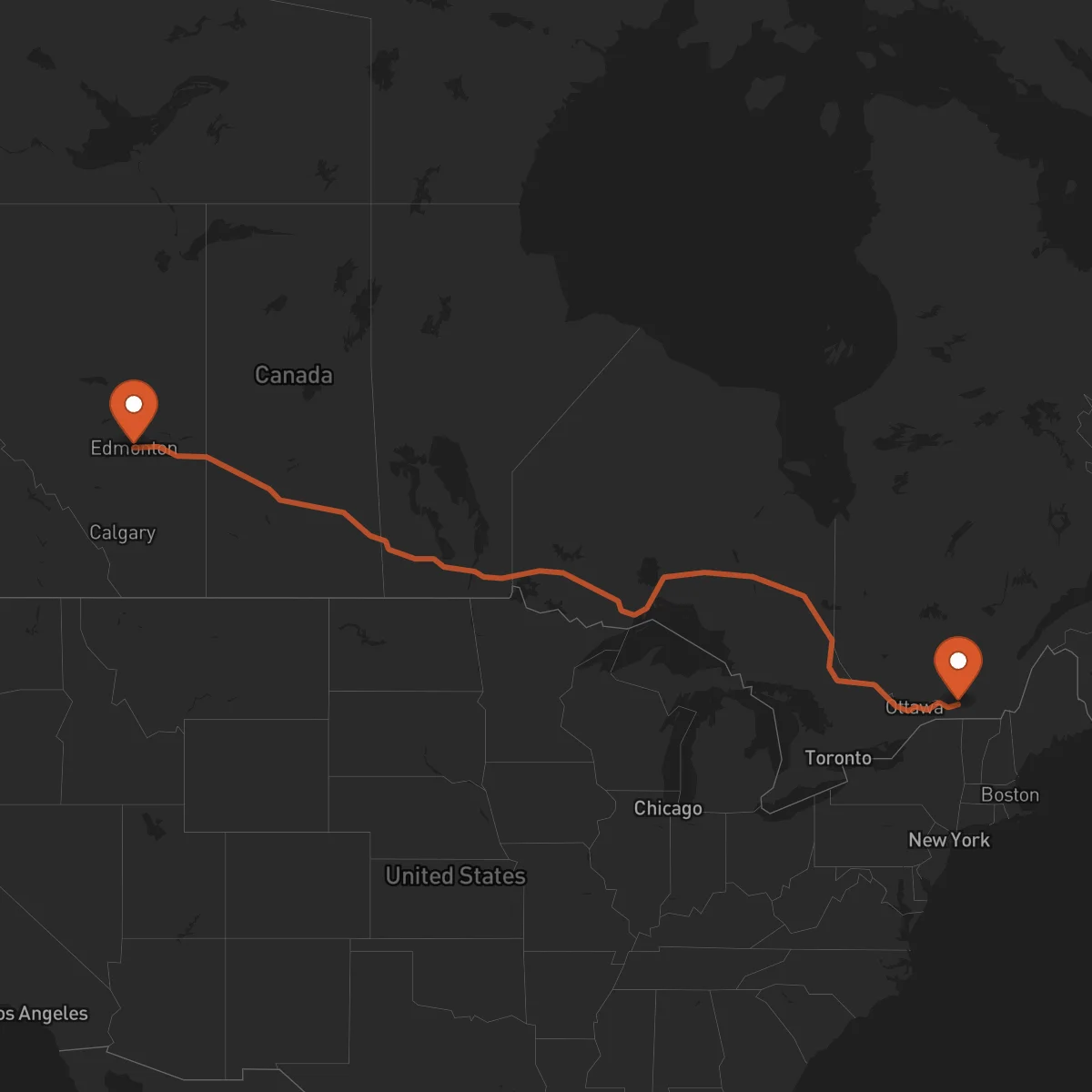
Montreal to Edmonton
Edmonton → MontrealFTL freight transportation service between Montreal and Edmonton. Reliable logistics solutions for your business.
Route Description
Everything you need to know about the corridor Montreal - Edmonton
The Montreal-Edmonton corridor represents one of the most critical freight transportation routes in Canada, connecting the economic powerhouse of Quebec to the resource-rich province of Alberta. This 2,973 km journey traverses the heart of Canada, linking two major metropolitan areas that serve as gateways to their respective regions. The corridor facilitates the movement of goods between Eastern and Western Canada, playing a vital role in the national supply chain and economic integration.
The economic significance of this route cannot be overstated. Montreal serves as a major industrial and commercial hub with diverse manufacturing capabilities, while Edmonton is known for its energy sector, particularly oil sands operations, and agricultural activities. The corridor supports the transportation of manufactured goods, industrial equipment, raw materials, and consumer products, enabling businesses to maintain efficient operations across the country. This route is particularly important for companies operating in the energy, manufacturing, and agricultural sectors that require reliable cross-country logistics solutions.
Control Terrestre provides comprehensive FTL (Full Truckload) services along this corridor, ensuring that your cargo moves efficiently from origin to destination. Our specialized transportation solutions are designed to meet the unique demands of cross-country freight, offering dedicated services that guarantee your shipment receives exclusive use of the equipment. With our extensive network of certified carriers and commitment to safety and reliability, we facilitate seamless transportation across this vital Canadian route, helping businesses maintain their competitive edge through dependable logistics support.
Services for this Route
Available services for the corridor Montreal - Edmonton
 Origin
Montreal stands as a strategic logistics hub in Eastern Canada, boasting one of the largest inland ports in North America and extensive transportation infrastructure. The city's location on the St. Lawrence River provides access to both domestic and international markets, while its proximity to major highways including the Trans-Canada Highway (Highway 40/20) and Autoroute 25 ensures efficient ground transportation connections. Montreal's multimodal capabilities, combining port facilities, rail connections, and road networks, make it an ideal origin point for freight distribution across Canada and into the United States.
The economic landscape of Montreal is characterized by diverse industries including aerospace, pharmaceuticals, technology, and advanced manufacturing. The city hosts numerous corporate headquarters and serves as a financial center for Quebec. Its industrial parks and distribution centers are equipped to handle various types of cargo, from high-value electronics to bulk commodities. The presence of major international airports and rail terminals further enhances Montreal's position as a comprehensive logistics gateway, capable of supporting complex supply chain operations that require seamless multimodal integration.
 Destination
Edmonton serves as a strategic logistics center in Western Canada, positioned as the gateway to Northern Alberta and the oil sands region. The city's location along the Yellowhead Highway (Highway 16) provides crucial connections to both east-west and north-south transportation corridors. Edmonton's transportation infrastructure includes the Edmonton International Airport, extensive rail networks operated by CN and CP, and modern highway systems that facilitate efficient freight movement. The city's role as a distribution center for Alberta and beyond makes it a critical destination for cross-country freight operations.
The economic foundation of Edmonton is strongly tied to the energy sector, with the oil and gas industry driving much of the regional economy. Additionally, the city has growing technology, manufacturing, and agricultural sectors. Edmonton's industrial areas are equipped with specialized facilities for handling energy equipment, industrial machinery, and bulk commodities. The presence of major industrial parks and logistics centers, combined with the city's strategic location near major resource extraction areas, makes Edmonton an essential node in Canada's freight transportation network, particularly for industries requiring reliable access to Western Canadian markets.










