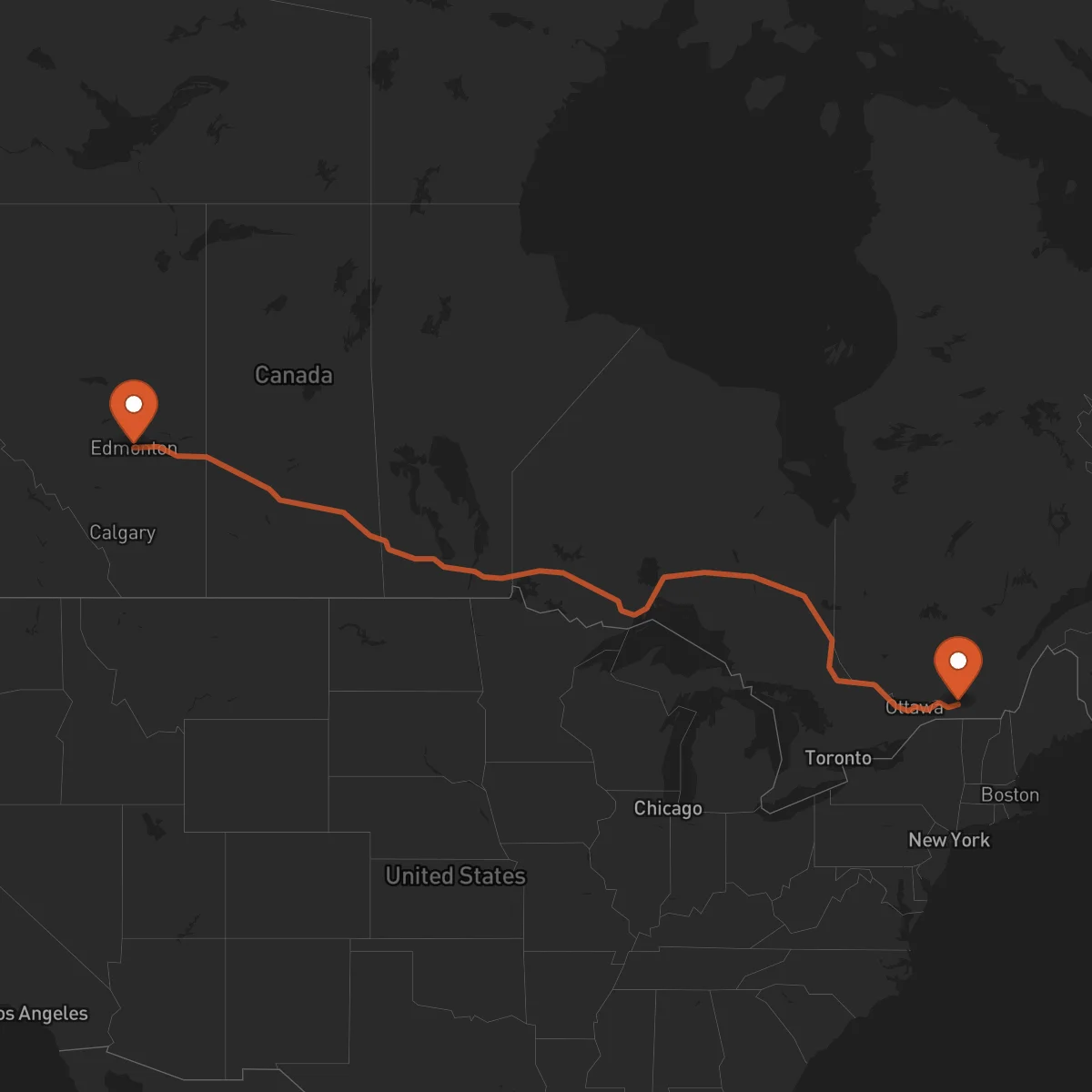
Edmonton to Montreal
Montreal → EdmontonFTL freight transportation service between Edmonton and Montreal. Reliable logistics solutions for your business.
Route Description
Everything you need to know about the corridor Edmonton - Montreal
The Edmonton-Montreal corridor is one of the most important freight transportation routes in Canada, connecting the economic center of Alberta with the industrial and commercial hub of Quebec. This route spans approximately 2,973 kilometers across the Canadian territory, traversing diverse landscapes and crossing multiple provinces. The corridor is vital for the national supply chain, facilitating the movement of goods between the western and eastern regions of the country.
The strategic importance of this corridor is reflected in its role in supporting key economic sectors. Edmonton, known for its energy industry and logistics infrastructure, serves as a gateway for goods from Alberta and neighboring provinces. Montreal, as one of Canada's largest ports and a major industrial center, represents a critical destination for imports, exports, and domestic distribution. The route supports industries such as manufacturing, agriculture, energy, and retail, ensuring the efficient flow of raw materials and finished products.
Transportation infrastructure along this corridor includes major highways such as the Trans-Canada Highway (Highway 1) and the Yellowhead Highway (Highway 16), which provide reliable and efficient connections. These highways are equipped to handle heavy freight traffic, ensuring timely deliveries across the vast Canadian landscape. Control Terrestre leverages this infrastructure to offer seamless FTL transportation services, optimizing routes and ensuring the safe and timely delivery of goods between Edmonton and Montreal.
Services for this Route
Available services for the corridor Edmonton - Montreal
 Origin
Edmonton, the capital of Alberta, is a strategic logistics hub in western Canada. Its location near major transportation routes and its proximity to the oil sands industry make it a critical point for freight movement. The city is home to a robust transportation network, including the Edmonton International Airport, extensive rail connections, and access to major highways such as the Yellowhead Highway. Edmonton’s economy is driven by industries such as energy, manufacturing, and logistics, making it a key origin point for goods destined for eastern Canada and beyond.
 Destination
Montreal, located in Quebec, is a major economic and industrial center in eastern Canada. As one of the country’s largest ports, it serves as a gateway for international trade and a critical node in the national supply chain. The city’s strategic location along the St. Lawrence River and its extensive transportation infrastructure, including highways, railways, and the Montreal-Trudeau International Airport, make it an ideal destination for freight transportation. Montreal’s economy is diverse, with key industries including aerospace, technology, manufacturing, and retail, driving demand for efficient logistics solutions.










