Montreal to Austin
Austin → MontrealFTL freight transportation service between Montreal and Austin. Reliable logistics solutions for your business.
Route Description
Everything you need to know about the corridor Montreal - Austin
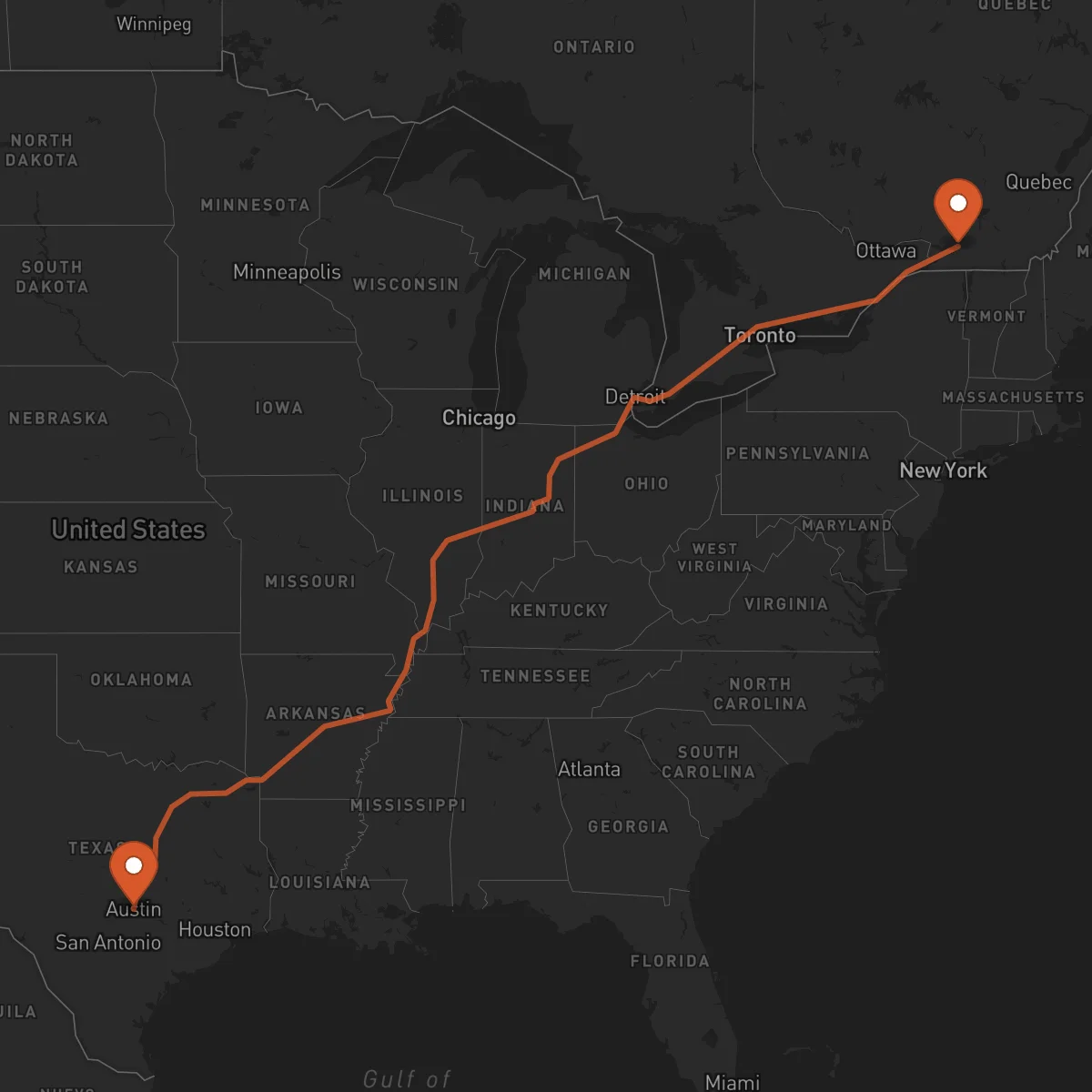
The Montreal-Austin corridor represents a vital logistics connection between Canada and the southern United States, spanning approximately 2,696 kilometers through diverse economic regions. This cross-border route links Quebec's industrial powerhouse with Texas's dynamic technology and manufacturing hub, creating a strategic pathway for goods moving between North America's major economic zones. The corridor traverses key industrial centers, agricultural regions, and technology corridors, making it essential for companies operating across the US-Canada-Mexico supply chain.
The economic significance of this corridor is substantial, connecting Montreal's aerospace, pharmaceutical, and advanced manufacturing sectors with Austin's booming technology, semiconductor, and automotive industries. Major companies in both cities rely on efficient cross-border transportation to maintain their global supply chains. The route passes through important economic regions including the Great Lakes industrial corridor, the Midwest manufacturing belt, and the emerging tech centers of the southern United States.
Transportation infrastructure along this corridor includes major interstate highways such as I-89, I-90, I-80, and I-35, providing reliable freight movement capabilities. Key border crossings at locations like Detroit-Windsor and other northern entry points facilitate smooth customs processing. Control Terrestre's expertise in cross-border operations ensures seamless movement through these critical transition points, with our C-TPAT-certified partners and experienced logistics teams managing all customs requirements and documentation for full truckload shipments between Montreal and Austin.
Services for this Route
Available services for the corridor Montreal - Austin
 Origin
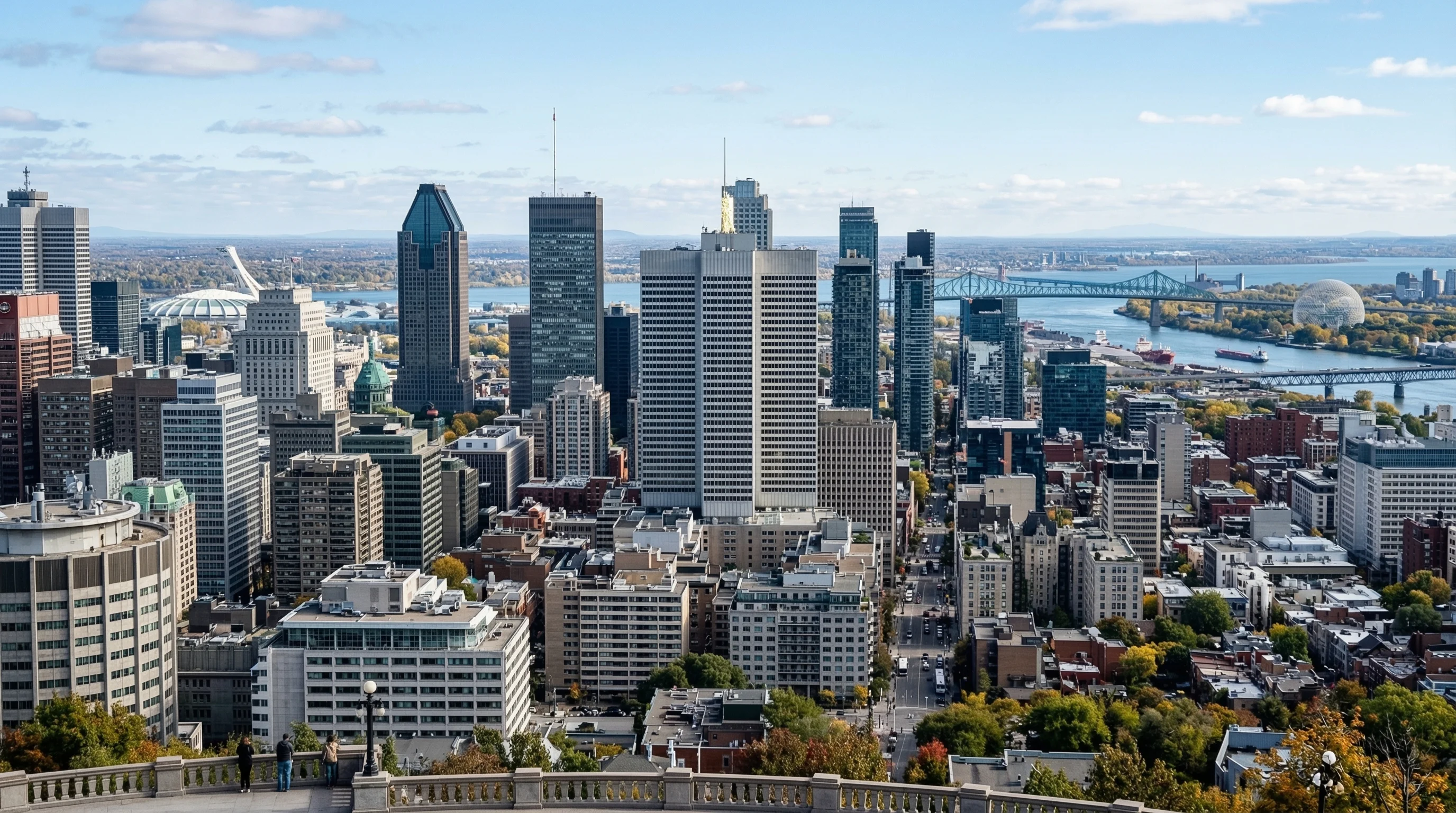
Montreal stands as a major North American logistics hub, strategically positioned in Quebec with access to both domestic Canadian markets and US cross-border opportunities. The city's Port of Montreal, one of Canada's largest inland ports, provides ocean freight connections that complement its extensive ground transportation network. Montreal's location at the intersection of major highways (including Autoroute 20 and Autoroute 40) and its international airport make it an ideal origin point for freight distribution throughout North America.
The city's diverse industrial base includes aerospace manufacturing (home to Bombardier and numerous suppliers), pharmaceutical production, advanced technology, and food processing industries. These sectors generate substantial freight volumes requiring reliable transportation solutions. Montreal's robust intermodal facilities allow for seamless cargo transfers between different transportation modes, while its proximity to the US border (approximately 1-2 hours to major crossings) makes it particularly attractive for companies serving both Canadian and American markets.
 Destination
Austin
Austin has emerged as a strategic logistics destination in Texas, combining its role as a technology and innovation center with growing manufacturing and distribution capabilities. The city's location in central Texas provides excellent access to major markets throughout the southern United States, while Austin-Bergstrom International Airport and the nearby Port of Houston offer multiple transportation options. Austin's position along Interstate 35 creates a direct north-south freight corridor connecting to major Texas cities and beyond.
The Austin metropolitan area has experienced rapid industrial growth, particularly in technology, semiconductor manufacturing, and electric vehicle production. Companies like Tesla, Samsung, and numerous tech startups have established significant operations in the region, creating substantial demand for freight transportation services. The city's expanding logistics infrastructure, including modern warehousing facilities and distribution centers, supports the growing e-commerce and manufacturing sectors. Austin's business-friendly environment and skilled workforce continue to attract companies requiring reliable supply chain solutions for both inbound raw materials and outbound finished products.










