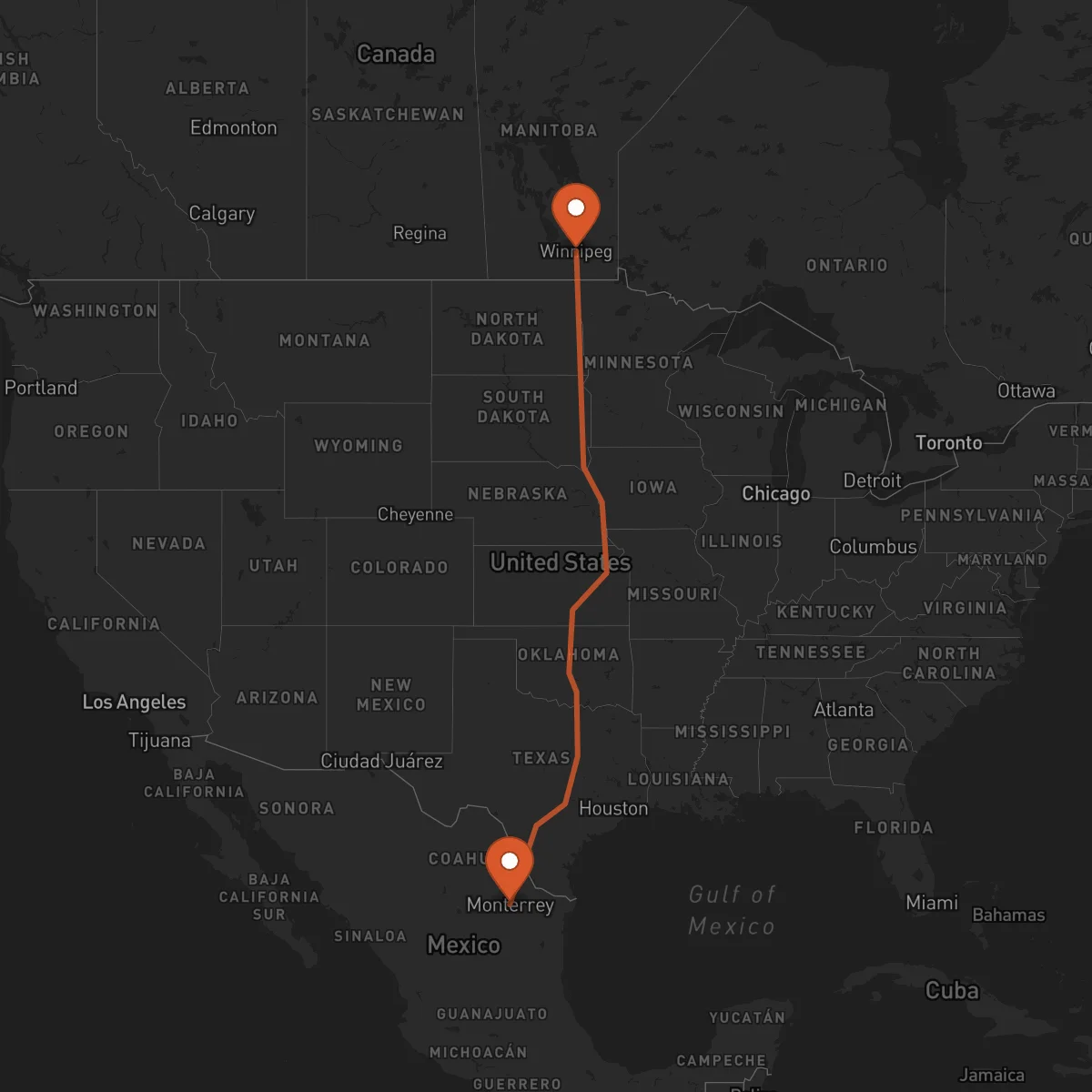
Monterrey to Winnipeg
Winnipeg → MonterreyFTL freight transportation service between Monterrey and Winnipeg. Reliable logistics solutions for your business.
Route Description
Everything you need to know about the corridor Monterrey - Winnipeg
The freight corridor between Monterrey, Nuevo León, Mexico, and Winnipeg, Manitoba, Canada, spans approximately 2,706 kilometers and represents one of the most strategically significant cross-border logistics routes in North America. This corridor connects two major industrial and commercial hubs, enabling companies to move full truckload (FTL) freight efficiently across three countries. As trade integration deepens across the region, this route has become essential for businesses seeking reliable, dedicated transportation solutions that link Mexican manufacturing centers with Canadian distribution networks.
Monterrey serves as one of Mexico's primary industrial powerhouses, home to steel, automotive, electronics, and aerospace manufacturing. Winnipeg, on the other hand, functions as a central logistics gateway to the Canadian Prairies and beyond, with strong agricultural, food processing, and retail distribution sectors. The corridor supports industries including automotive parts, raw materials, consumer goods, refrigerated food products, and specialized cargo such as hazardous materials and oversized freight. Companies along this route rely on consistent, dedicated FTL services to maintain supply chain continuity and reduce transit variability.
The transportation infrastructure supporting this corridor includes major highways such as Mexican Federal Highway 40 and Highway 85 from Monterrey, connecting to U.S. Interstate 35 and Interstate 29 through key border crossings like Laredo, Texas, and Pembina, North Dakota. These crossings are critical nodes where customs processing, C-TPAT and FAST certifications, and compliance with trade regulations play a vital role in ensuring smooth freight movement. Control Terrestre leverages its alliance of experienced and strategic transportation providers to navigate these border complexities, offering seamless cross-border FTL operations.
At Control Terrestre, we facilitate operations on this corridor by coordinating dedicated full truckload services tailored to each client's supply chain needs. Our providers hold certifications including C-TPAT, FAST, BASC, Clean Transportation, and Responsible Care, ensuring compliance and security at every stage. Whether your freight requires dry van, refrigerated, tanker, flatbed, or specialized equipment, we connect your shipments from origin to destination with the professionalism and care that define our commitment to being the most human and green transportation company in the industry.
Services for this Route
Available services for the corridor Monterrey - Winnipeg
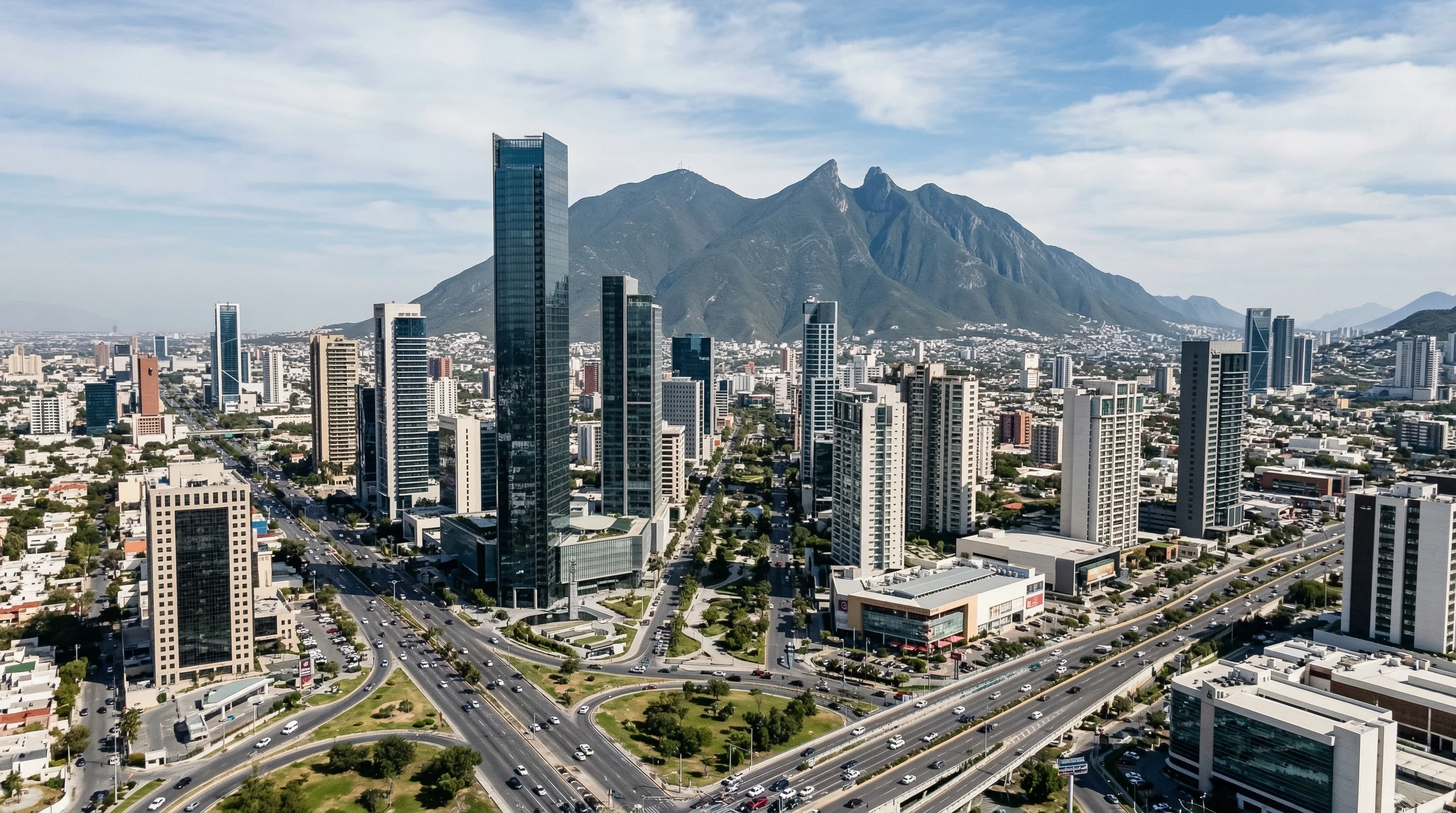 Origin
Monterrey
Monterrey, the capital of Nuevo León, stands as one of Mexico's most important industrial and logistics centers. Located in northeastern Mexico, the city serves as a primary manufacturing hub for the automotive, steel, electronics, aerospace, and food and beverage sectors. Its proximity to the U.S. border—approximately 240 kilometers from Laredo, Texas—makes it an ideal origin point for cross-border freight operations. Monterrey's transportation infrastructure includes access to major federal highways such as Highway 40 and Highway 85, which connect directly to U.S. interstate systems. The city also features multiple industrial parks, rail connections, and proximity to international airports, providing companies with robust multimodal logistics options for full truckload shipments heading north.
 Destination
Winnipeg, the capital of Manitoba, is a central logistics hub for Canada, strategically positioned at the heart of the Prairies. The city serves as a key distribution point for agricultural products, food processing, retail goods, and industrial materials destined for markets across western and central Canada. Winnipeg's transportation infrastructure includes access to the Trans-Canada Highway and major provincial routes, with strong connections to U.S. border crossings such as Pembina, North Dakota. The city's rail networks and intermodal facilities further enhance its role as a gateway for cross-border freight. Companies shipping full truckload cargo to Winnipeg benefit from its central location, which enables efficient distribution to Saskatchewan, Alberta, and Ontario markets.










