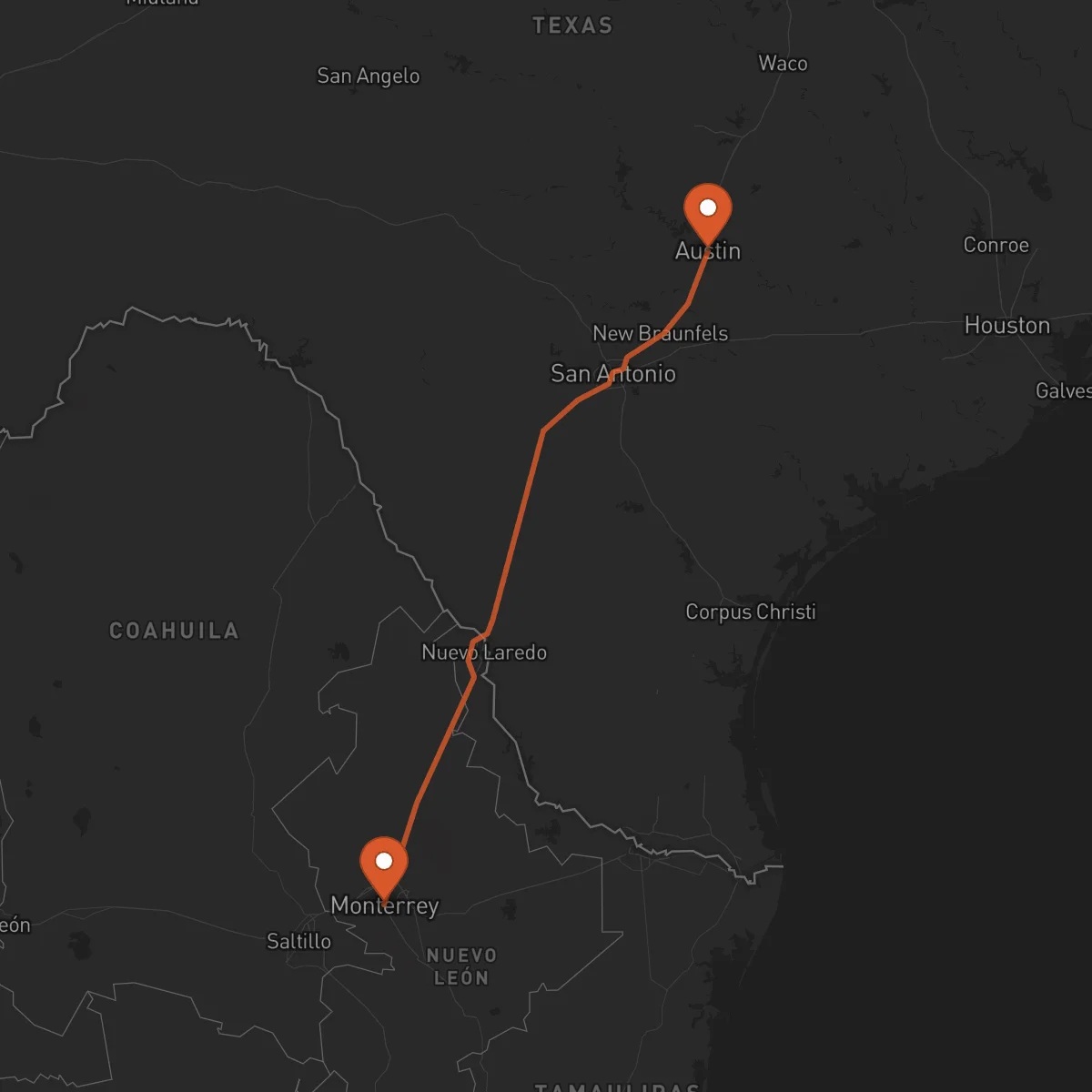
Monterrey to Austin
Austin → MonterreyFTL freight transportation service between Monterrey and Austin. Reliable logistics solutions for your business.
Route Description
Everything you need to know about the corridor Monterrey - Austin
The Monterrey-Austin corridor represents a vital trade link between Mexico's industrial powerhouse and one of the United States' fastest-growing technology hubs. This 569-kilometer cross-border route connects Nuevo León's manufacturing sector with Texas's innovation ecosystem, facilitating the movement of high-value goods, automotive components, and advanced technology products. The corridor leverages the complementary strengths of both regions, where Monterrey's expertise in manufacturing meets Austin's leadership in technology and business services.
The transportation infrastructure along this route includes Mexico's Federal Highway 85D and the US Interstate 35, providing efficient connectivity between both cities. The Laredo-Nuevo Laredo border crossing serves as the primary gateway, offering multiple lanes and modern processing facilities to handle the substantial trade volume. This strategic location enables seamless freight movement while maintaining compliance with both Mexican and US customs regulations.
Control Terrestre specializes in full truckload (FTL) services along this corridor, offering dedicated transportation solutions that ensure your cargo moves directly from origin to destination without intermediate stops. Our C-TPAT-certified carriers and experienced logistics team handle all cross-border documentation, customs clearance, and regulatory compliance, providing you with reliable, secure transportation for your most critical shipments between Monterrey and Austin.
Services for this Route
Available services for the corridor Monterrey - Austin
 Origin
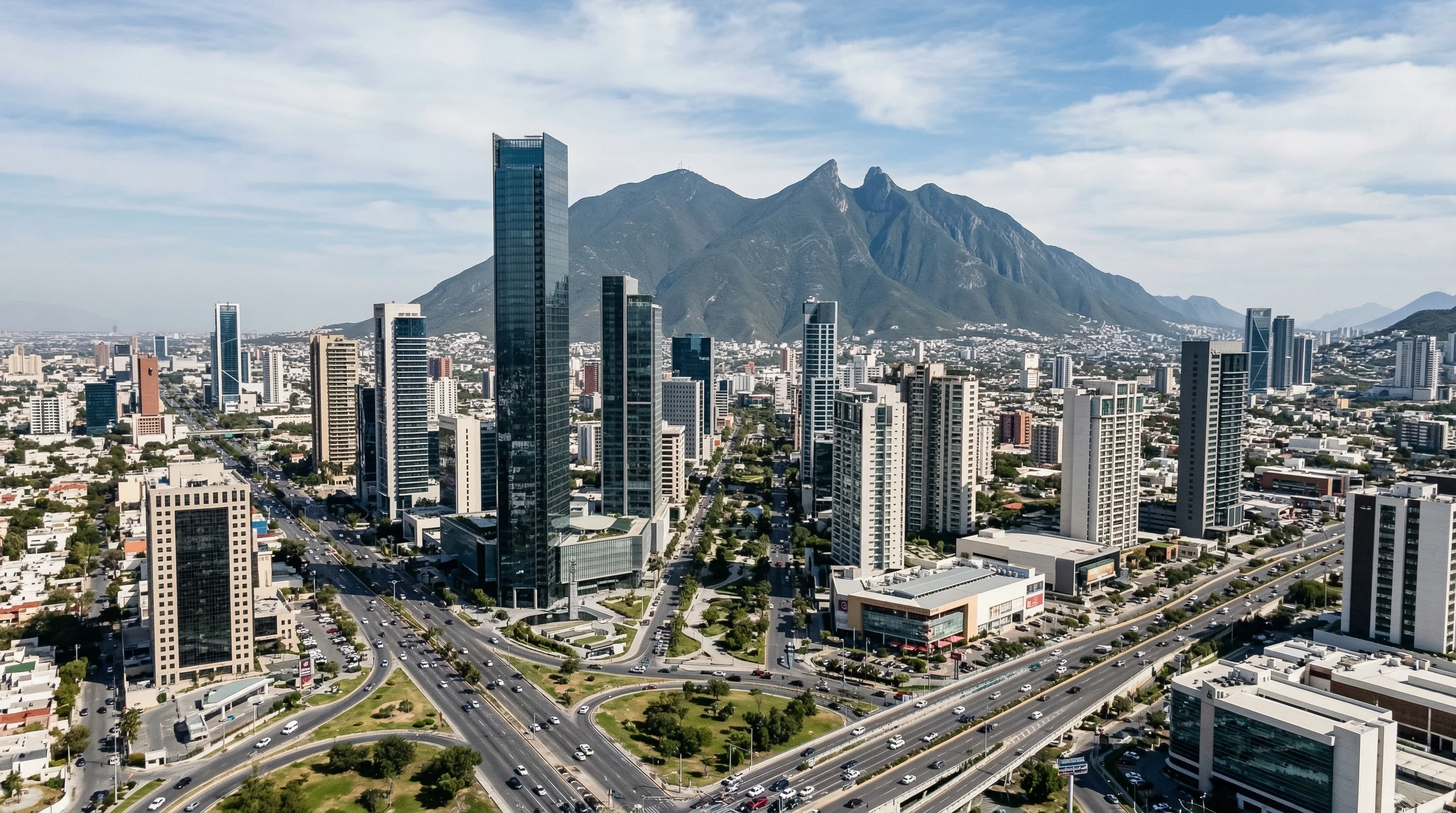
Monterrey
Monterrey stands as Mexico's industrial capital and a strategic logistics hub in northeastern Mexico. Located in the state of Nuevo León, it serves as the gateway to the US-Mexico border, providing direct access to major markets in both countries. The city's industrial base encompasses automotive manufacturing, aerospace, electronics, and metal products, supported by a robust network of suppliers and specialized logistics providers. Monterrey's transportation infrastructure includes modern highways, a major international airport, and rail connections, making it an ideal origin point for cross-border freight movements.
 Destination
Austin
Austin has emerged as a dynamic logistics and technology center in the heart of Texas. The city's strategic location along the I-35 corridor provides excellent connectivity to major US markets, while its growing population and business ecosystem create substantial freight demand. Austin's economy is driven by technology, healthcare, and advanced manufacturing sectors, with a particular focus on electronics and semiconductor production. The city's transportation infrastructure includes multiple interstate highways, Austin-Bergstrom International Airport, and proximity to major rail terminals, facilitating efficient distribution throughout the central United States.










