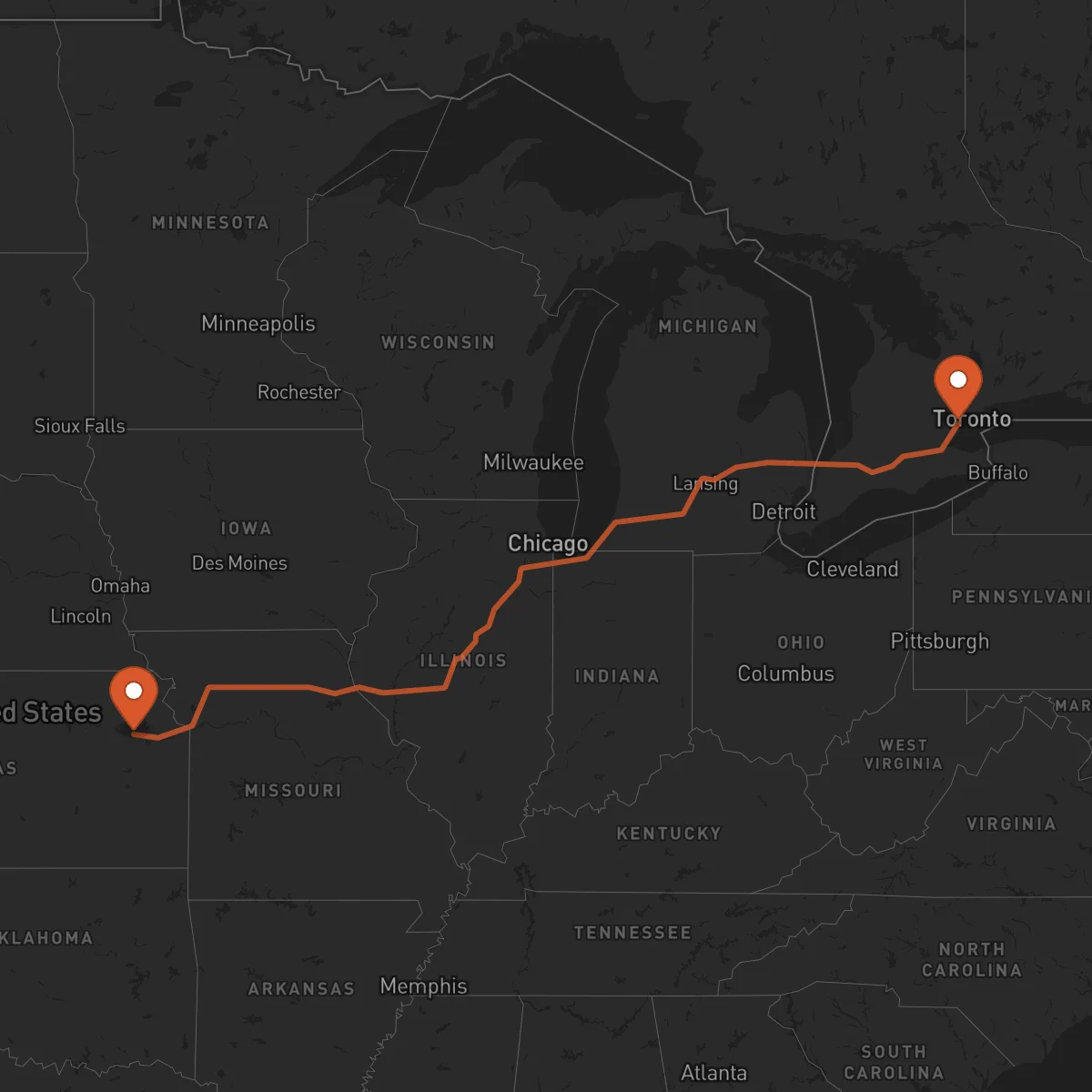
Mississauga to Topeka
Topeka → MississaugaFTL freight transportation service between Mississauga and Topeka. Reliable logistics solutions for your business.
Route Description
Everything you need to know about the corridor Mississauga - Topeka
The Mississauga to Topeka corridor represents a vital cross-border freight transportation link connecting Canada's largest transportation hub with a strategic industrial center in the U.S. Midwest. This 1,428 km route traverses major economic regions, facilitating the movement of goods between Ontario's manufacturing powerhouse and Kansas's agricultural and industrial sectors. The corridor's strategic importance lies in its ability to connect North American supply chains across international borders efficiently.
The economic significance of this corridor is substantial, linking Mississauga's diverse industrial base with Topeka's manufacturing, healthcare, and agricultural processing industries. Key economic sectors utilizing this route include automotive parts, industrial equipment, agricultural products, and consumer goods. The corridor supports just-in-time manufacturing processes and supply chain optimization for companies operating across both countries.
Transportation infrastructure along this route includes major highways such as Highway 401 through Ontario, connecting to Interstate 69 and Interstate 70 in the United States. The corridor typically crosses at key border points like the Blue Water Bridge or Detroit-Windsor Tunnel, with customs clearance processes streamlined through our C-TPAT certified partners. Control Terrestre facilitates seamless cross-border operations through our experienced team handling documentation, customs compliance, and dedicated FTL services that ensure your cargo moves efficiently between Mississauga and Topeka without delays or complications.
Services for this Route
Available services for the corridor Mississauga - Topeka
 Origin
Mississauga serves as a critical logistics hub in Canada, strategically located in the Greater Toronto Area with direct access to major transportation networks. The city hosts Pearson International Airport and extensive rail connections, making it ideal for distribution and manufacturing operations. Key industries include advanced manufacturing, pharmaceuticals, automotive, and technology sectors. Mississauga's transportation infrastructure includes Highway 401, one of North America's busiest highways, providing direct access to cross-border routes and domestic distribution networks throughout Ontario and beyond.
 Destination
Topeka
Topeka, Kansas, occupies a strategic position in the U.S. Midwest, serving as a distribution and manufacturing center with excellent transportation connectivity. The city benefits from its location along major freight corridors and proximity to Kansas City's larger logistics network. Topeka's economy features strong healthcare, education, and manufacturing sectors, with particular emphasis on food processing and agricultural equipment production. The city's transportation infrastructure includes Interstate 70, providing east-west connectivity, and a network of state highways that facilitate efficient distribution throughout the region and beyond.










