Mississauga to Surrey
Surrey → MississaugaFTL freight transportation service between Mississauga and Surrey. Reliable logistics solutions for your business.
Route Description
Everything you need to know about the corridor Mississauga - Surrey
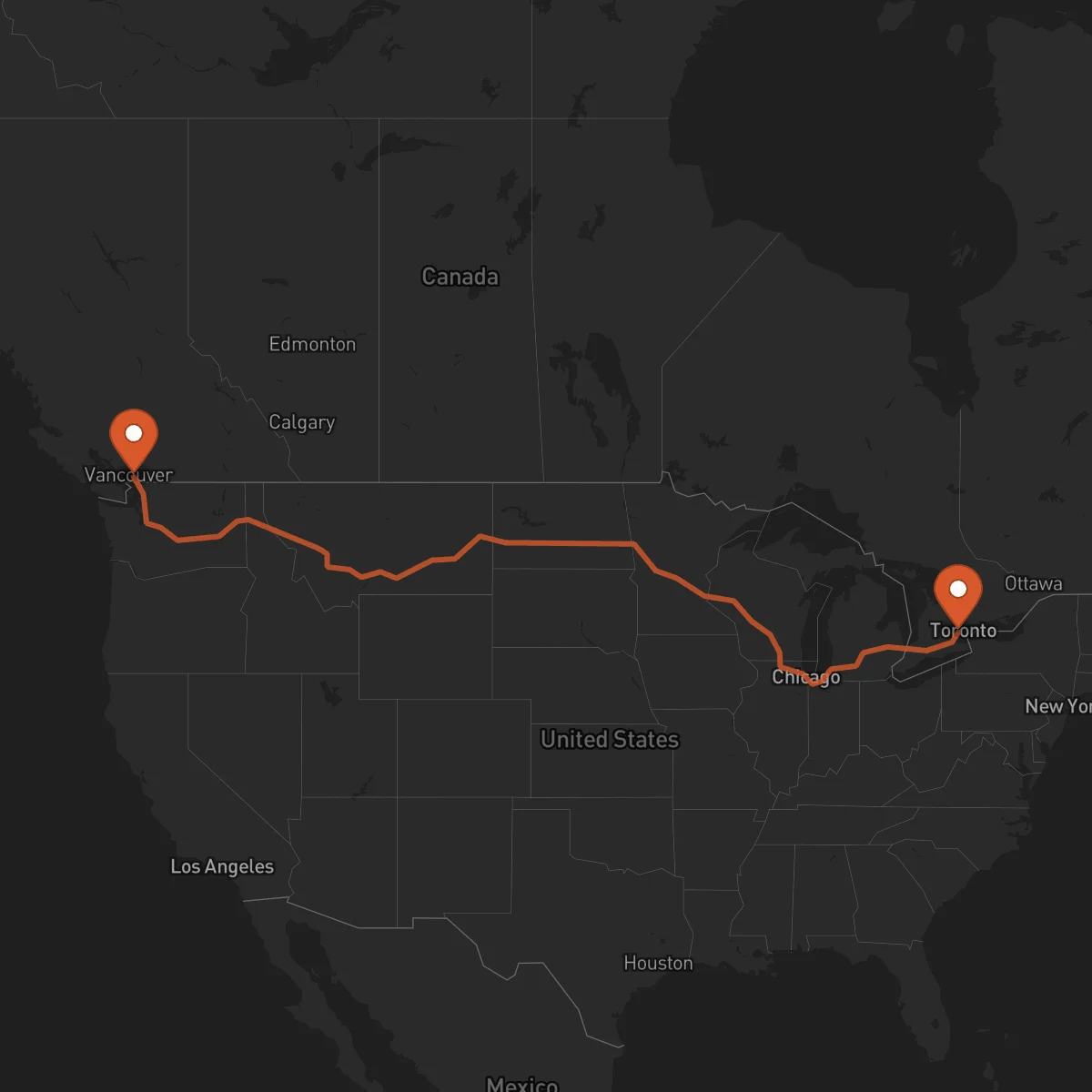
The Mississauga to Surrey corridor represents one of Canada's most critical domestic freight transportation routes, spanning approximately 3,325 kilometers across the country's vast geography. This east-west connection links Ontario's manufacturing heartland with British Columbia's Pacific gateway, facilitating the movement of goods between Canada's two most economically significant provinces.
The corridor traverses diverse landscapes and connects major industrial centers, making it essential for Canada's supply chain resilience. Transportation along this route relies heavily on the Trans-Canada Highway system, particularly Highway 401 through Ontario and Quebec, transitioning to Highway 17 and Highway 1 through the Prairie provinces before reaching British Columbia's Lower Mainland.
Key industries utilizing this corridor include automotive manufacturing and parts distribution from the Greater Toronto Area, agricultural products from the Prairies, and consumer goods requiring nationwide distribution. The route also serves critical sectors such as technology equipment, pharmaceuticals, and industrial machinery moving between Canada's major economic hubs.
Control Terrestre provides comprehensive FTL (Full Truckload) services along this corridor, offering dedicated transportation solutions that ensure your cargo moves efficiently across the country. Our experienced carrier network understands the complexities of cross-country shipping, from navigating seasonal weather challenges to optimizing delivery schedules for maximum efficiency.
Services for this Route
Available services for the corridor Mississauga - Surrey
 Origin
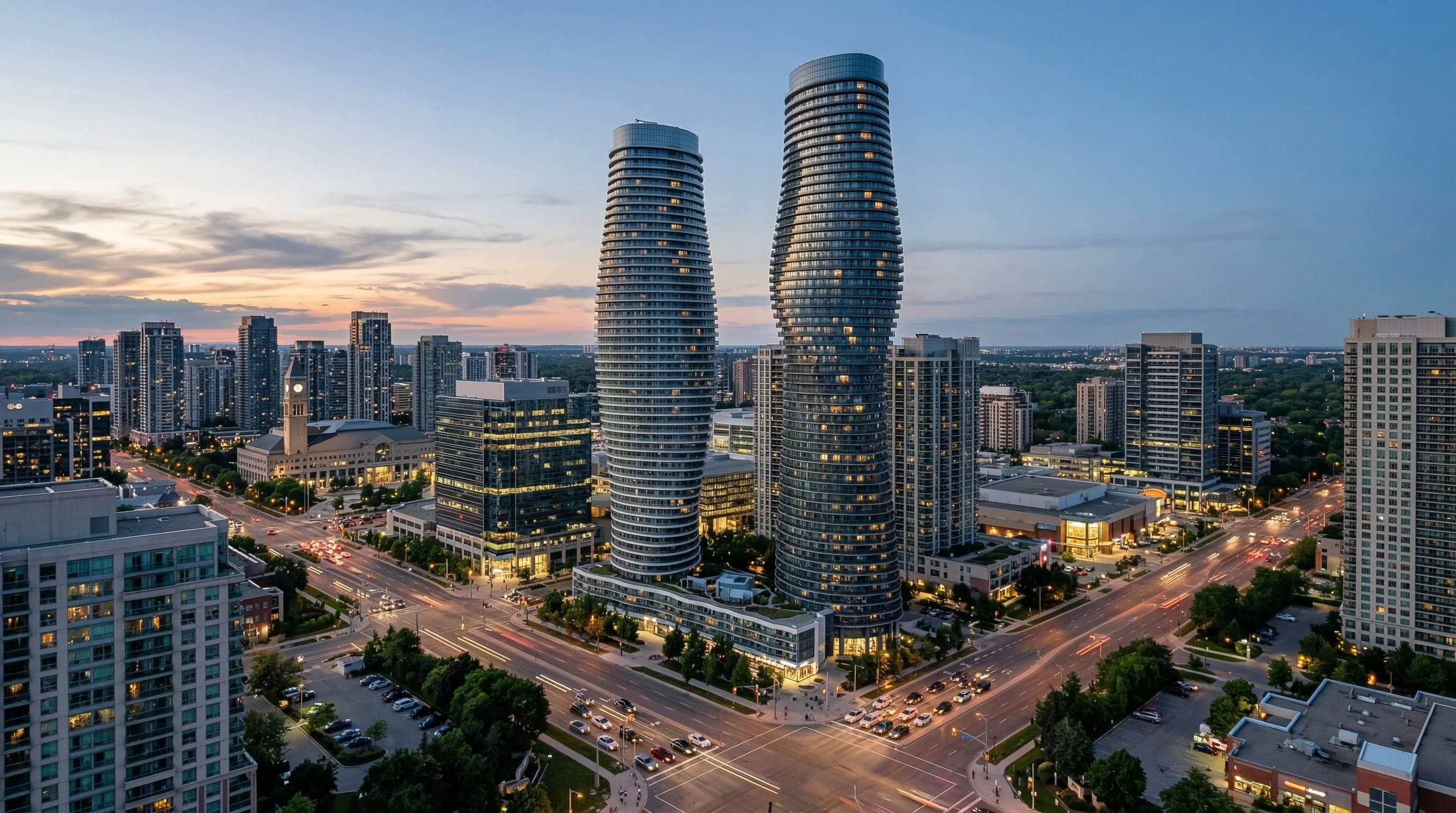
Mississauga stands as a premier logistics hub in Canada, strategically located in the Greater Toronto Area with immediate access to major transportation infrastructure. The city hosts one of North America's busiest airports, Toronto Pearson International Airport, and benefits from proximity to the Port of Hamilton and extensive rail connections through CN and CP rail lines.
The city's economic landscape is dominated by advanced manufacturing, particularly in the automotive and aerospace sectors, alongside a robust pharmaceutical and biotechnology industry. Mississauga also serves as a major corporate center, housing the Canadian headquarters of numerous multinational companies, which drives consistent freight movement through the region.
Transportation infrastructure in Mississauga includes direct access to Highway 401, Canada's busiest highway, and the nearby Queen Elizabeth Way (QEW). The city's industrial parks feature modern warehousing facilities, cross-docking operations, and integrated logistics centers designed to handle high-volume freight movements efficiently.
 Destination
Surrey
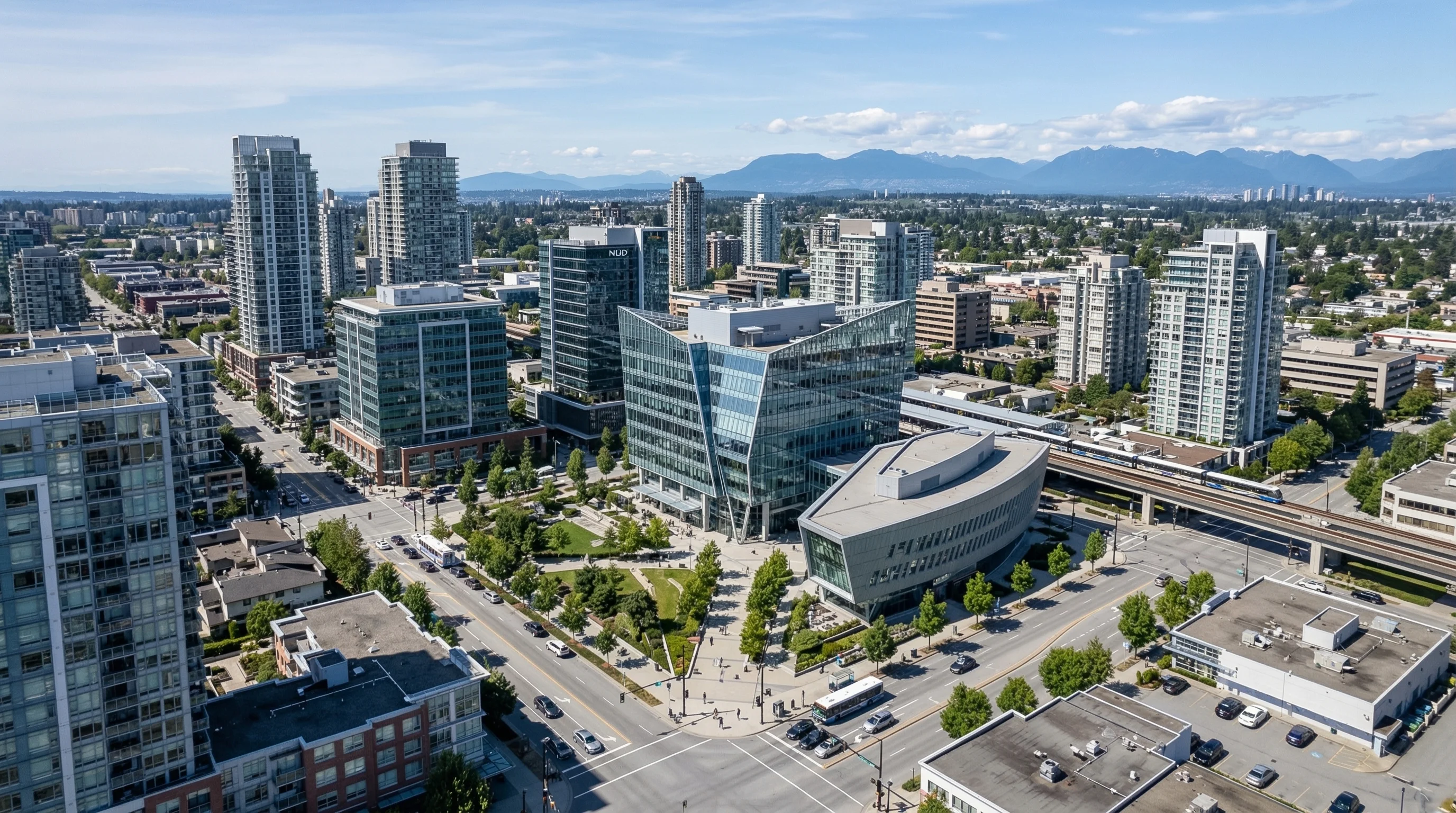
Surrey represents a strategic logistics center in British Columbia's Lower Mainland, positioned advantageously near the U.S. border and Vancouver's port facilities. The city's location provides immediate access to major transportation corridors including Highway 1 (Trans-Canada Highway) and proximity to the U.S. border crossings at Blaine and Sumas.
The local economy is characterized by a diverse mix of industries including technology, clean energy, and advanced manufacturing. Surrey has developed into a significant agricultural center for British Columbia, particularly in the greenhouse sector, while also hosting growing clusters in health technology and professional services.
Transportation infrastructure in Surrey includes comprehensive road networks, rail connections through CN and CP rail lines, and proximity to the Port of Vancouver, Canada's largest port. The city's industrial areas feature modern distribution centers, cold storage facilities, and specialized handling capabilities for various cargo types, supporting efficient freight operations throughout the region.










