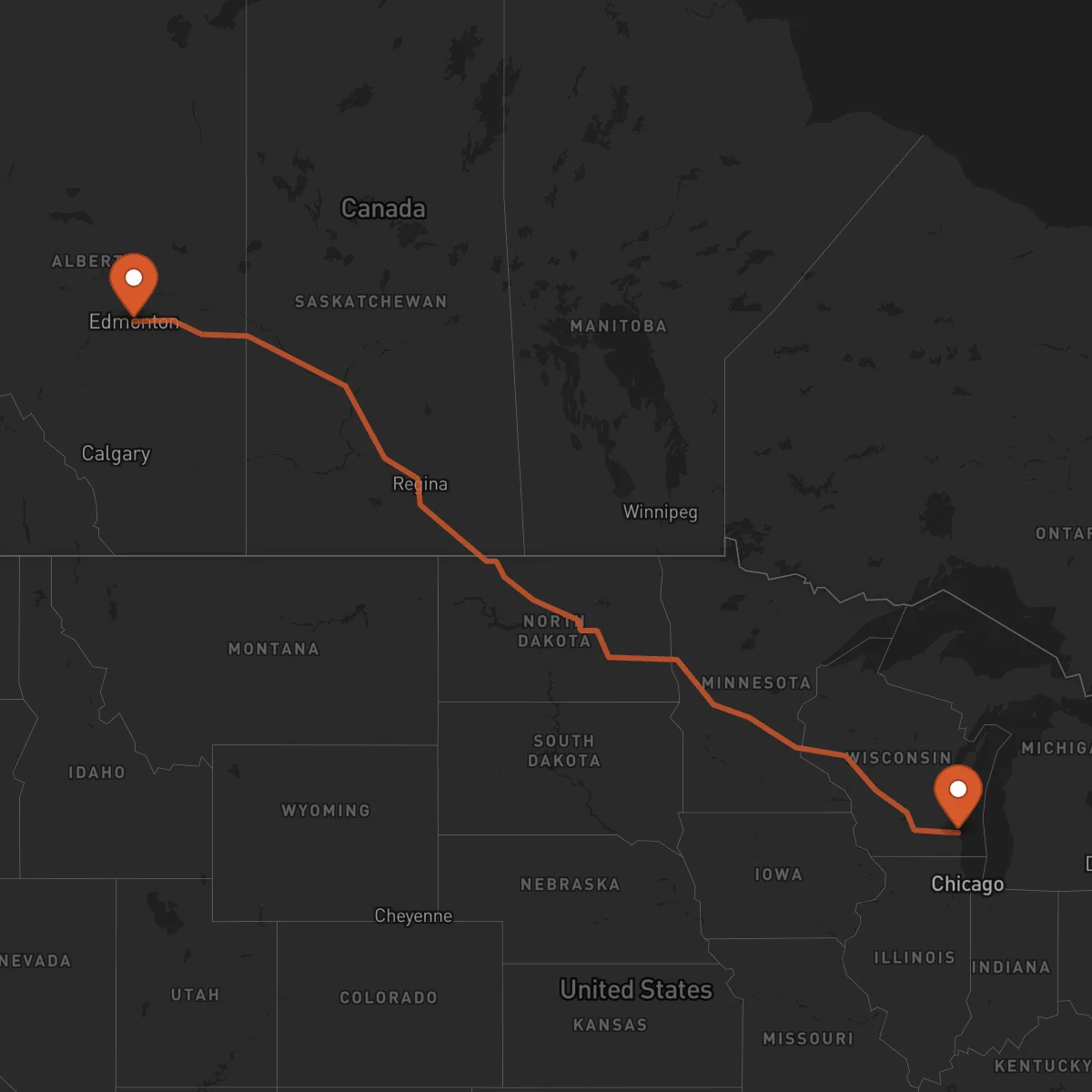
Milwaukee to Edmonton
Edmonton → MilwaukeeFTL freight transportation service between Milwaukee and Edmonton. Reliable logistics solutions for your business.
Route Description
Everything you need to know about the corridor Milwaukee - Edmonton
The Milwaukee-Edmonton corridor represents a vital cross-border freight transportation route connecting the industrial heartland of Wisconsin with the strategic logistics hub of Alberta. This 2,206 km route traverses the Great Lakes region and the Canadian Prairies, facilitating the movement of goods between two major economic centers. The corridor's strategic importance lies in its ability to connect manufacturing-intensive regions of the American Midwest with Canada's energy and resource-rich western provinces.
The economic relationship between Milwaukee's industrial base and Edmonton's resource sector creates significant freight demand along this route. Milwaukee, with its strong manufacturing and automotive industries, produces high-value industrial equipment, machinery, and components that support Edmonton's energy sector operations. Conversely, Edmonton serves as a gateway to Canada's oil sands and agricultural regions, generating demand for specialized equipment and industrial supplies from Milwaukee-based manufacturers.
Key industries utilizing this corridor include manufacturing, energy equipment, construction materials, and agricultural products. The route primarily follows major transportation arteries including I-94 West through Minnesota, connecting to Highway 28 West in North Dakota, and continuing through Saskatchewan and Alberta via the Trans-Canada Highway system. The primary border crossing at Portal/North Portal offers efficient processing for commercial freight, with both locations being C-TPAT-certified facilities that expedite cross-border movements.
Control Terrestre facilitates seamless operations along this corridor through our network of certified carriers and expertise in cross-border documentation. Our team ensures compliance with customs regulations, manages permits for specialized cargo when needed, and provides real-time tracking throughout the journey. We coordinate with our strategic partners to optimize transit times and maintain the integrity of temperature-sensitive shipments when required.
Services for this Route
Available services for the corridor Milwaukee - Edmonton
 Origin
Milwaukee
Milwaukee, Wisconsin serves as a strategic logistics hub in the American Midwest, positioned along the western shore of Lake Michigan. The city's location provides excellent access to major transportation networks including I-94, I-43, and rail connections that link to national freight corridors. Milwaukee's port facilities on Lake Michigan offer additional intermodal capabilities, connecting road, rail, and water transportation modes for efficient cargo movement.
The region's economy is anchored by advanced manufacturing, with particular strength in industrial machinery, precision tools, and automotive components. Major employers in the area include manufacturers of construction equipment, agricultural machinery, and specialized industrial systems. The presence of several technical colleges and engineering programs ensures a skilled workforce supporting these industries. Milwaukee's logistics infrastructure includes multiple warehousing facilities, cross-docking operations, and a network of specialized carriers capable of handling diverse freight requirements.
 Destination
Edmonton, Alberta stands as a critical logistics and distribution center in Western Canada, strategically positioned at the northern end of the CANAMEX Corridor. The city's location provides direct access to major transportation routes including the Yellowhead Highway (Highway 16) and proximity to the Edmonton International Airport's cargo facilities. Edmonton's position near the geographic center of Alberta makes it an ideal hub for distributing goods throughout the province and into northern Canada.
The Edmonton region's economy is dominated by the energy sector, with significant activity in oil sands development, natural gas processing, and petrochemical manufacturing. This industrial base creates substantial demand for specialized equipment, industrial supplies, and construction materials transported from manufacturing centers like Milwaukee. The city also serves as a gateway to Canada's northern territories, with logistics operations supporting mining, forestry, and resource extraction industries. Edmonton's transportation infrastructure includes extensive warehousing facilities, intermodal yards, and a network of carriers experienced in handling oversized and specialized cargo common to the energy sector.










