Edmonton to Milwaukee
Milwaukee → EdmontonFTL freight transportation service between Edmonton and Milwaukee. Reliable logistics solutions for your business.
Route Description
Everything you need to know about the corridor Edmonton - Milwaukee
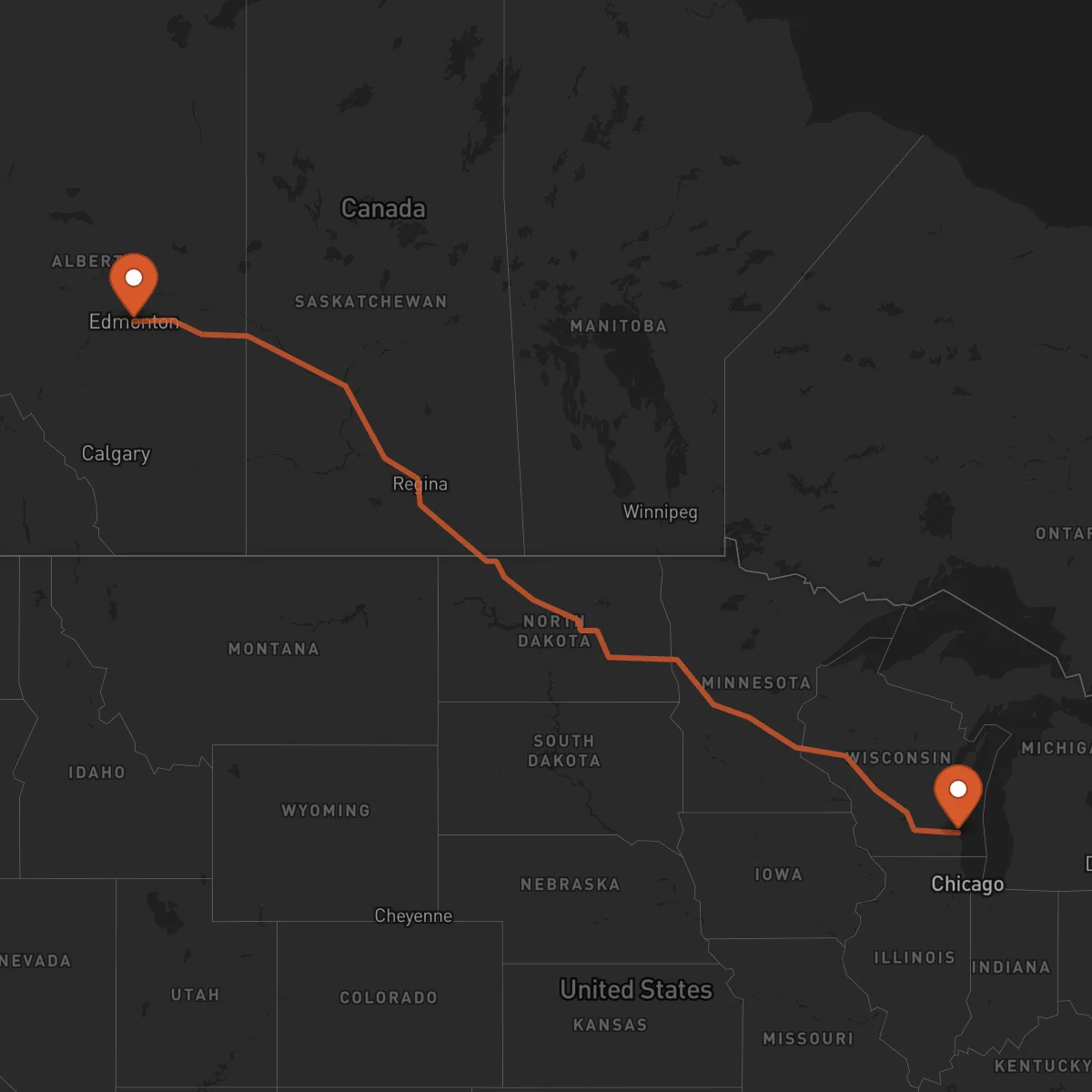
The Edmonton to Milwaukee corridor represents a vital cross-border freight transportation route connecting the industrial heart of Alberta with the manufacturing and distribution hub of Wisconsin. This 2,206 km corridor traverses the Canadian Prairies and the American Midwest, facilitating the movement of goods between two major North American economic regions. The route serves as a critical link for companies operating in both countries, enabling efficient supply chain integration across the Canada-US border.
The economic significance of this corridor is substantial, connecting Edmonton's energy and resource-based economy with Milwaukee's diverse manufacturing sector. Edmonton serves as a gateway to Canada's oil sands and agricultural heartland, while Milwaukee is renowned for its advanced manufacturing, particularly in machinery, metal fabrication, and food processing. This complementary industrial relationship creates consistent freight demand moving in both directions along the corridor.
Key industries utilizing this transportation route include energy equipment and supplies moving from Edmonton to Milwaukee, agricultural products and processed foods traveling in both directions, manufacturing components and raw materials, and specialized industrial equipment. The corridor also supports the movement of automotive parts, given Milwaukee's historical connection to the automotive industry and Alberta's growing automotive manufacturing sector.
Transportation infrastructure along this route includes major highways such as Alberta Highway 16 (Yellowhead Highway) connecting Edmonton to Winnipeg, then transitioning to Interstate 90 and I-94 through the American Midwest. The primary border crossing is typically at Portal, North Dakota, or other efficient points depending on specific cargo requirements. Control Terrestre facilitates seamless cross-border operations by leveraging our C-TPAT and FAST certifications, ensuring expedited customs clearance and minimizing delays for our customers' full truckload shipments.
Services for this Route
Available services for the corridor Edmonton - Milwaukee
 Origin
Edmonton, Alberta, is strategically positioned as a major logistics hub in Western Canada, serving as the primary gateway to the oil sands of northern Alberta and the agricultural heartland of the Prairies. Located along the North Saskatchewan River, Edmonton's transportation infrastructure includes extensive highway networks, rail connections, and proximity to major airports. The city's Yellowhead Highway (Highway 16) provides direct east-west connectivity across Canada, making it an ideal origin point for cross-border freight movements.
The region's economy is anchored by the energy sector, with Alberta's oil sands operations requiring substantial logistics support for equipment, supplies, and product distribution. Additionally, Edmonton benefits from a strong agricultural sector, manufacturing base, and growing technology industry. The city's industrial parks and warehousing facilities provide excellent infrastructure for freight consolidation and distribution, supporting efficient full truckload operations to destinations across North America.
 Destination
Milwaukee
Milwaukee, Wisconsin, is strategically located on the western shore of Lake Michigan, serving as a major transportation and logistics hub in the American Midwest. The city's position at the intersection of major highways, including I-94 and I-43, provides excellent connectivity to regional and national markets. Milwaukee's port facilities on Lake Michigan complement its robust road and rail infrastructure, creating a multimodal transportation environment ideal for freight distribution.
The Milwaukee metropolitan area is home to a diverse industrial base, with particular strengths in advanced manufacturing, including machinery, metal fabrication, and food processing. The region has a rich industrial heritage and continues to be a center for innovation in manufacturing technologies. Major corporations and numerous small to medium-sized enterprises rely on efficient logistics solutions to maintain their supply chains, creating consistent demand for full truckload freight services connecting Milwaukee with major Canadian markets and industrial centers.










