Milwaukee to Montreal
Montreal → MilwaukeeFTL freight transportation service between Milwaukee and Montreal. Reliable logistics solutions for your business.
Route Description
Everything you need to know about the corridor Milwaukee - Montreal
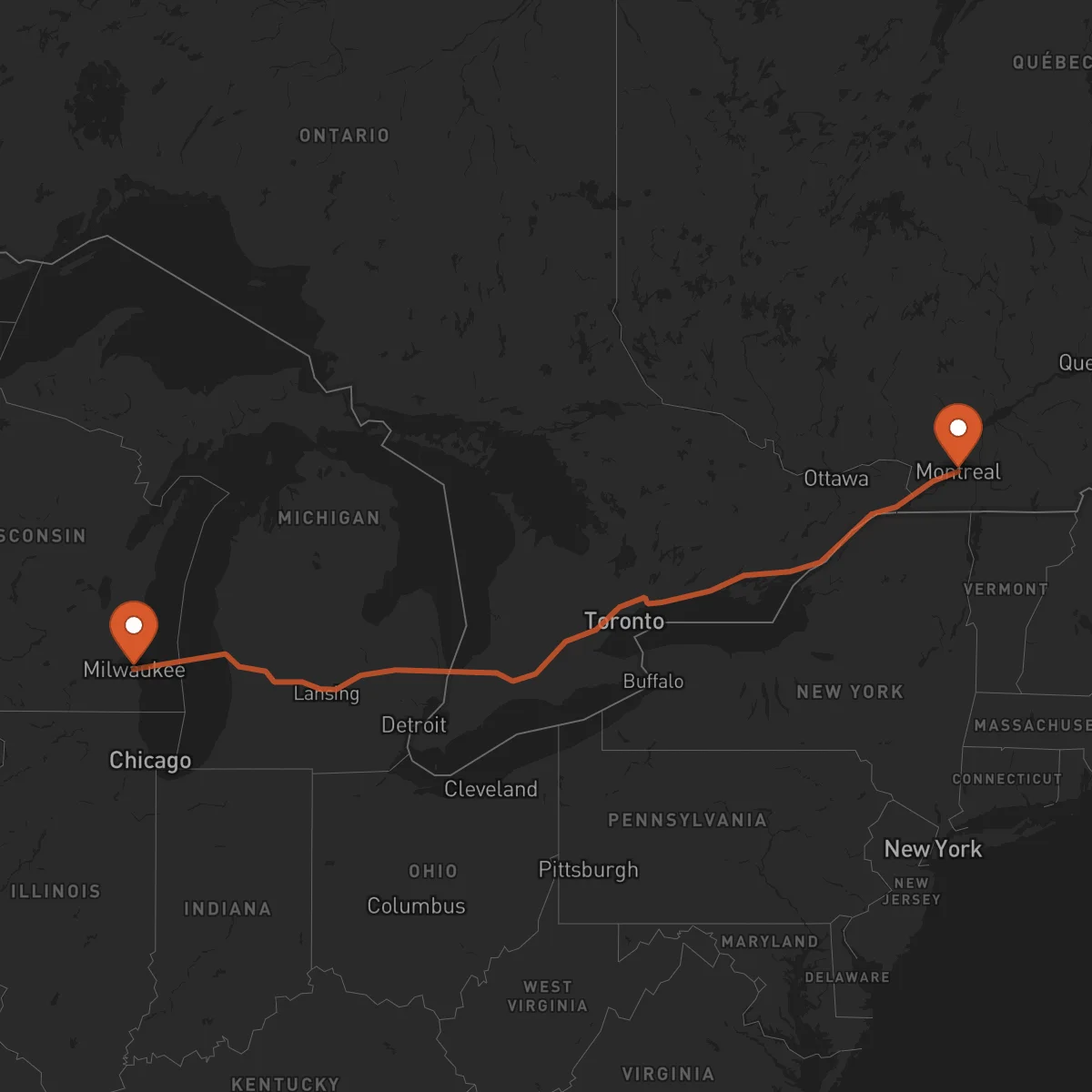
The Milwaukee-Montreal corridor represents a vital cross-border logistics route connecting the industrial heartland of the United States with Canada's major economic hub in Quebec. This 1173 km transportation corridor traverses through key Midwest and Great Lakes states before crossing into Canada, serving as a critical supply chain link between two major North American markets. The route facilitates the movement of goods between Wisconsin's manufacturing centers and Quebec's diverse industrial base, supporting integrated North American production and distribution networks.
The economic significance of this corridor is underscored by the complementary industrial strengths of both regions. Milwaukee serves as a major manufacturing center for machinery, metal products, and transportation equipment, while Montreal functions as a leading hub for aerospace, pharmaceuticals, electronics, and food processing industries. This complementary economic structure creates substantial freight volumes moving in both directions, with manufacturers in both cities relying on just-in-time inventory systems that demand reliable, full truckload transportation services.
Transportation infrastructure along this corridor includes major interstate highways such as I-94, I-43, and I-39 in the United States, connecting to Canadian routes through efficient border crossings. The corridor benefits from proximity to major ports including the Port of Milwaukee and the Port of Montreal, enabling seamless intermodal connections. Control Terrestre leverages this infrastructure network to provide dedicated full truckload services, ensuring cargo moves efficiently through all border crossing points with minimal delays and maximum security.
Services for this Route
Available services for the corridor Milwaukee - Montreal
 Origin
Milwaukee
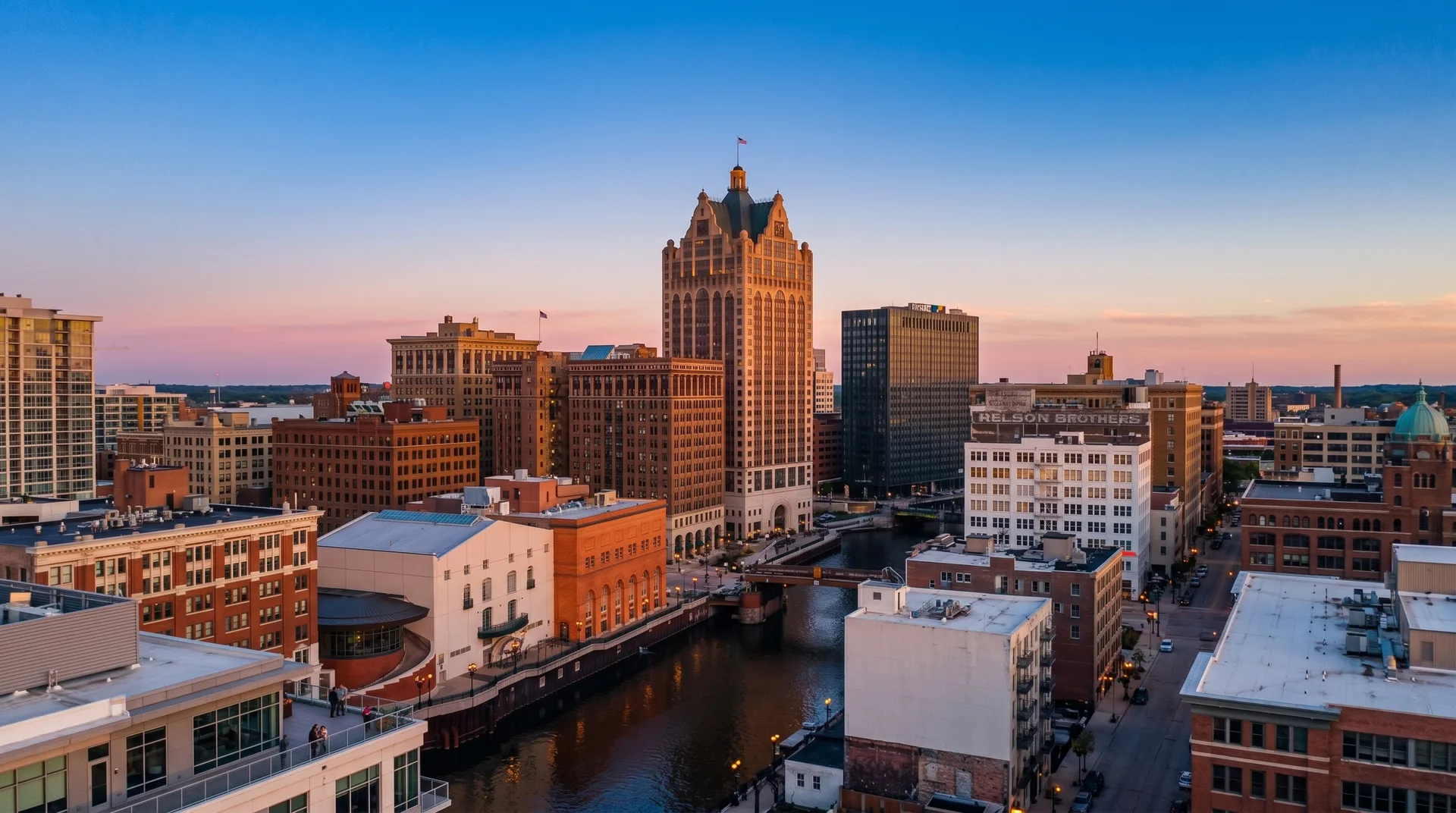
Milwaukee, Wisconsin stands as a strategic logistics hub in the American Midwest, positioned advantageously along the western shore of Lake Michigan. The city's location provides direct access to major interstate highways including I-94, I-43, and I-41, creating excellent ground transportation connections to both coastal and inland markets. Milwaukee's proximity to the Port of Milwaukee enables efficient intermodal freight operations, while its position within the Great Lakes region facilitates cost-effective distribution throughout the Midwest and beyond.
The economic landscape of Milwaukee is dominated by advanced manufacturing, particularly in machinery, metal fabrication, and transportation equipment. The city hosts major operations for companies in the food processing, brewing, and medical device sectors. This industrial diversity generates substantial freight volumes requiring reliable full truckload transportation services. Milwaukee's skilled workforce and established industrial base make it an ideal origin point for time-sensitive, high-value cargo moving to Canadian markets.
 Destination
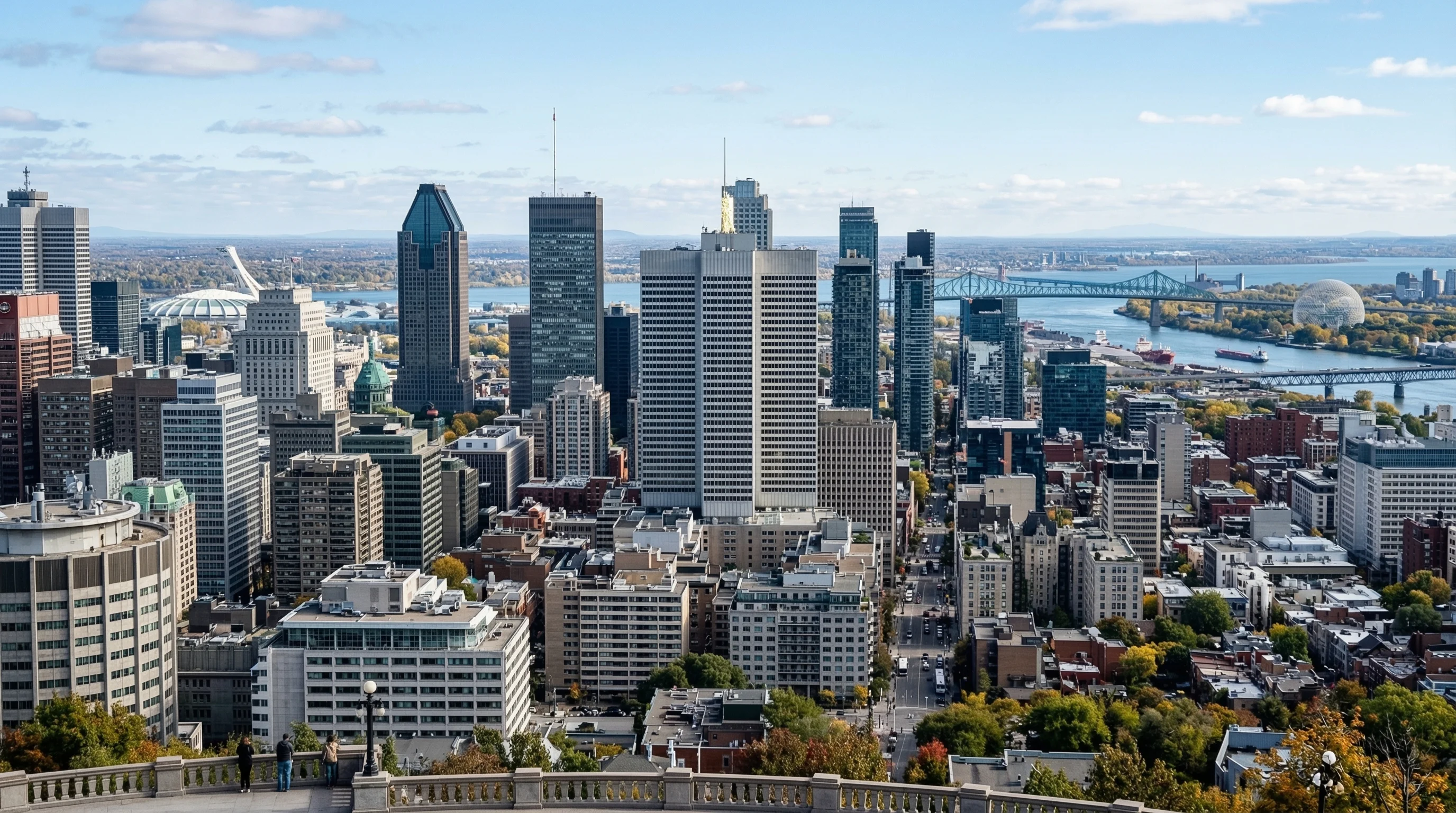
Montreal, Quebec represents Canada's premier logistics and economic center, strategically located at the confluence of the Saint Lawrence River and major transportation networks. The city serves as a gateway to Eastern Canada and the Atlantic provinces, with its position facilitating both domestic distribution and international trade. Montreal's extensive transportation infrastructure includes the Port of Montreal, one of North America's busiest ports, along with comprehensive highway connections via Autoroutes 20 and 40.
The metropolitan area's economy is characterized by advanced industries including aerospace, information technology, pharmaceuticals, and financial services. Montreal hosts major operations for global companies in these sectors, creating substantial demand for specialized freight transportation. The city's role as a distribution center for Quebec and Atlantic Canada, combined with its manufacturing capabilities, generates consistent freight volumes requiring dedicated full truckload services. Montreal's bilingual workforce and established trade relationships with U.S. partners make it an ideal destination for cross-border logistics operations.










