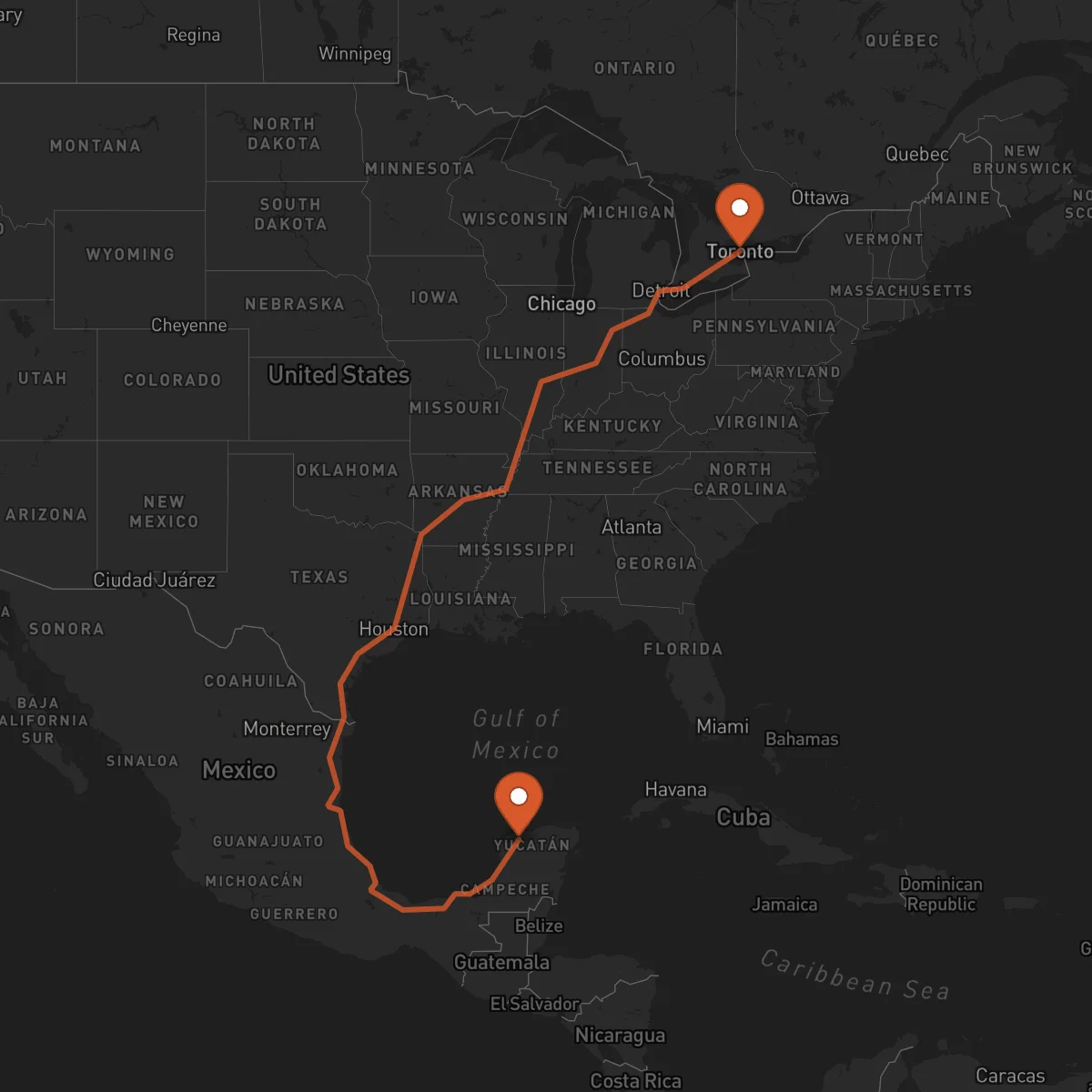
Mérida to Toronto
Toronto → MéridaFTL freight transportation service between Mérida and Toronto. Reliable logistics solutions for your business.
Route Description
Everything you need to know about the corridor Mérida - Toronto
The Mérida-Toronto corridor represents a vital logistics connection between Mexico's southeastern region and Canada's economic hub. This cross-border route spans approximately 2,694 kilometers, linking the Yucatan Peninsula's growing industrial base with Toronto's diverse manufacturing and distribution ecosystem. The corridor facilitates the movement of goods between two major North American markets, supporting the integration of supply chains across the continent.
The transportation infrastructure along this route includes Mexico's Federal Highway 180 and Highway 186, connecting to the U.S. Interstate system through key crossings such as Laredo or Brownsville. From there, goods continue north through major U.S. highways before crossing into Canada. The route passes through diverse industrial regions, allowing for efficient distribution to both origin and destination markets. Control Terrestre's network of certified carriers ensures seamless cross-border operations, handling all customs documentation and compliance requirements for full truckload shipments.
This corridor serves industries including automotive components, electronics, agricultural products, and manufactured goods. Toronto's position as Canada's financial and industrial center creates consistent demand for imports from Mexico's specialized manufacturing sectors. The route's reliability and Control Terrestre's expertise in cross-border logistics make it an optimal choice for companies requiring dedicated full truckload services between these strategic markets.
Services for this Route
Available services for the corridor Mérida - Toronto
 Origin
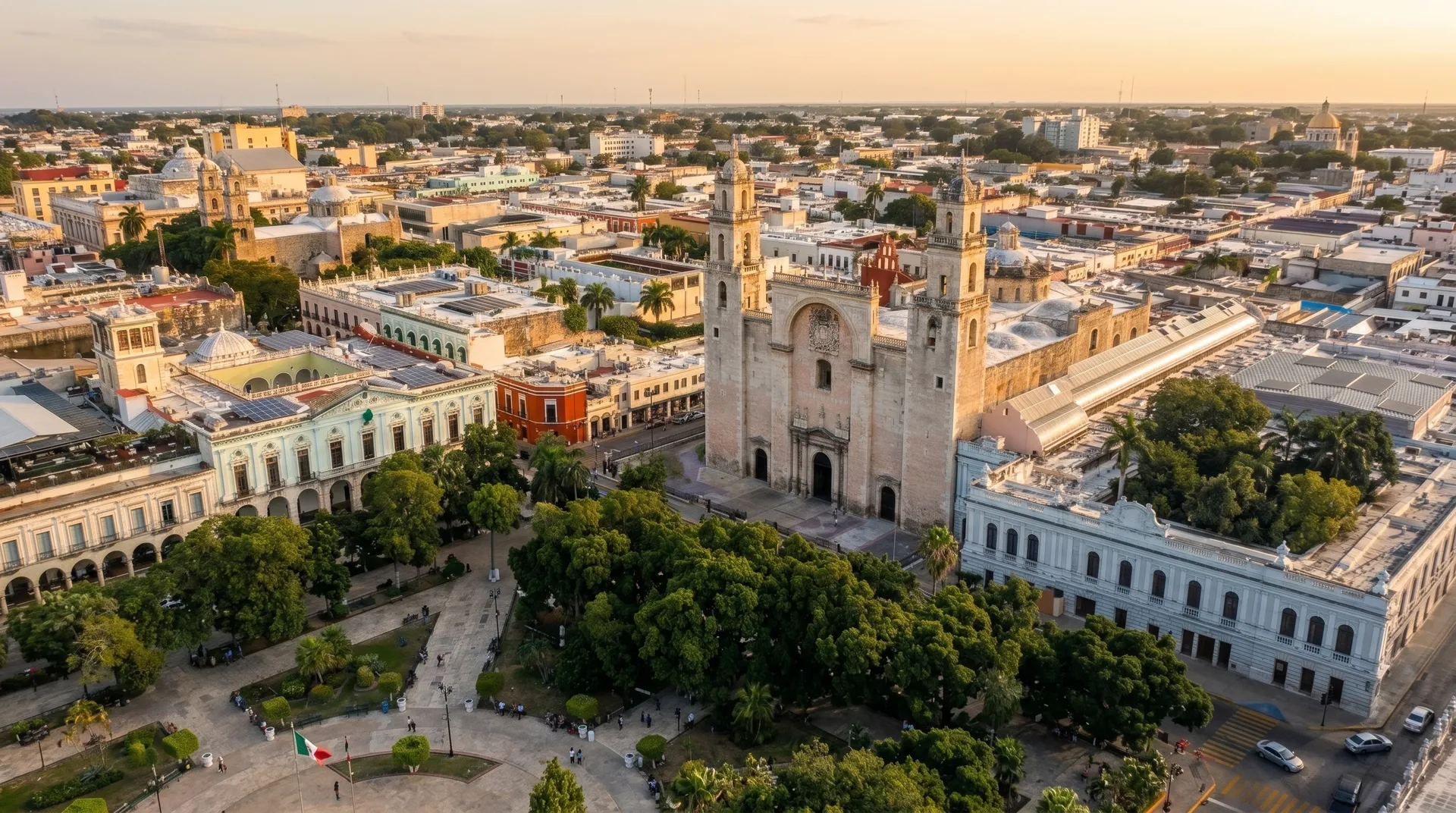
Mérida, the capital of Yucatán, serves as a strategic logistics hub for southeastern Mexico. Located on the Yucatan Peninsula, the city benefits from proximity to major ports like Progreso and access to a growing industrial corridor. Mérida's economy encompasses aerospace manufacturing, automotive components, food processing, and tourism-related industries. The city's transportation infrastructure includes the Manuel Crescencio Rejón International Airport and connections to Mexico's federal highway network, facilitating efficient cargo movement to both domestic and international markets.
 Destination
Toronto stands as Canada's primary economic engine and a crucial logistics center. Situated on Lake Ontario's northwestern shore, the city provides access to major transportation networks including Pearson International Airport, the Port of Toronto, and extensive highway connections. Toronto's diverse economy spans financial services, technology, automotive manufacturing, aerospace, and consumer goods production. The city's strategic location within the Quebec City-Windsor Corridor enables efficient distribution throughout eastern Canada and connections to U.S. markets via the nearby Ambassador Bridge and other border crossings.










