Mérida to Moncton
Moncton → MéridaFTL freight transportation service between Mérida and Moncton. Reliable logistics solutions for your business.
Route Description
Everything you need to know about the corridor Mérida - Moncton
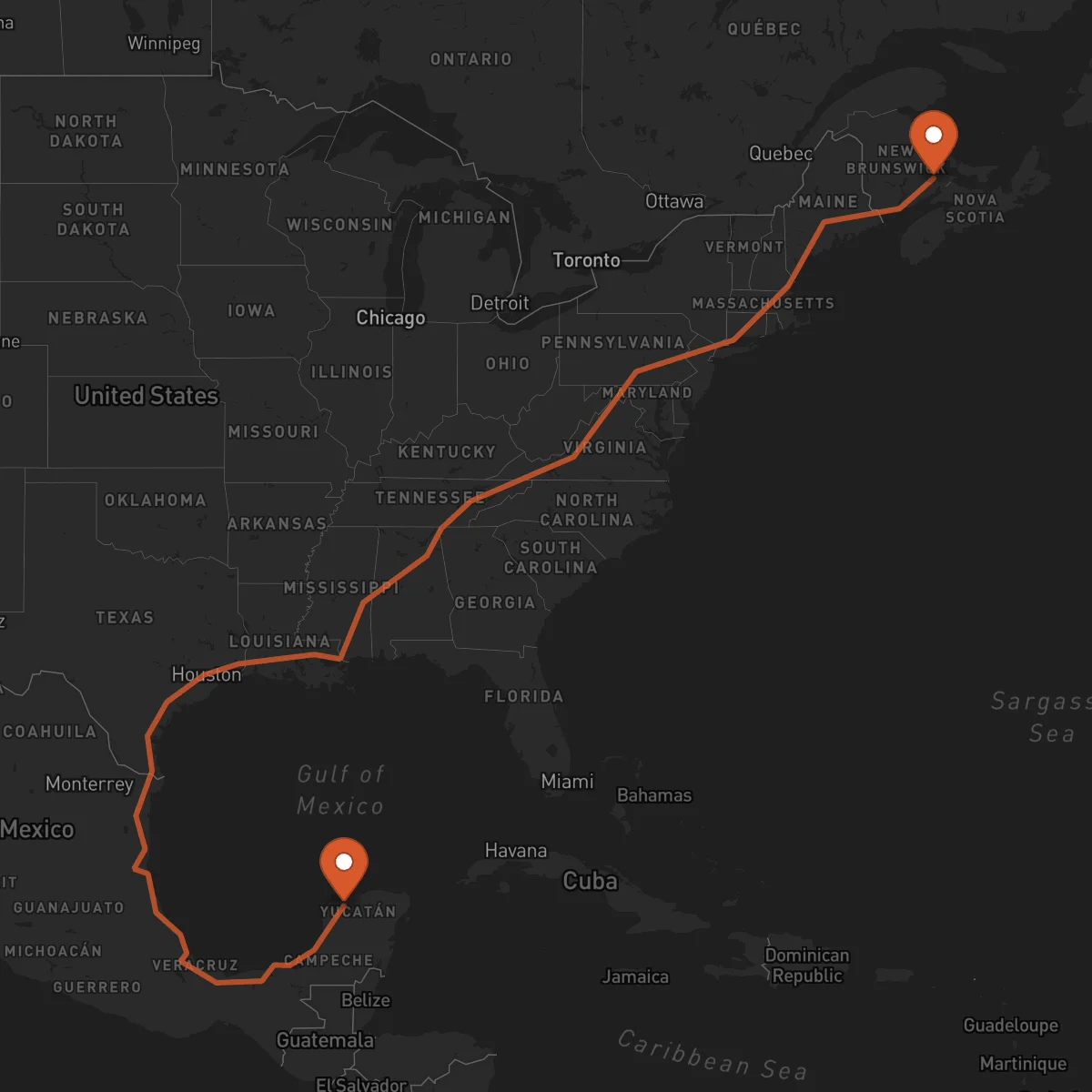
The logistics corridor connecting Mérida, Yucatán, Mexico to Moncton, New Brunswick, Canada represents a vital cross-border transportation route spanning approximately 3,587 kilometers. This corridor links the southeastern region of Mexico with Atlantic Canada, facilitating the movement of goods between two distinct economic regions. The route traverses multiple Mexican states including Yucatán, Campeche, Tabasco, Veracruz, and Tamaulipas before crossing into the United States through Laredo or Brownsville, then continuing through the eastern U.S. states before entering Canada via the eastern corridor.
This transportation corridor serves as a critical link for industries requiring specialized freight services between Mexico's Yucatán Peninsula and Canada's Atlantic provinces. The route accommodates a diverse range of cargo types, from automotive parts and electronics manufactured in the Mérida region to agricultural products, seafood, and manufactured goods destined for the Canadian market. The corridor's strategic importance has grown with increasing trade between Mexico and Canada, particularly in sectors such as automotive, aerospace, and food processing.
Key infrastructure along this route includes Mexico's Federal Highways 180 and 180D connecting Mérida to the U.S. border, major U.S. interstates such as I-35 and I-81, and Canadian highways leading to Moncton. The corridor benefits from well-established border crossing points with dedicated FAST lanes for pre-approved carriers, facilitating efficient customs clearance. Control Terrestre's expertise in cross-border operations ensures seamless coordination across all jurisdictions, providing clients with reliable full truckload (FTL) services that maintain cargo integrity throughout the journey.
Services for this Route
Available services for the corridor Mérida - Moncton
 Origin
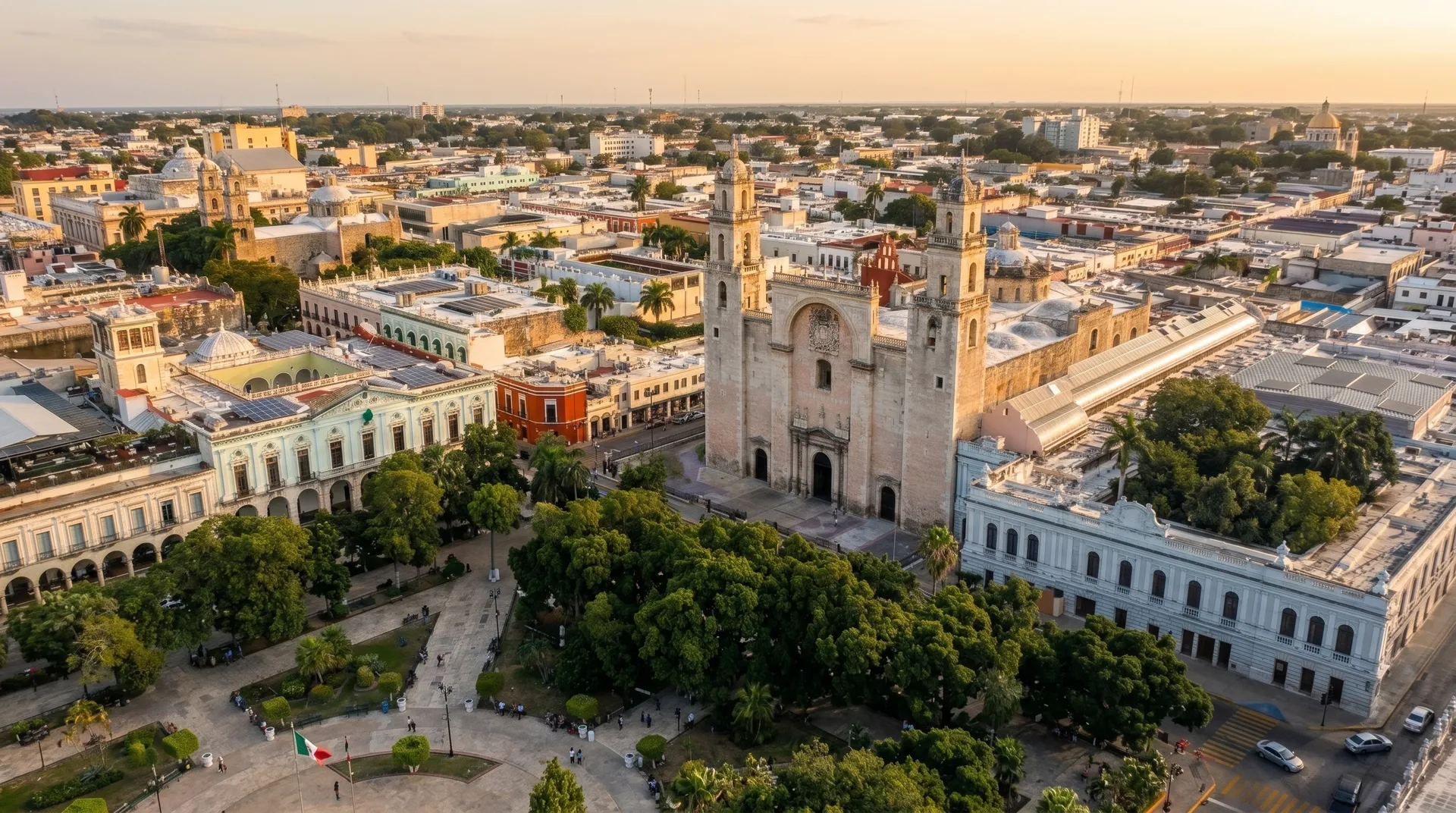
Mérida, the capital of Yucatán state, serves as a strategic logistics hub for southeastern Mexico. Located on the Yucatán Peninsula, Mérida benefits from its proximity to major ports such as Progreso and its connection to the broader Mexican industrial network. The city and surrounding region have developed strong capabilities in automotive manufacturing, aerospace components, and food processing, making it a key origin point for specialized freight. Mérida's transportation infrastructure includes access to Federal Highway 180, which provides direct connectivity to other Mexican states and ultimately to the U.S. border. The city's international airport and seaport facilities complement the road network, offering multimodal options for shippers. Control Terrestre leverages Mérida's strategic position to provide efficient full truckload services to destinations throughout North America, capitalizing on the region's growing industrial base and export-oriented economy.
 Destination
Moncton
Moncton, located in New Brunswick, Canada, occupies a strategic position in Atlantic Canada's logistics network. As one of the region's major transportation hubs, Moncton serves as a gateway to the Maritime provinces and beyond. The city's economy encompasses diverse sectors including manufacturing, aerospace, information technology, and distribution. Moncton's central location in the Maritimes provides excellent access to other major Canadian cities such as Halifax, Saint John, and Fredericton, as well as connections to the northeastern United States. The city benefits from comprehensive transportation infrastructure including the Trans-Canada Highway, an international airport, and rail connections. Moncton's designation as a Foreign Trade Zone enhances its appeal for import/export operations. Control Terrestre's services to Moncton support the region's industrial needs by providing reliable full truckload transportation from Mexican origins, facilitating trade in automotive parts, electronics, and other manufactured goods that support Atlantic Canada's economy.










