Madison to San Marcos
San Marcos → MadisonFTL freight transportation service between Madison and San Marcos. Reliable logistics solutions for your business.
Route Description
Everything you need to know about the corridor Madison - San Marcos
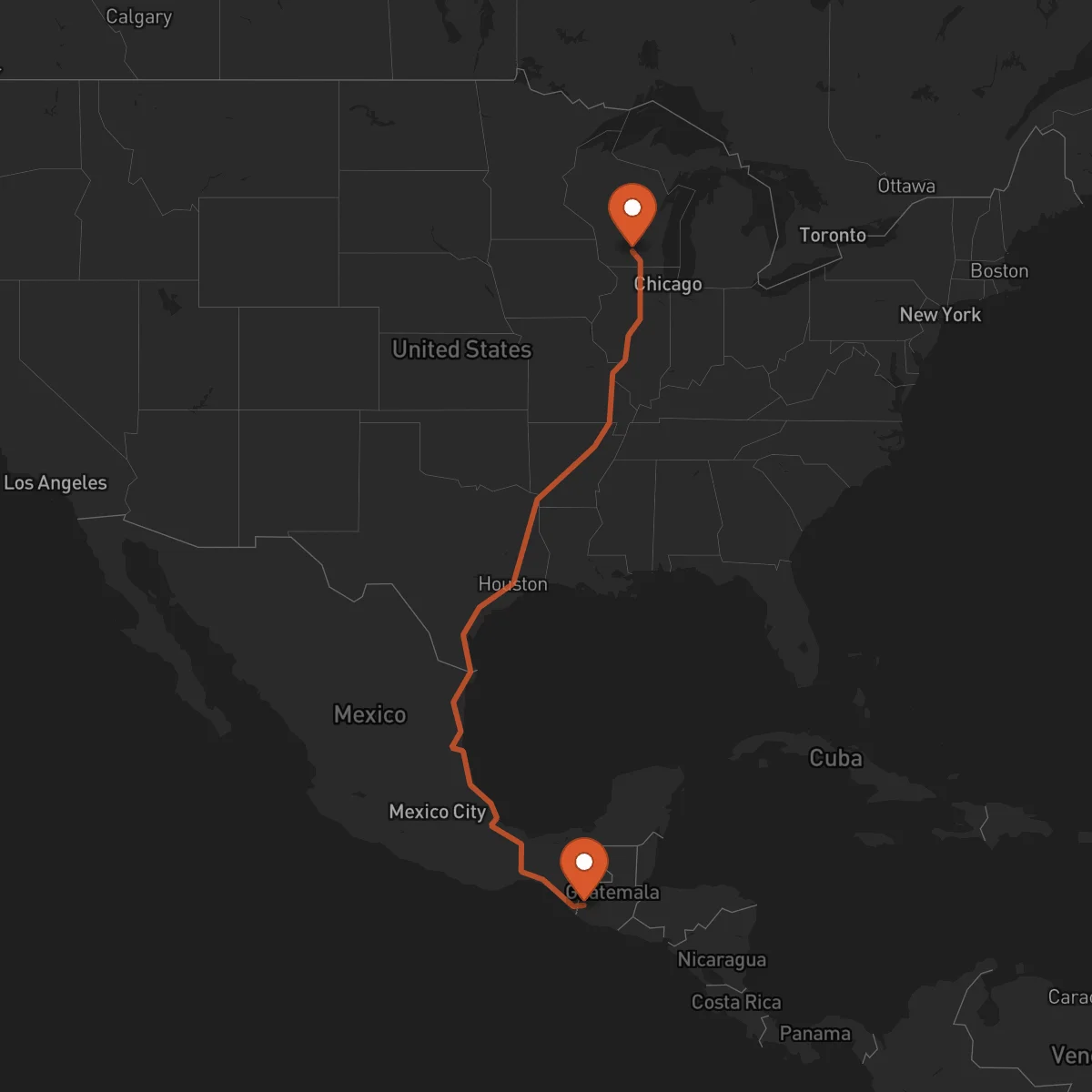
The Madison, Wisconsin to San Marcos, Guatemala corridor is a critical North American trade artery, bridging the U.S. Midwest with Central America's Pacific coast. This cross-border route is strategically vital for moving goods efficiently between major production and consumption centers, supporting integrated supply chains across international boundaries. The corridor leverages a network of major U.S. interstate highways and key Central American roadways, necessitating expert navigation of complex international customs and regulatory environments. Control Terrestre facilitates seamless operations on this corridor through our alliance of certified providers, ensuring reliable full truckload (FTL) movement for diverse cargo types.
Economically, the corridor connects the industrial and agricultural heartland of Wisconsin with Guatemala's significant export regions. Madison's economy, driven by dairy, food processing, and advanced manufacturing, generates consistent outbound freight. Conversely, San Marcos and surrounding Guatemala serve as a hub for agricultural exports (coffee, bananas, sugar) and textile manufacturing, creating robust inbound logistics needs to the U.S. market. Other industries utilizing this route include automotive parts, machinery, and consumer goods, all requiring dedicated, timely cross-border transportation.
The primary transportation infrastructure follows I-39 South from Madison to I-90/I-94, converging towards the Texas/Mexico border. After crossing into Mexico, the route typically utilizes Mexican Federal Highways 57 and 150D towards the Guatemala border at Tecún Umán. The final leg traverses Guatemalan highways CA-1 and CA-2 to reach San Marcos. The principal border crossing is at Tecún Umán, Guatemala / Ciudad Hidalgo, Mexico. Navigating this crossing requires meticulous attention to customs documentation, compliance with both Mexican and Guatemalan regulations, and familiarity with procedures for cargo like refrigerated goods, dry van, or specialized equipment.
Control Terrestre excels in managing this complex corridor. Our providers hold essential certifications including C-TPAT and FAST for expedited U.S. border processing and BASC for security standards in the Americas. We coordinate the entire door-to-door journey, handling customs brokerage support, cross-border paperwork, and transit coordination. This allows our clients to move full truckloads—whether standard dry, refrigerated, flatbed, or tanker—with a single, accountable partner dedicated to optimizing their supply chain across this challenging international route.
Services for this Route
Available services for the corridor Madison - San Marcos
 Origin
Madison
Madison, Wisconsin, serves as a pivotal logistics origin in the upper Midwest, centrally located within the U.S. industrial corridor. Its strategic position provides efficient access to major markets via an extensive highway network, including Interstates 90, 94, and 39, which form the primary arteries for north-south and east-west freight movement. The city is a major economic engine for Wisconsin, with a diverse industrial base dominated by dairy and food production (home to numerous global food companies), advanced manufacturing (medical devices, automotive components), and a robust technology sector. The Port of Milwaukee on Lake Michigan offers additional intermodal options for bulk cargo. This combination of strong local production and superior transportation infrastructure makes Madison a consistent generator of outbound full truckload freight destined for national and international markets.
 Destination
San Marcos
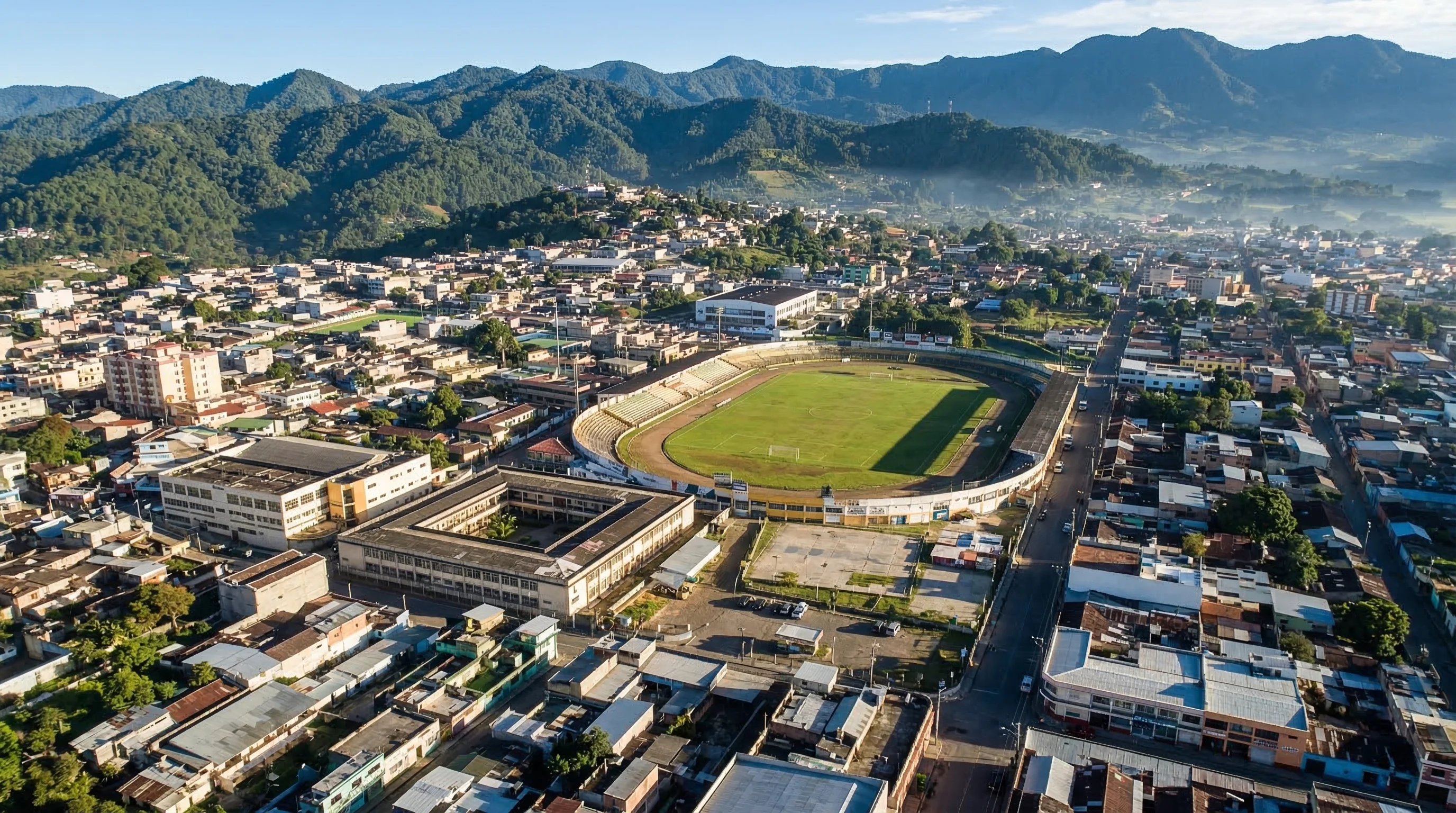
San Marcos, located in southwestern Guatemala near the Pacific coast, is a strategically important logistics destination for trade with Central America. It acts as a gateway to one of Guatemala's most fertile agricultural regions and a center for textile manufacturing. The area's economy is heavily reliant on exporting high-value agricultural products like coffee, bananas, and sugar, as well as manufactured textiles, all of which require reliable import/export freight services. The city's connectivity is defined by its position on the Pan-American Highway (CA-1) and its link to the crucial CA-2 coastal highway, facilitating movement to major Pacific ports like Puerto Quetzal. This infrastructure supports both domestic distribution and international cross-border trucking, making San Marcos a key node for FTL cargo moving between Guatemala and the broader North American market.










