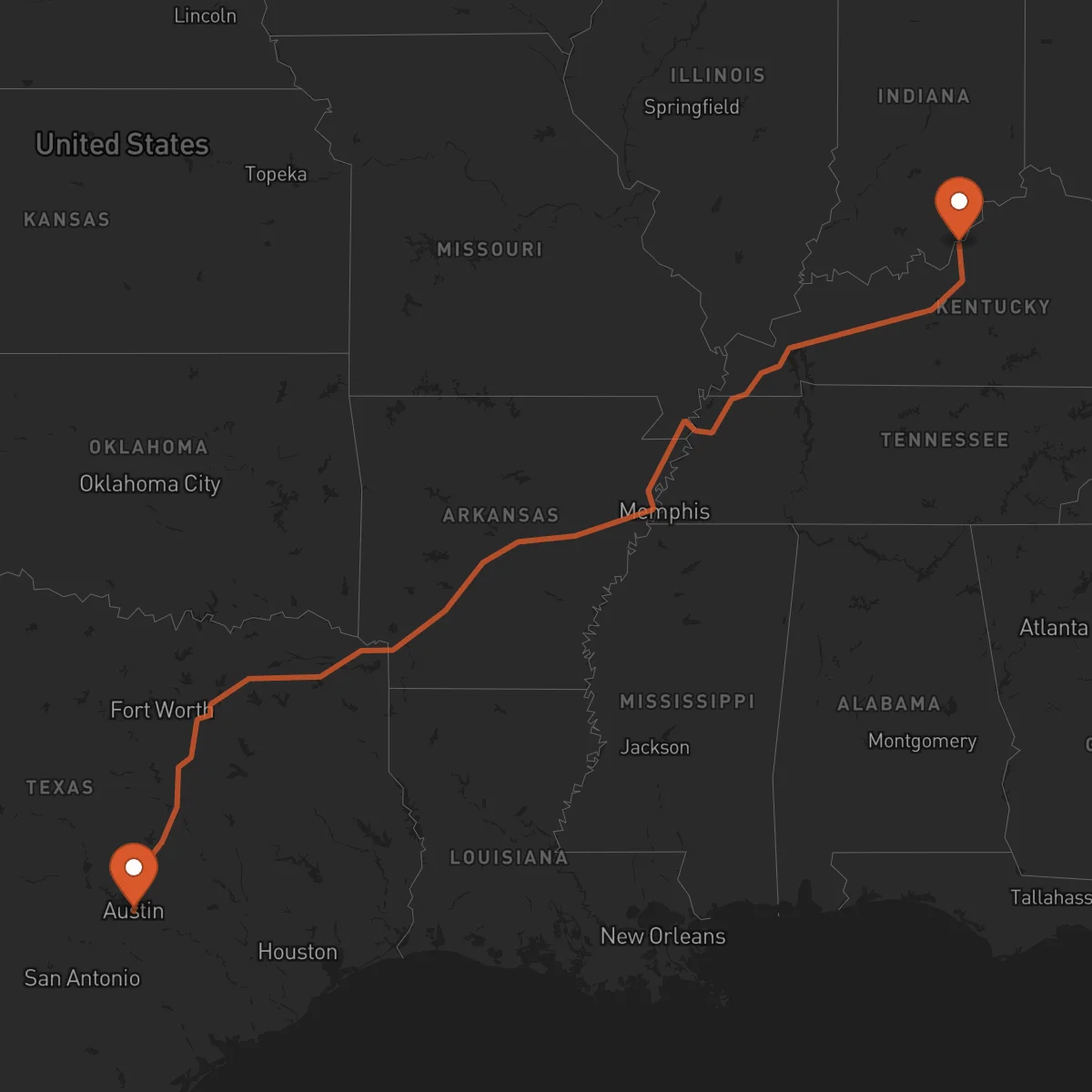
Louisville to Austin
Austin → LouisvilleFTL freight transportation service between Louisville and Austin. Reliable logistics solutions for your business.
Route Description
Everything you need to know about the corridor Louisville - Austin
The Louisville to Austin corridor represents a vital transportation link connecting the industrial heartland of Kentucky with the booming tech and business hub of Texas. This 1,412 km domestic route traverses diverse terrain and crosses multiple state lines, making it a strategic pathway for companies moving goods between the Midwest and the Southwest. The corridor benefits from excellent highway infrastructure, primarily utilizing I-65 South to I-30 West, then connecting to I-35 South, which provides direct access to Austin's growing logistics network.
This route serves a diverse range of industries, with manufacturing companies in Louisville shipping automotive parts, aerospace components, and consumer goods to Austin's expanding technology sector. The corridor also supports the movement of agricultural products, industrial equipment, and specialized cargo between these two dynamic economic regions. Austin's status as a major tech center creates consistent demand for reliable freight transportation, while Louisville's position as a logistics hub ensures efficient outbound capabilities.
Control Terrestre specializes in full truckload (FTL) services along this corridor, providing dedicated transportation solutions that ensure your cargo moves efficiently and securely. Our experienced network of carriers understands the nuances of this route, from managing regional weather patterns to navigating peak traffic periods around major metropolitan areas. We offer flexible scheduling, real-time tracking, and specialized equipment options to meet the unique needs of your shipment, whether you're transporting time-sensitive electronics, temperature-controlled pharmaceuticals, or oversized industrial machinery.
Services for this Route
Available services for the corridor Louisville - Austin
 Origin
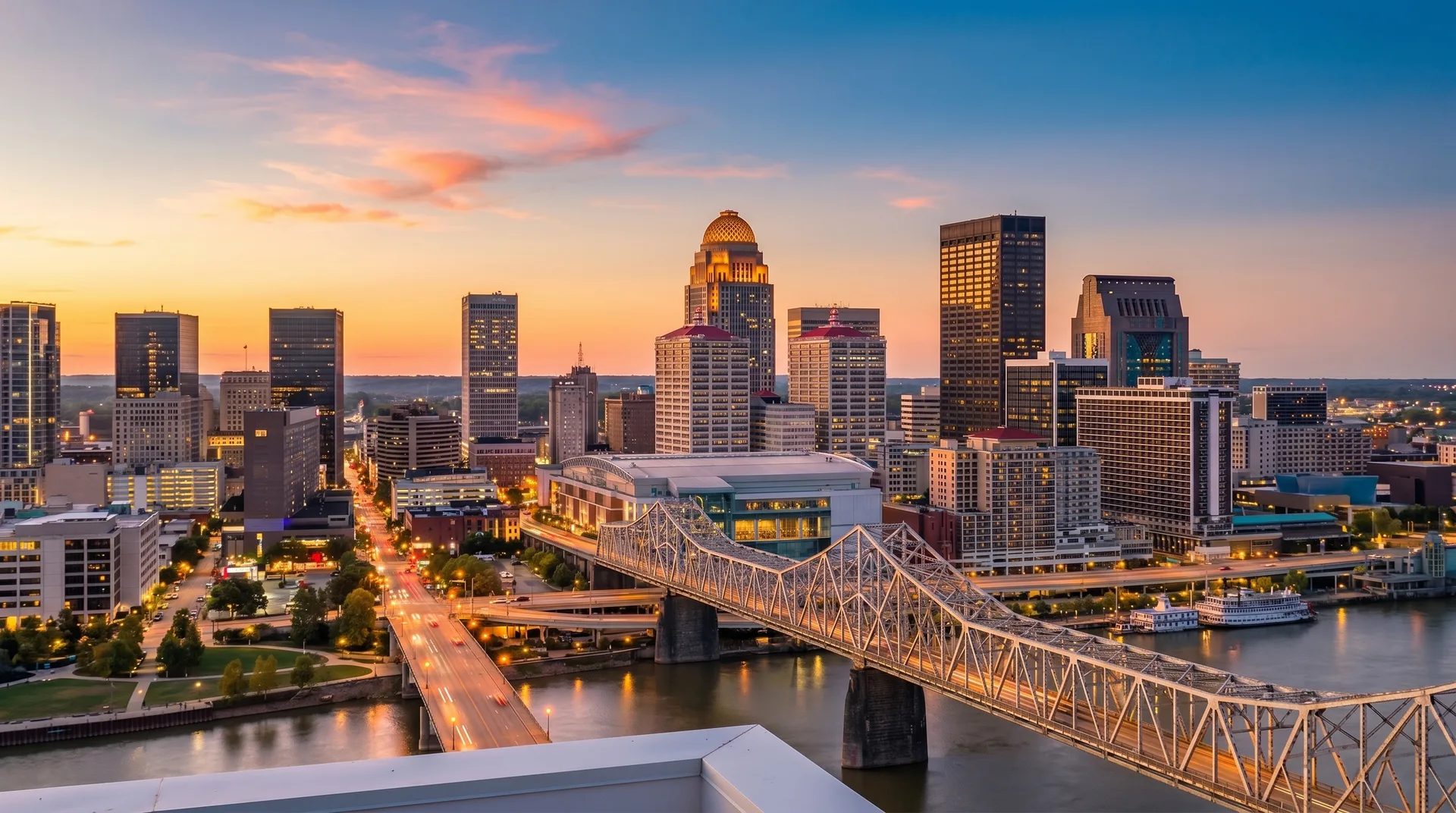
Louisville
Louisville, Kentucky serves as a strategic logistics powerhouse in the Midwest, positioned along the Ohio River with exceptional connectivity to major transportation networks. The city boasts one of the most advanced intermodal facilities in the country, combining river, rail, and highway access that makes it an ideal origin point for freight distribution. Louisville's central location provides efficient access to major markets across the eastern United States, with proximity to key cities like Chicago, Nashville, and Atlanta.
The region's economy is anchored by manufacturing, healthcare, and logistics sectors, with major employers including Ford, GE Appliances, and UPS Worldport - the largest automated package handling facility in the world. This industrial diversity creates consistent freight volume and demand for reliable transportation services. Louisville's infrastructure includes multiple interstate highways (I-64, I-65, I-71), extensive warehousing facilities, and a foreign trade zone that facilitates international commerce.
 Destination
Austin
Austin, Texas has emerged as one of the fastest-growing economic centers in the United States, combining technology innovation with traditional Texas industries to create a dynamic logistics destination. The city's strategic location in Central Texas provides excellent access to major markets throughout the Southwest, with strong connections to Mexico and the broader Latin American region. Austin's infrastructure continues to expand, with ongoing improvements to major highways including I-35, Loop 1, and State Highway 130.
The Austin metropolitan area has transformed into a technology and business powerhouse, earning its reputation as "Silicon Hills" due to the concentration of tech companies and startups. Major employers include Dell, Apple, IBM, and numerous innovative firms in software development, semiconductor manufacturing, and clean energy. The region's diverse economy also encompasses healthcare, education, and entertainment industries, creating varied and consistent demand for freight transportation services. Austin's rapid population growth and business expansion ensure reliable freight volume throughout the year.










