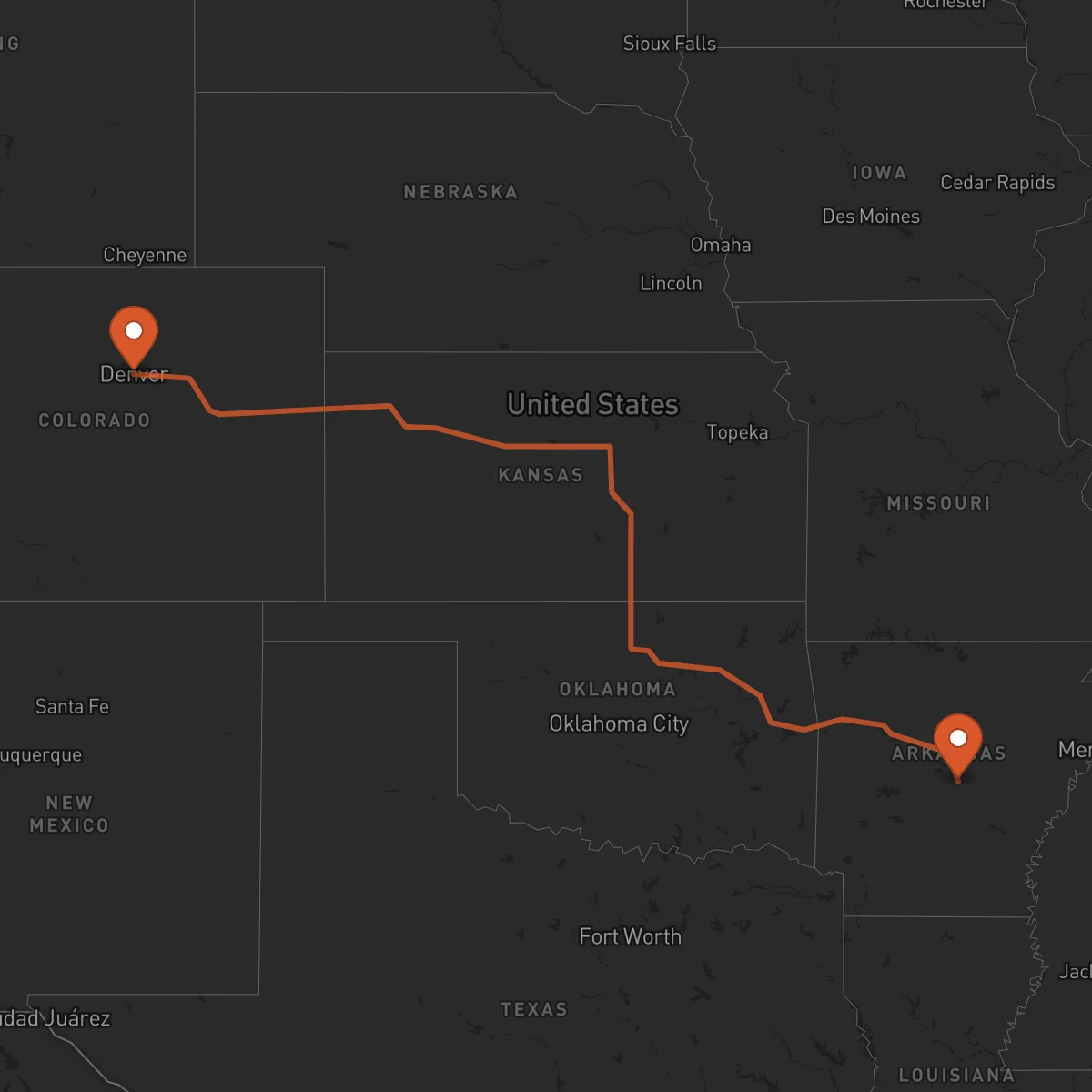
Little Rock to Denver
Denver → Little RockFTL freight transportation service between Little Rock and Denver. Reliable logistics solutions for your business.
Route Description
Everything you need to know about the corridor Little Rock - Denver
The Little Rock to Denver corridor is a vital domestic freight route spanning approximately 1,253 kilometers across the heart of the United States. This strategic connection links the industrial and commercial hubs of Arkansas with the rapidly growing markets of Colorado, facilitating the movement of goods between the Midwest and the Rocky Mountain region. The corridor serves as a critical artery for supply chains that support both manufacturing and consumer markets.
The economic significance of this route is underscored by the diverse industrial activities in both regions. Little Rock, as a key logistics center in the South, connects to Denver's thriving economy, which is driven by sectors such as aerospace, technology, energy, and outdoor recreation equipment manufacturing. The corridor supports the efficient distribution of raw materials, finished goods, and specialized equipment, enabling businesses to optimize their supply chain operations and reduce transit times.
Transportation infrastructure along this route includes major highways such as I-30, I-40, and I-70, which provide reliable and efficient connectivity. These highways are designed to handle high volumes of freight traffic, ensuring timely deliveries and minimizing disruptions. Control Terrestre leverages this infrastructure to offer seamless FTL transportation services, ensuring that your cargo moves securely and efficiently from origin to destination. Our expertise in managing this corridor allows us to provide tailored solutions that meet the unique needs of your business.
Services for this Route
Available services for the corridor Little Rock - Denver
 Origin
Little Rock
Little Rock, the capital of Arkansas, is a strategic logistics hub in the southern United States. Its location at the intersection of major highways, including I-30 and I-40, makes it a key gateway for freight movement across the region. The city is home to a diverse economy, with strong sectors in manufacturing, healthcare, and logistics. Little Rock’s Port of Little Rock, situated on the Arkansas River, further enhances its connectivity by providing access to inland waterways, complementing its robust road network. This combination of transportation modes makes Little Rock an ideal origin point for freight destined for markets across the country.
 Destination
Denver
Denver, the capital of Colorado, is a dynamic and rapidly growing economic center in the Rocky Mountain region. Known for its strategic location and access to major transportation corridors, Denver serves as a critical distribution hub for industries such as aerospace, technology, energy, and outdoor recreation. The city’s proximity to I-70 and other key highways ensures efficient connectivity to national and international markets. Denver International Airport, one of the busiest cargo airports in the U.S., further enhances its logistics capabilities, making it a prime destination for freight transportation. This combination of infrastructure and economic activity positions Denver as a vital endpoint for supply chains moving through the region.










