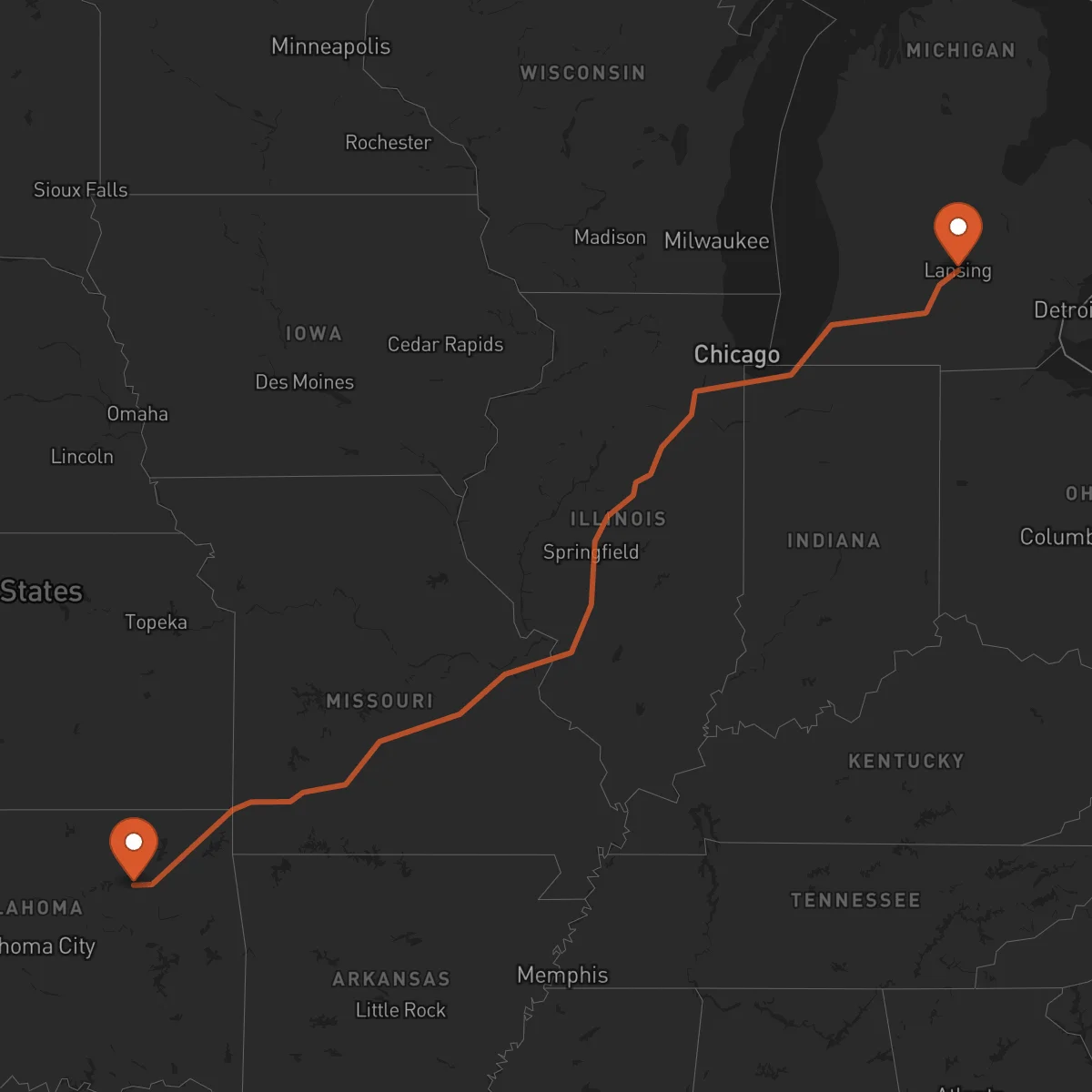
Lansing to Tulsa
Tulsa → LansingFTL freight transportation service between Lansing and Tulsa. Reliable logistics solutions for your business.
Route Description
Everything you need to know about the corridor Lansing - Tulsa
The logistics corridor connecting Lansing, Michigan, to Tulsa, Oklahoma, represents a vital transportation link across the American Midwest, spanning approximately 1,223 kilometers. This domestic route traverses through key industrial states including Michigan, Indiana, Illinois, Missouri, and Oklahoma, creating a strategic pathway for freight movement between the Great Lakes region and the Southern Plains. The corridor's significance lies in its ability to connect manufacturing powerhouses with energy and agricultural centers, facilitating the seamless flow of goods across diverse economic zones.
The economic context of this corridor reflects the complementary industrial strengths of both regions. Lansing serves as a hub for automotive manufacturing and technology, while Tulsa anchors a dynamic economy centered on energy, aerospace, and logistics. This creates a natural trade relationship where finished goods from Michigan's manufacturing sector complement Oklahoma's energy products and agricultural outputs. The corridor enables just-in-time delivery systems that modern industries depend upon, reducing inventory costs and improving supply chain efficiency.
Key industries utilizing this transportation route include automotive parts and finished vehicles, energy equipment and supplies, agricultural machinery, industrial components, and consumer goods. The corridor particularly benefits from the automotive industry's complex supply chains, where components frequently move between assembly plants and distribution centers. Additionally, the energy sector's need for specialized equipment and the agricultural industry's seasonal demands create consistent freight volumes throughout the year.
Control Terrestre facilitates seamless operations along this corridor through our extensive network of certified carriers and specialized equipment. Our dedicated services ensure that freight moves efficiently regardless of size, weight, or special handling requirements. With our C-TPAT-certified partners and commitment to responsible transportation, we provide reliable full truckload solutions that meet the demanding schedules of modern supply chains while maintaining the highest safety and compliance standards.
Services for this Route
Available services for the corridor Lansing - Tulsa
 Origin
Lansing
Lansing, Michigan, serves as a strategic logistics hub in the Great Lakes region, offering exceptional connectivity for freight transportation. Located along major interstate highways including I-96 and I-496, Lansing provides direct access to Detroit, Chicago, and other key Midwest markets. The city's proximity to major ports and rail terminals enhances its multimodal transportation capabilities, making it an ideal origin point for domestic freight movements. Lansing's infrastructure includes modern warehousing facilities, advanced distribution centers, and a skilled logistics workforce that supports efficient freight operations.
The economic landscape of Lansing is dominated by the automotive industry, with General Motors maintaining significant manufacturing and assembly operations in the region. This industrial base is complemented by emerging technology sectors, healthcare services, and educational institutions centered around Michigan State University. The presence of these diverse economic activities creates a robust freight generation pattern, with regular movements of automotive components, finished vehicles, industrial equipment, and consumer goods. Lansing's strategic location also positions it as a gateway for freight destined for both eastern and western U.S. markets.
 Destination
Tulsa
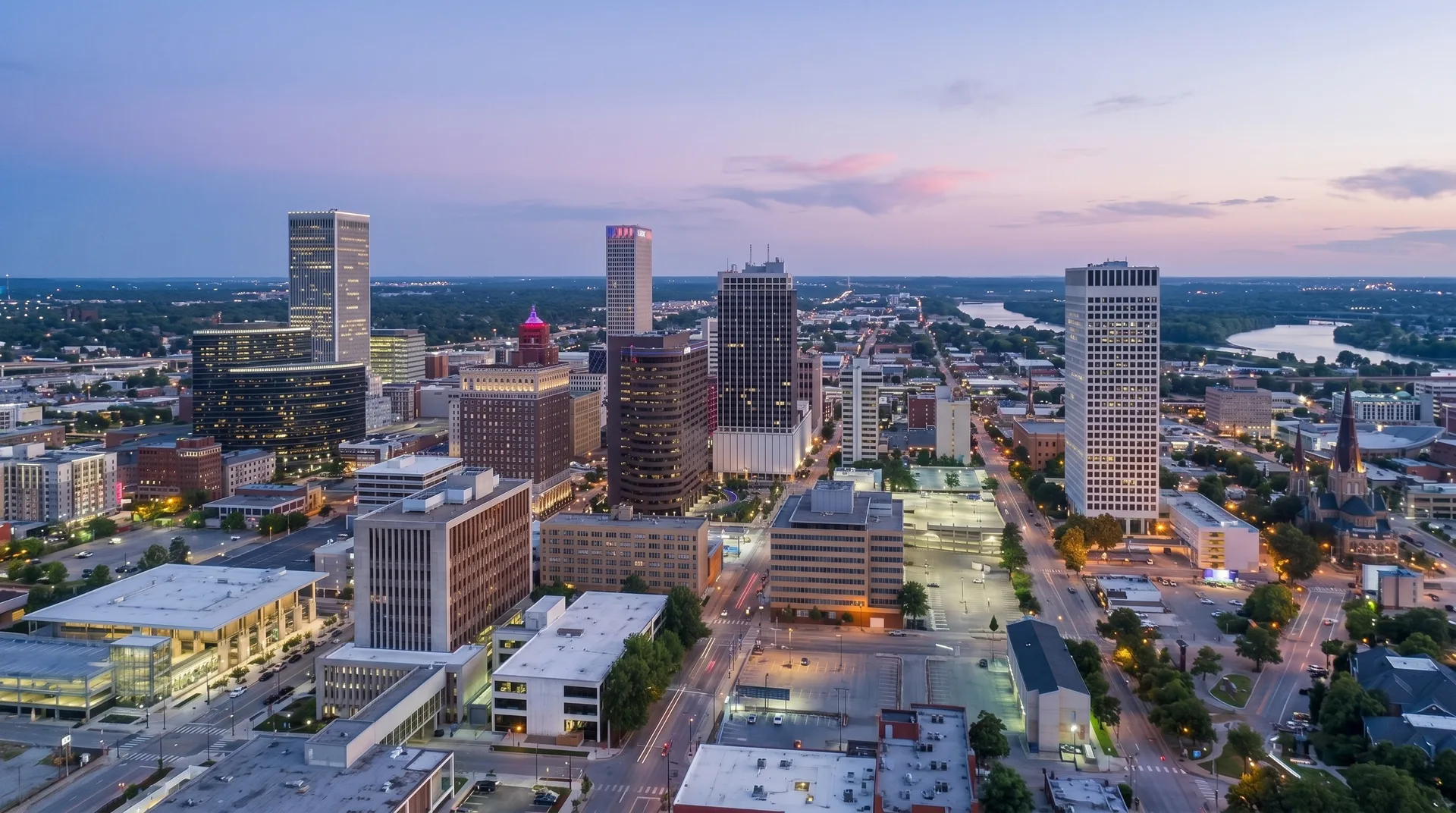
Tulsa, Oklahoma, stands as a critical logistics center in the Southern Plains, offering strategic advantages for freight distribution across the central United States. The city's location at the intersection of major transportation corridors, including I-44 and I-244, provides excellent connectivity to regional and national markets. Tulsa's transportation infrastructure features a modern international airport, extensive rail networks operated by major carriers, and proximity to the Port of Catoosa on the McClellan-Kerr Arkansas River Navigation System. This multimodal capability makes Tulsa an efficient destination for diverse freight types.
The economic foundation of Tulsa is built on the energy sector, with the city serving as a headquarters for numerous oil and gas companies and related service providers. This energy focus is complemented by strong aerospace, manufacturing, and logistics industries. The presence of the Tulsa Port of Catoosa, the nation's farthest inland seaport, enhances the region's ability to handle international freight. Additionally, Tulsa's growing technology sector and healthcare industry contribute to consistent freight volumes, particularly in specialized equipment and high-value goods. The city's central location makes it an ideal distribution point for freight destined for the southwestern and central United States.










