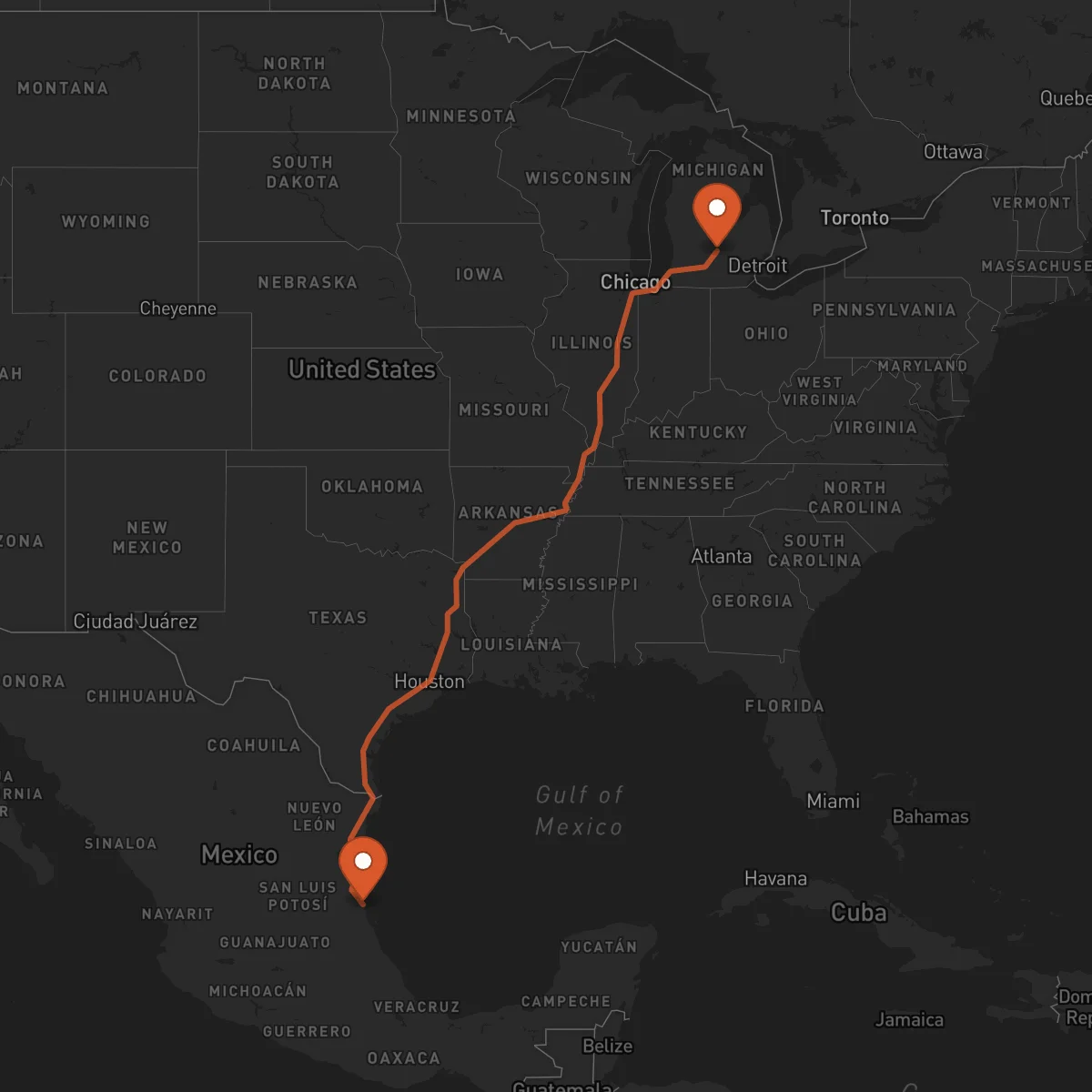
Lansing to Tampico
Tampico → LansingFTL freight transportation service between Lansing and Tampico. Reliable logistics solutions for your business.
Route Description
Everything you need to know about the corridor Lansing - Tampico
The Lansing to Tampico corridor represents a vital cross-border freight transportation route connecting the industrial Midwest of the United States with Mexico's strategic Gulf Coast. This 2,593 km corridor facilitates the movement of goods between Michigan's manufacturing hub and Tamaulipas' important port and industrial region, creating essential supply chain links for North American trade. The route traverses multiple states and crosses the international border at key points, requiring expert knowledge of customs procedures and cross-border regulations.
The economic significance of this corridor spans multiple industries, with automotive components, manufacturing parts, and industrial equipment flowing from Lansing's production centers to Tampico's manufacturing and export facilities. Conversely, finished goods, agricultural products, and consumer merchandise move northward from Mexico's industrial centers. This bidirectional freight flow supports the integrated manufacturing networks that define North American commerce, particularly in the automotive and electronics sectors.
Transportation along this corridor relies on major interstate highways including I-69, I-94, and I-35, connecting to Mexico's Federal Highway 85D. The primary border crossing at Laredo/Nuevo Laredo serves as the main gateway, where Control Terrestre's C-TPAT-certified carriers ensure efficient customs clearance and secure cargo handling. Our specialized cross-border expertise helps navigate the complexities of international freight movement, providing seamless door-to-door service that maintains cargo integrity throughout the journey.
Services for this Route
Available services for the corridor Lansing - Tampico
 Origin
Lansing
Lansing, Michigan serves as a strategic logistics hub in the American Midwest, benefiting from its central location within the Great Lakes manufacturing region. The city's proximity to major automotive manufacturing centers and its access to extensive highway networks make it an ideal origin point for freight distribution. Lansing's economy centers around automotive manufacturing, with General Motors and other suppliers maintaining significant operations in the area, creating consistent freight volumes for outbound transportation.
The city offers robust transportation infrastructure including direct access to I-96, I-69, and I-496, providing efficient connections to major freight corridors across the Midwest. Capital Region International Airport supports air cargo operations, while rail connections through Norfolk Southern and CSX Transportation provide intermodal options. The surrounding region's industrial parks and manufacturing facilities generate substantial freight volumes, particularly in automotive parts, machinery, and industrial equipment, making Lansing a reliable source for full truckload shipments to destinations throughout North America.
 Destination
Tampico
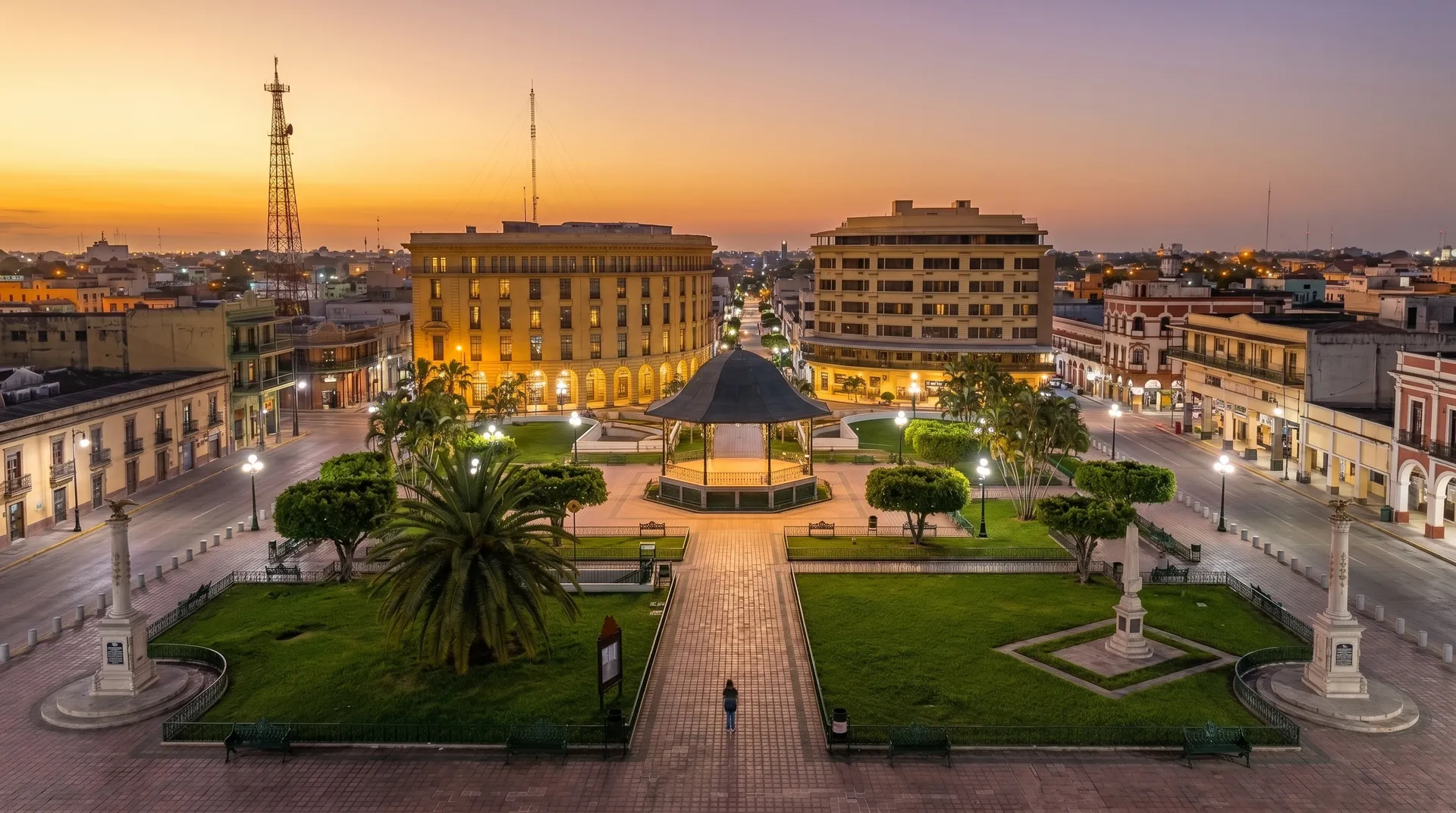
Tampico, Tamaulipas stands as a crucial logistics gateway on Mexico's Gulf Coast, offering strategic access to both domestic markets and international shipping routes. The city's location near the mouth of the Pánuco River provides direct access to maritime shipping, while its proximity to major industrial centers in northeastern Mexico creates significant freight demand. Tampico's economy encompasses oil and gas production, chemical manufacturing, and agricultural processing, generating diverse freight requirements for inbound and outbound transportation.
The region benefits from multiple transportation options including the Port of Tampico, which handles both cargo and petroleum products, and Federal Highway 85D providing connections to the U.S. border. The city's industrial parks house manufacturing facilities for automotive components, electronics, and consumer goods, creating consistent demand for cross-border freight services. Tampico's role as a distribution center for northeastern Mexico, combined with its port facilities, makes it an essential destination for freight originating from U.S. manufacturing centers, particularly for companies engaged in just-in-time supply chain operations.










