Lansing to Saint Paul
Saint Paul → LansingFTL freight transportation service between Lansing and Saint Paul. Reliable logistics solutions for your business.
Route Description
Everything you need to know about the corridor Lansing - Saint Paul
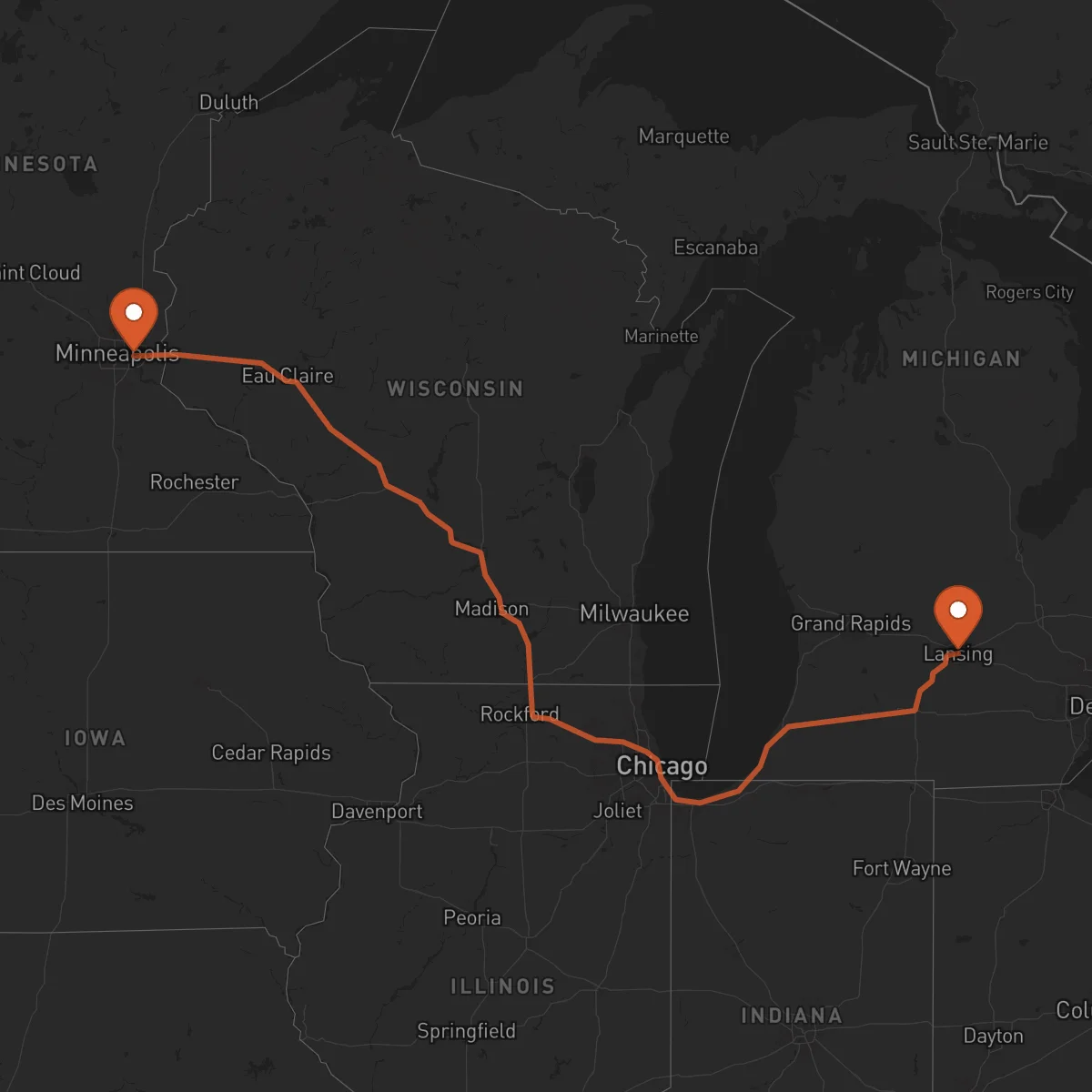
The logistics corridor between Lansing, Michigan, and Saint Paul, Minnesota, represents a vital transportation link spanning approximately 727 kilometers across the American Midwest. This route connects two important Midwestern capitals, facilitating the movement of goods between Michigan's automotive and manufacturing heartland and Minnesota's diverse economic center. The corridor traverses key states including Michigan, Wisconsin, and Minnesota, passing through important industrial and agricultural regions that contribute significantly to the national economy.
The economic significance of this corridor is underscored by the complementary industrial strengths of both endpoints. Lansing serves as a major automotive manufacturing hub, while Saint Paul benefits from a diverse economy including food processing, medical technology, and distribution centers. The route supports critical supply chain operations for automotive parts, agricultural products, industrial equipment, and consumer goods. Major highways including I-94 and I-96 form the backbone of this transportation corridor, providing reliable and efficient freight movement across the region.
Control Terrestre specializes in optimizing freight transportation along this corridor through our extensive network of certified carriers and strategic partnerships. Our full truckload (FTL) services ensure dedicated transportation solutions for businesses requiring reliable cargo movement between Lansing and Saint Paul. We leverage our expertise in route planning, load optimization, and compliance management to deliver consistent service quality, helping companies maintain efficient supply chains across this important Midwestern route.
Services for this Route
Available services for the corridor Lansing - Saint Paul
 Origin
Lansing
Lansing, Michigan, serves as a strategic logistics hub in the Great Lakes region, offering excellent connectivity to major transportation networks. The city's location provides direct access to I-96, I-496, and I-69, facilitating efficient freight movement to and from key markets throughout the Midwest and beyond. Lansing's robust infrastructure includes the nearby Capital Region International Airport and rail connections through Class I railroads, supporting multimodal transportation options for businesses operating in the area.
The local economy is anchored by the automotive industry, with General Motors operating significant manufacturing facilities in the region. This industrial base creates substantial demand for freight transportation services, particularly for automotive parts, components, and finished vehicles. Additionally, Lansing's economy includes healthcare, education, and government sectors, contributing to diverse freight transportation needs. The city's strategic position within Michigan's logistics network makes it an ideal origin point for regional and cross-country freight movements.
 Destination
Saint Paul
Saint Paul, Minnesota, stands as a major logistics and distribution center in the Upper Midwest, offering strategic advantages for freight transportation. The city's location provides access to an extensive network of highways, including I-94, I-35E, and I-494, connecting it to regional markets and national transportation corridors. Saint Paul benefits from proximity to the Mississippi River and the Port of Saint Paul, as well as excellent rail connections through major freight railroads, creating a multimodal transportation environment that supports diverse shipping needs.
The local economy features a strong presence in food processing, medical technology, and distribution sectors. Major companies in these industries generate consistent demand for freight transportation services, particularly for temperature-controlled shipments, specialized equipment, and high-value cargo. Saint Paul's role as a regional economic center, combined with its proximity to Minneapolis and the broader Twin Cities metropolitan area, creates substantial logistics opportunities. The city's infrastructure supports efficient cargo handling and distribution, making it an ideal destination for businesses requiring reliable freight transportation solutions.










