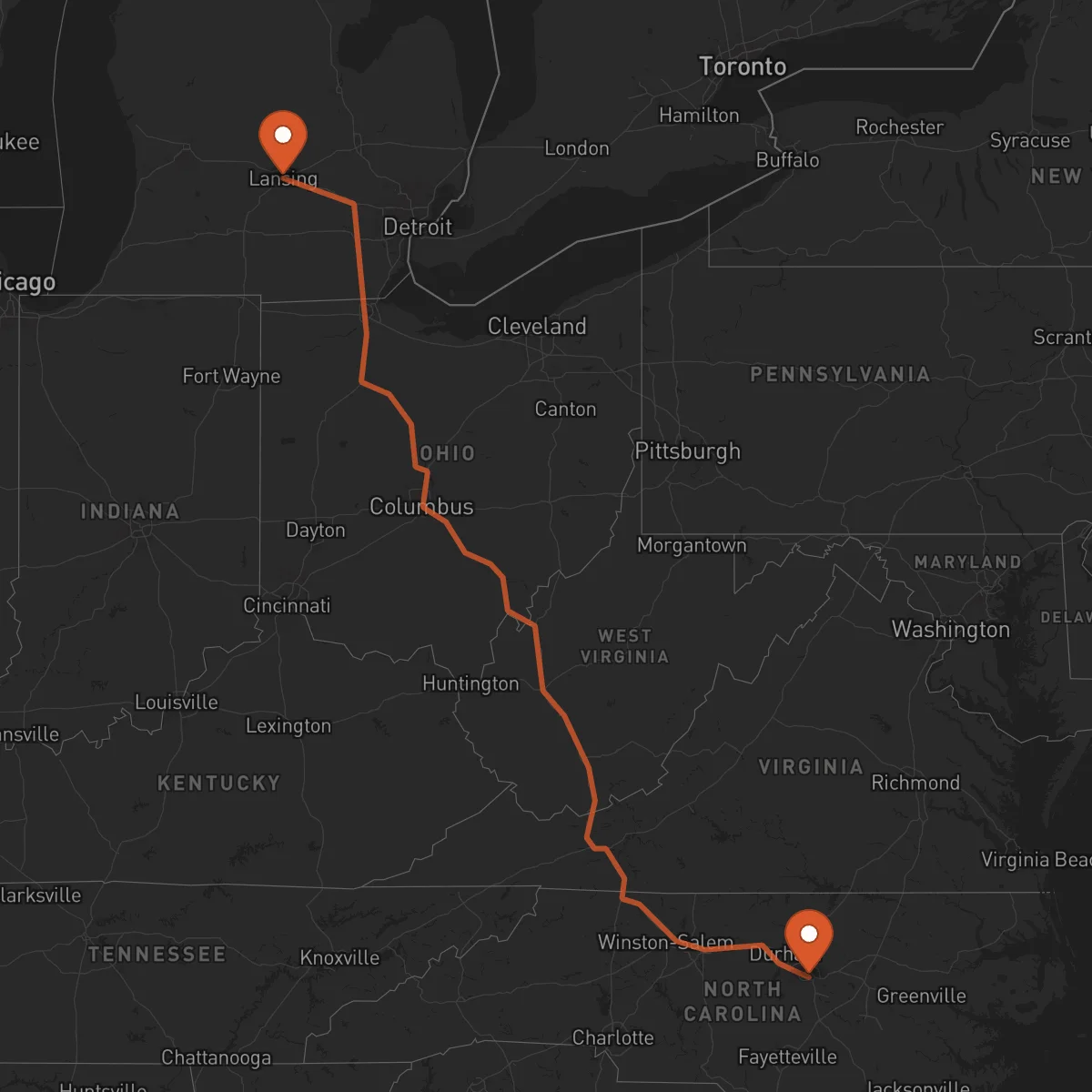
Lansing to Raleigh
Raleigh → LansingFTL freight transportation service between Lansing and Raleigh. Reliable logistics solutions for your business.
Route Description
Everything you need to know about the corridor Lansing - Raleigh
The logistics corridor between Lansing, Michigan, and Raleigh, North Carolina, represents a crucial connection in the Midwest-East Coast freight network. Spanning approximately 925 kilometers, this route traverses diverse landscapes and industrial zones, facilitating the movement of goods between the Great Lakes region and the Research Triangle area. This corridor is vital for companies looking to optimize their supply chain between the manufacturing heartland and the growing tech and research hub of North Carolina.
The economic significance of this route is underscored by the complementary industrial strengths of both regions. Lansing, with its automotive heritage and manufacturing base, produces a wide range of goods that find markets in Raleigh's diverse economy, which includes technology, pharmaceuticals, and research institutions. The corridor also supports the agricultural sector, with produce and processed foods moving in both directions, and the retail industry, which relies on timely restocking of stores across the East Coast.
Key transportation infrastructure along this corridor includes major interstate highways such as I-70, I-77, and I-85, providing reliable and efficient freight movement. These highways connect with regional distribution centers and industrial parks, ensuring seamless integration with local logistics networks. The route also benefits from proximity to major rail lines and airports, offering intermodal transportation options for shippers.
Control Terrestre specializes in full truckload (FTL) freight transportation along this corridor, offering dedicated services that ensure your cargo moves directly from origin to destination without intermediate stops. Our extensive network of certified carriers and our expertise in managing cross-regional shipments guarantee that your freight arrives on time and in perfect condition, supporting your business operations between Michigan and North Carolina.
Services for this Route
Available services for the corridor Lansing - Raleigh
 Origin
Lansing
Lansing, Michigan, serves as a strategic logistics hub in the Great Lakes region, offering excellent connectivity to major markets in the Midwest and beyond. The city's location provides easy access to interstate highways, including I-96 and I-496, facilitating efficient distribution throughout Michigan and neighboring states. Lansing's industrial base, particularly in automotive manufacturing and technology, creates a steady flow of freight that requires reliable transportation solutions.
The city's logistics infrastructure includes multiple warehousing and distribution centers, as well as proximity to major ports on the Great Lakes for international freight. Lansing's economic diversity, with strengths in government, education, and healthcare sectors, contributes to a varied freight profile that demands flexible and responsive transportation services. The presence of Michigan State University also supports a growing tech and research sector, adding to the complexity and value of shipments moving through the area.
 Destination
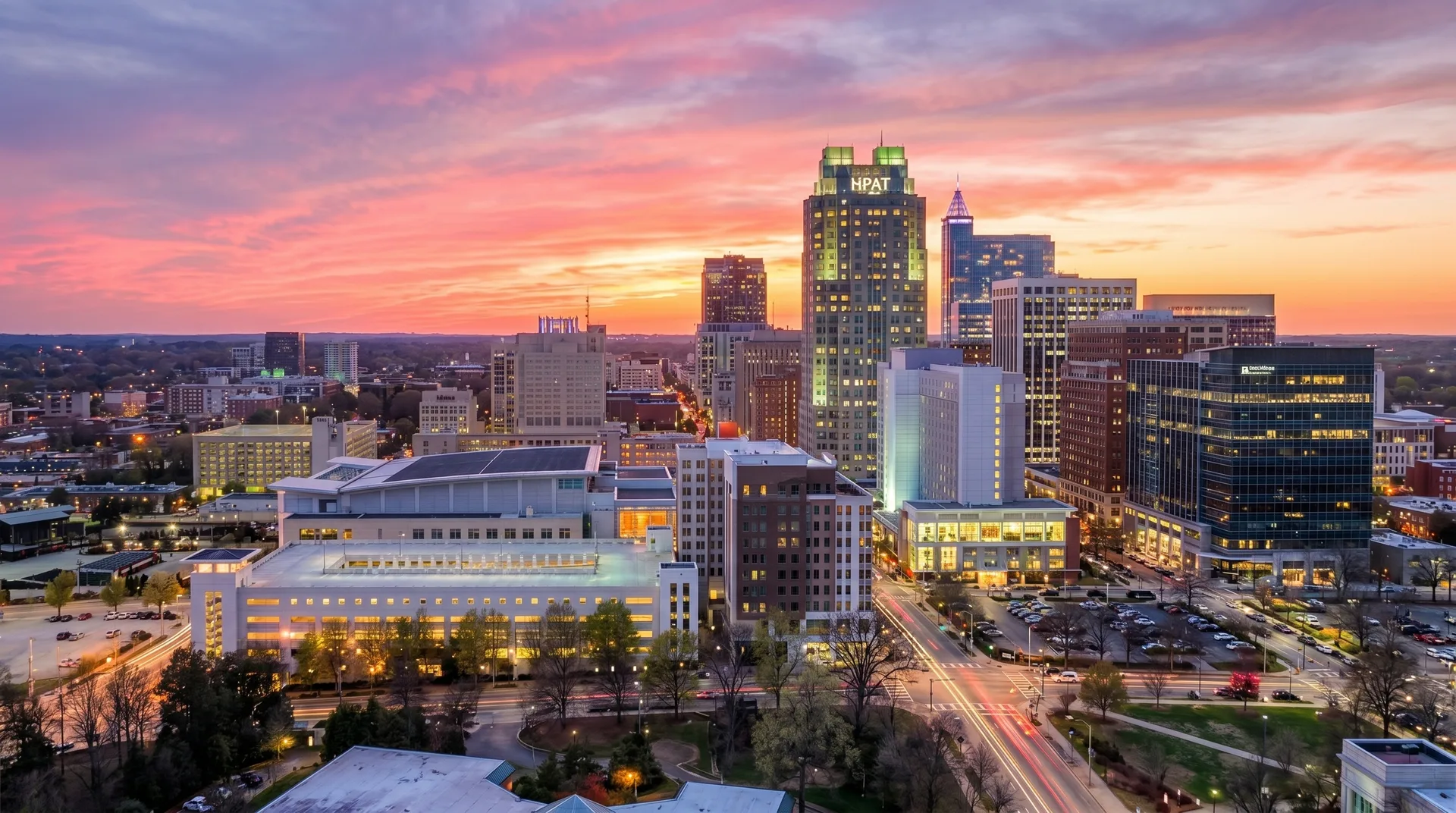
Raleigh
Raleigh, North Carolina, is a rapidly growing logistics and economic center in the Southeast, known for its Research Triangle Park and thriving technology sector. The city's strategic location provides access to major East Coast markets within a day's drive, making it an ideal distribution point for companies serving the region. Raleigh's transportation infrastructure includes extensive highway networks, with I-40 and I-440 providing direct connections to other major cities and ports.
The area's strong presence in research, technology, and pharmaceuticals creates a high demand for specialized freight services, including temperature-controlled and high-value shipments. Raleigh's proximity to major ports like Wilmington and Norfolk enhances its role in international trade, while its growing population supports a robust retail and e-commerce sector. The city's commitment to sustainable development and smart city initiatives also influences the logistics landscape, with an increasing focus on efficient and environmentally friendly transportation solutions.










