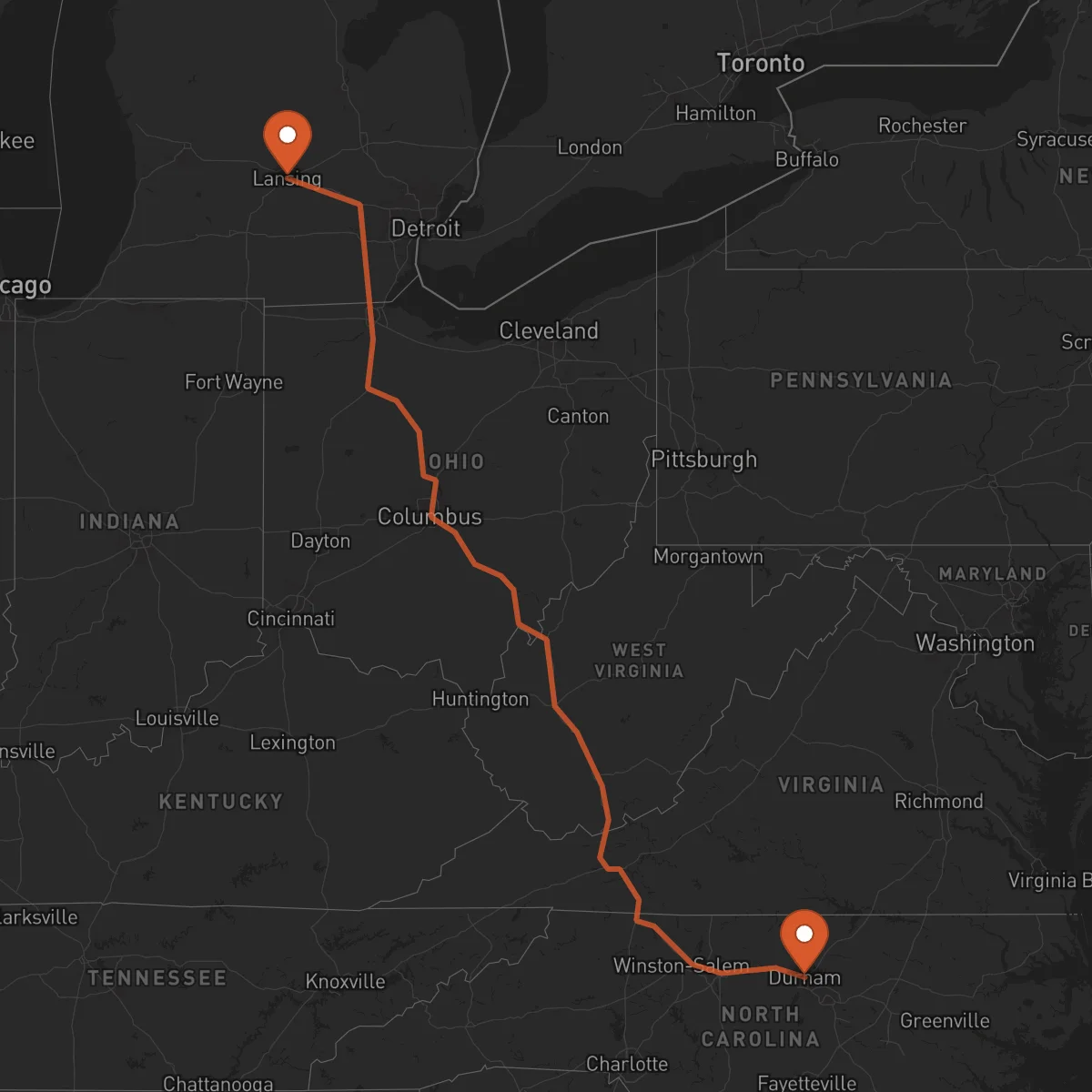
Lansing to Durham
Durham → LansingFTL freight transportation service between Lansing and Durham. Reliable logistics solutions for your business.
Route Description
Everything you need to know about the corridor Lansing - Durham
The Lansing to Durham corridor connects Michigan's capital with North Carolina's Research Triangle, spanning approximately 893 kilometers across the eastern United States. This domestic route traverses key industrial and agricultural regions, providing essential freight connectivity between the Midwest and Southeast. The corridor strategically links manufacturing centers, research facilities, and distribution hubs, facilitating the movement of goods across diverse economic zones. Major highways including I-69, I-70, and I-85 form the backbone of this transportation link, offering reliable transit options for freight carriers.
This corridor serves critical economic functions, connecting automotive manufacturing in Michigan with the technology, healthcare, and research-driven economy of North Carolina's Research Triangle. The route passes through multiple states, crossing diverse terrain and industrial landscapes that support various freight transportation needs. Companies operating along this corridor benefit from access to major markets in both regions, with the ability to reach millions of consumers and businesses within a day's drive.
Control Terrestre provides specialized FTL services along the Lansing-Durham corridor, leveraging our network of certified carriers to ensure reliable, full truckload transportation. Our expertise in handling diverse freight types, combined with our commitment to safety and efficiency, makes us the ideal partner for companies requiring consistent, high-quality transportation between these strategic locations.
Services for this Route
Available services for the corridor Lansing - Durham
 Origin
Lansing
Lansing, Michigan's capital city, serves as a strategic logistics hub in the Great Lakes region. The city's location provides excellent connectivity to major manufacturing centers, agricultural areas, and distribution networks throughout the Midwest. Lansing's economy is anchored by state government operations, automotive manufacturing, and education institutions, creating diverse freight transportation needs. The city benefits from proximity to major highways including I-96 and I-496, as well as rail connections that support intermodal transportation options. Local infrastructure includes the Capital Region International Airport and access to the Great Lakes waterway system, providing multiple transportation alternatives for businesses operating in the area.
 Destination
Durham
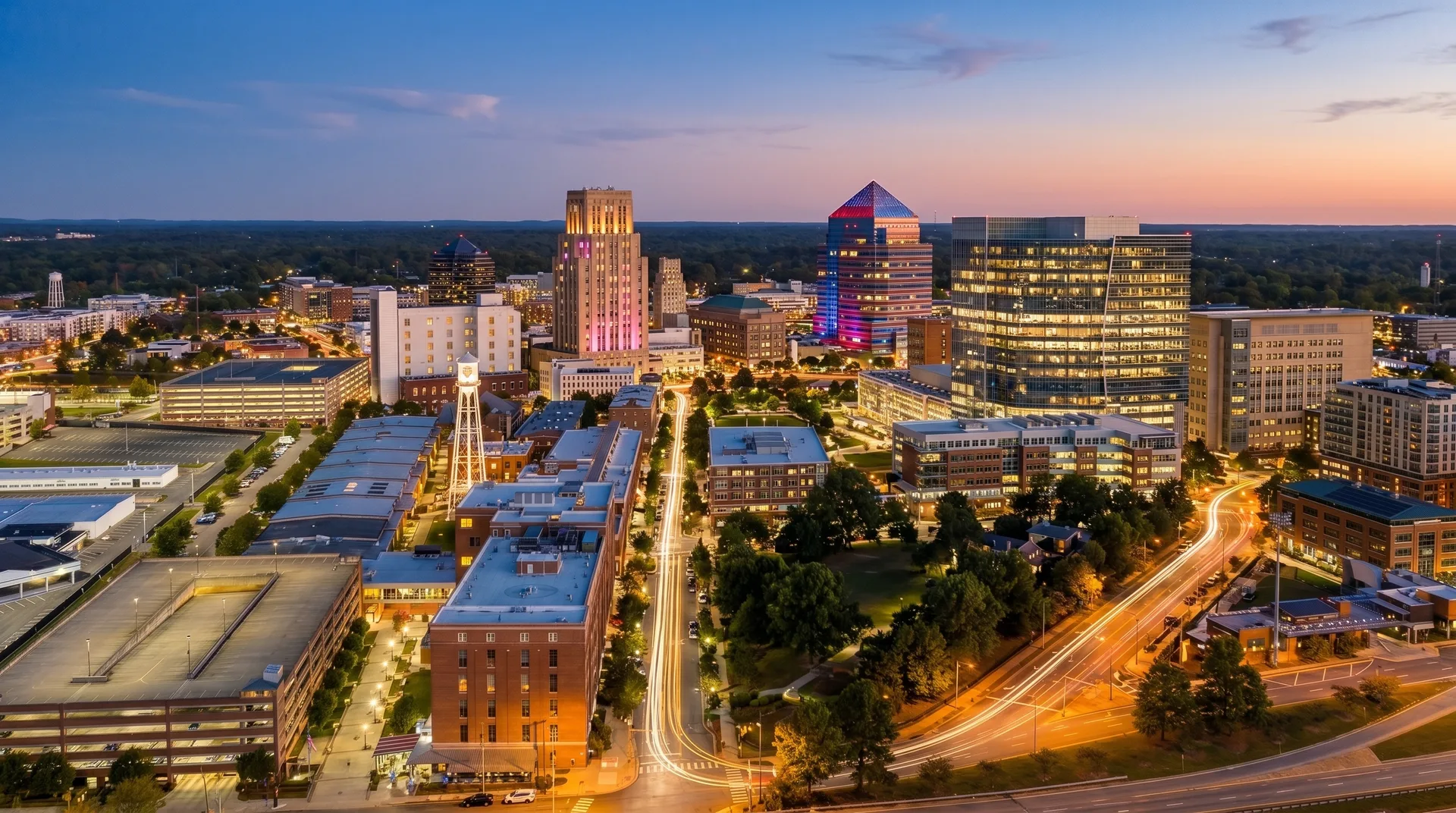
Durham, North Carolina, forms part of the renowned Research Triangle, a major center for technology, healthcare, and education in the southeastern United States. The city's strategic location in the Piedmont region provides excellent access to major markets along the East Coast, with proximity to Raleigh and Chapel Hill creating a robust economic ecosystem. Durham's economy is driven by research institutions, biotechnology companies, healthcare providers, and educational facilities, generating consistent demand for specialized freight transportation services. The area is served by major highways including I-85 and I-40, with the Raleigh-Durham International Airport providing air cargo options. The region's growing population and business development continue to expand freight transportation needs throughout the metropolitan area.










