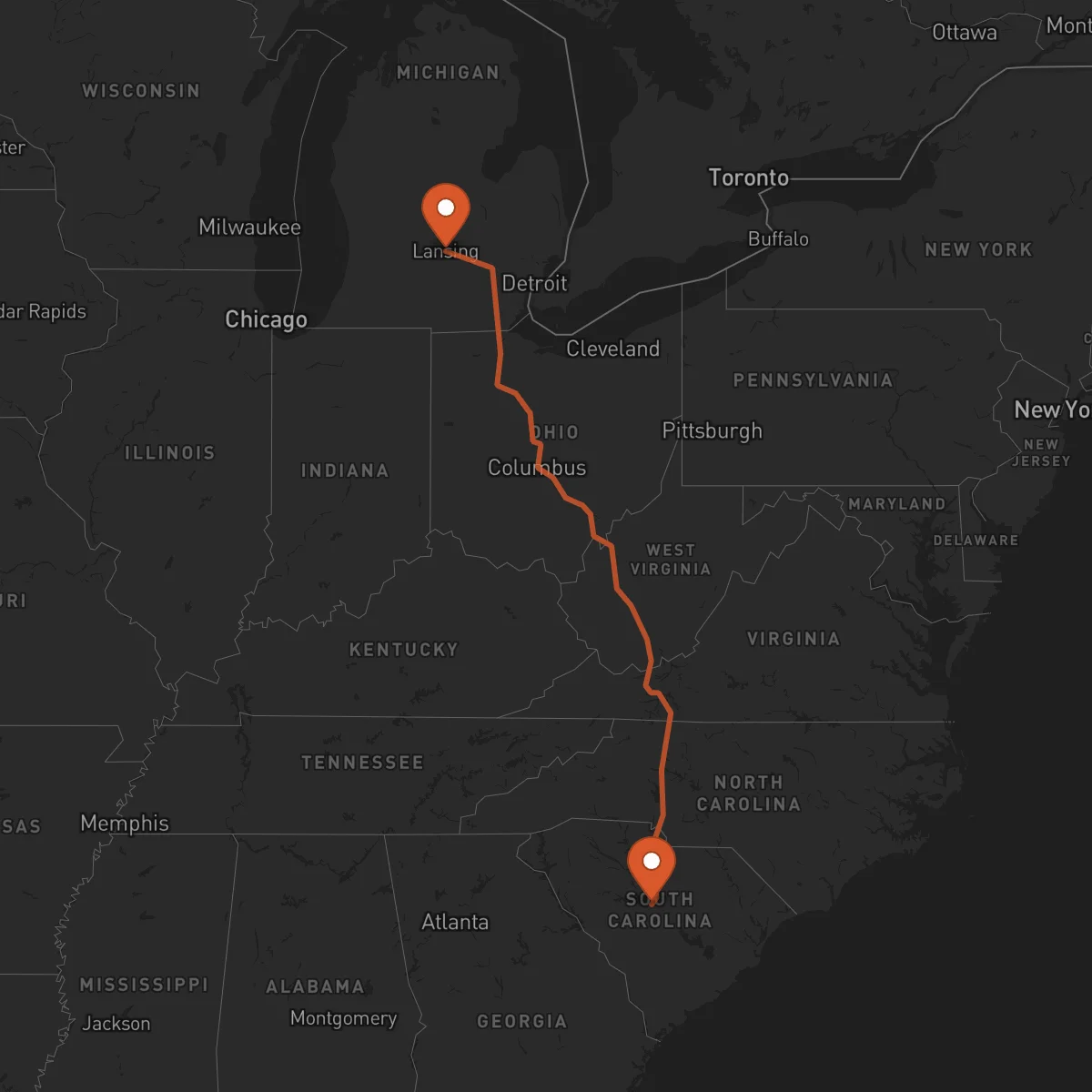
Lansing to Columbia
Columbia → LansingFTL freight transportation service between Lansing and Columbia. Reliable logistics solutions for your business.
Route Description
Everything you need to know about the corridor Lansing - Columbia
The logistics corridor between Lansing, Michigan, and Columbia, South Carolina, represents a vital connection in the U.S. domestic freight network, spanning approximately 1,018 kilometers across the Midwest and Southeast regions. This north-to-south route traverses diverse economic landscapes, linking the manufacturing heartland of the Great Lakes with the growing industrial and distribution hubs of the Carolinas. The corridor serves as a critical artery for businesses moving goods between these two dynamic regions, facilitating trade and supporting supply chain operations across multiple sectors.
The route passes through major transportation corridors including I-69, I-70, and I-77, connecting key economic centers along the way. This strategic pathway enables efficient movement of freight from Michigan's automotive and manufacturing clusters to South Carolina's expanding automotive industry, aerospace sector, and distribution networks. The corridor's infrastructure supports both regional distribution patterns and long-haul freight movements, making it essential for companies requiring reliable transportation between the Midwest and Southeast.
Control Terrestre provides comprehensive FTL (Full Truckload) transportation services along this corridor, offering dedicated equipment and experienced carriers to ensure your cargo moves efficiently and securely. Our specialized providers maintain all necessary certifications including C-TPAT and FAST, ensuring smooth cross-state operations. Whether you're shipping automotive parts, industrial equipment, or consumer goods, our full truckload solutions are designed to meet the specific demands of this important domestic route.
Services for this Route
Available services for the corridor Lansing - Columbia
 Origin
Lansing
Lansing, Michigan, serves as a strategic logistics hub in the Great Lakes region, benefiting from its central location within the state and proximity to major manufacturing centers. The city and surrounding areas are home to significant automotive manufacturing operations, with suppliers and assembly plants requiring efficient freight movement. Lansing's transportation infrastructure includes access to I-96, I-69, and I-496, providing excellent connectivity to regional and national freight networks. The area's industrial base extends beyond automotive to include healthcare, education, and technology sectors, all requiring reliable logistics support.
 Destination
Columbia
Columbia, South Carolina, occupies a strategic position in the Southeast as a major distribution and manufacturing center. The city benefits from its location at the intersection of I-20, I-26, and I-77, providing excellent access to regional markets and ports. Columbia has emerged as a key logistics hub with significant growth in e-commerce distribution centers, automotive manufacturing (including BMW suppliers), and aerospace industries. The region's infrastructure supports efficient freight movement throughout the Southeast and to major East Coast ports, making it an ideal destination for companies seeking to establish distribution networks in the growing Southern market.










