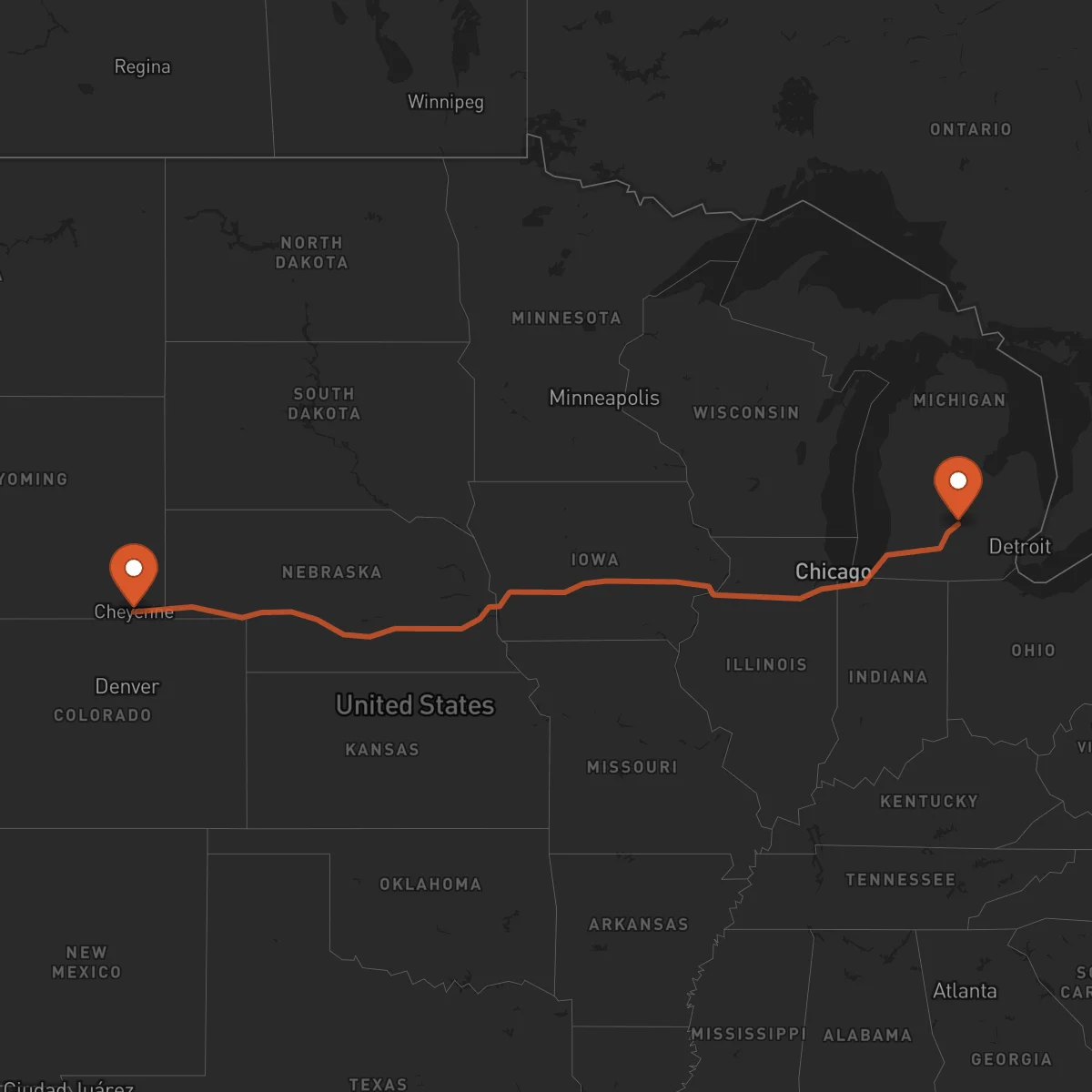
Lansing to Cheyenne
Cheyenne → LansingFTL freight transportation service between Lansing and Cheyenne. Reliable logistics solutions for your business.
Route Description
Everything you need to know about the corridor Lansing - Cheyenne
The Lansing, Michigan to Cheyenne, Wyoming corridor represents a vital freight transportation link connecting the industrial Midwest with the Rocky Mountain region. This 1,682 km domestic route traverses through multiple states, providing essential connectivity for businesses moving goods between Michigan's manufacturing heartland and Wyoming's resource-rich territory. The corridor passes through key transportation hubs including Chicago and Denver, offering multiple routing options for optimized freight movement.
The economic significance of this corridor is substantial, facilitating the movement of manufactured goods, agricultural products, and industrial equipment between two distinct economic regions. Michigan's automotive and manufacturing industries generate significant outbound freight volumes, while Wyoming's energy sector and agricultural operations create substantial inbound demand. This bidirectional freight flow makes the corridor particularly valuable for companies requiring consistent, reliable transportation solutions.
Control Terrestre specializes in providing full truckload (FTL) services along this corridor, leveraging our network of certified carriers to ensure efficient and secure freight movement. Our dedicated transportation solutions are designed to meet the specific needs of businesses operating between Lansing and Cheyenne, whether you're shipping automotive parts, industrial machinery, or agricultural products. With our strategic partnerships and expertise in North American logistics, we facilitate seamless cross-country freight transportation that keeps your supply chain moving.
Our full truckload services on this corridor offer dedicated capacity, ensuring your freight travels directly from origin to destination without intermediate stops or handling. This approach minimizes transit times and reduces the risk of damage or delays, making it ideal for time-sensitive or high-value shipments. Control Terrestre's commitment to safety, reliability, and customer service means you can trust us to handle your freight with the utmost care and professionalism.
Services for this Route
Available services for the corridor Lansing - Cheyenne
 Origin
Lansing
Lansing, Michigan serves as a strategic logistics hub in the Great Lakes region, benefiting from its central location within Michigan and proximity to major transportation networks. The city is part of Michigan's manufacturing corridor, with strong connections to Detroit's automotive industry and Grand Rapids' diverse manufacturing sector. Lansing's transportation infrastructure includes access to I-96, I-69, and I-496, providing excellent connectivity to regional and national freight networks. The city's location near major rail terminals and the Port of Detroit enhances its capabilities as a multimodal logistics center, making it an ideal origin point for freight shipments heading west.
The economic base of Lansing centers around manufacturing, automotive parts production, and technology services. The region is home to numerous automotive suppliers, research institutions, and distribution centers that generate substantial freight volumes. Michigan State University in nearby East Lansing contributes to a skilled workforce and innovative business environment. The area's industrial parks and warehouse facilities provide modern infrastructure for logistics operations, supporting efficient freight consolidation and distribution activities.
 Destination
Cheyenne
Cheyenne, Wyoming occupies a strategic position as the state's capital and largest city, serving as a crucial logistics gateway to the Rocky Mountain region. Located at the intersection of I-25 and I-80, Cheyenne provides direct access to major freight corridors connecting the Midwest with the West Coast and Mountain states. The city's elevation and location make it a natural distribution point for goods moving throughout Wyoming and neighboring states. Cheyenne's transportation infrastructure includes a regional airport, rail connections, and proximity to major trucking routes, facilitating efficient freight movement in all directions.
The local economy in Cheyenne is diverse, with significant contributions from government, military, energy, and agricultural sectors. F.E. Warren Air Force Base and the Wyoming state government are major employers, while the region's energy industry (oil, natural gas, and coal) generates substantial freight activity. Agriculture, including cattle ranching and crop production, creates additional demand for transportation services. The city's industrial parks and warehousing facilities support logistics operations, while its proximity to Wyoming's natural resources makes it a key distribution center for mining equipment, construction materials, and agricultural products.










